The Founding of the Communist Party of China
1921 · Shanghai, China
The Communist Party of China is founded at the first National Congress, marking a pivotal event in Chinese political history.
June 28, 1921
The Chinese Communist Party was founded in Shanghai, marking the beginning of a significant political movement that would eventually lead to the establishment of the People's Republic of China in 1949.
Shanghai, China | Chinese Communist Party
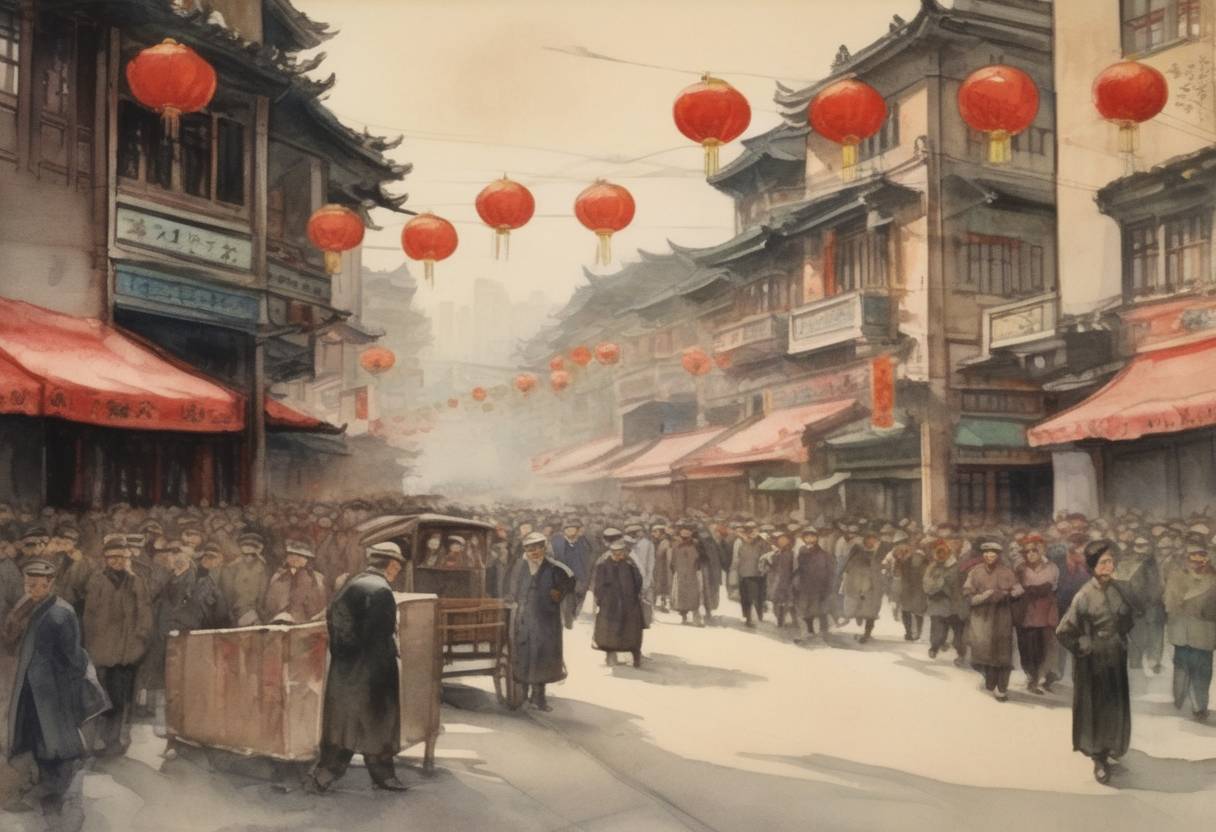
The early 20th century was a period of significant upheaval and transformation in China. The Qing Dynasty had fallen in 1911, leading to the establishment of the Republic of China. However, the new republic struggled with internal divisions, warlordism, and foreign influence. Amidst this backdrop, various political ideologies, including communism, began to gain traction as potential solutions to China’s challenges.
May Fourth Movement (1919): This intellectual and cultural movement, sparked by nationalistic fervor and dissatisfaction with the Treaty of Versailles, which awarded Chinese territories to Japan, played a crucial role in spreading Marxist ideas among Chinese intellectuals and students.
Influence of the Russian Revolution (1917): The success of the Bolsheviks in Russia inspired many Chinese intellectuals, who saw Marxism-Leninism as a viable path for China’s modernization and liberation from imperialist powers.
Comintern Support: The Communist International (Comintern) actively sought to spread communism worldwide and provided support and guidance to Chinese revolutionaries interested in forming a communist party.
The Chinese Communist Party was officially founded during a secret meeting held in Shanghai. The congress took place from July 23 to August 2, 1921, although the date of June 28 is often cited in historical records.
Location: The meeting was held in the French Concession area of Shanghai, a location chosen for its relative safety from Chinese authorities.
Attendees: The congress was attended by 13 delegates representing about 50 members nationwide. Notable attendees included Mao Zedong, Li Dazhao, and Chen Duxiu, who became the party’s first general secretary.
Agenda: The congress focused on establishing the party’s structure, goals, and strategies. It emphasized the need for a proletarian revolution and the overthrow of the bourgeoisie.
Growth and Challenges: Initially small, the CCP faced numerous challenges, including suppression by the ruling Kuomintang (KMT) and internal ideological struggles. However, it gradually expanded its influence, particularly among peasants and workers.
Alliance and Split with the KMT: The CCP initially allied with the KMT to unify China and expel foreign powers. This alliance was short-lived, as tensions led to a violent split in 1927, with the KMT purging communists from its ranks.
Long March (1934-1935): The CCP’s strategic retreat from the KMT’s encirclement campaigns, known as the Long March, was a pivotal moment that solidified Mao Zedong’s leadership and laid the groundwork for future successes.
Establishment of the People’s Republic of China (1949): After years of civil war and Japanese invasion, the CCP emerged victorious over the KMT, leading to the establishment of the People’s Republic of China on October 1, 1949.
The founding of the CCP marked the beginning of a significant political movement that reshaped China’s social, economic, and political landscape. The CCP’s rise to power and the subsequent establishment of a communist state had profound implications for global geopolitics during the Cold War and continues to influence China’s role in the world today.
Source: en.wikipedia.org