The Death of Captain James Cook
1779 · Kealakekua Bay, Hawaii
British explorer Captain James Cook was killed by Native Hawaiians during his third exploratory voyage in the Pacific, at Kealakekua Bay on the Big Island of Hawaii.
November 26, 1778
In the Hawaiian Islands, Captain James Cook becomes the first European to visit Maui.
Maui, Hawaii
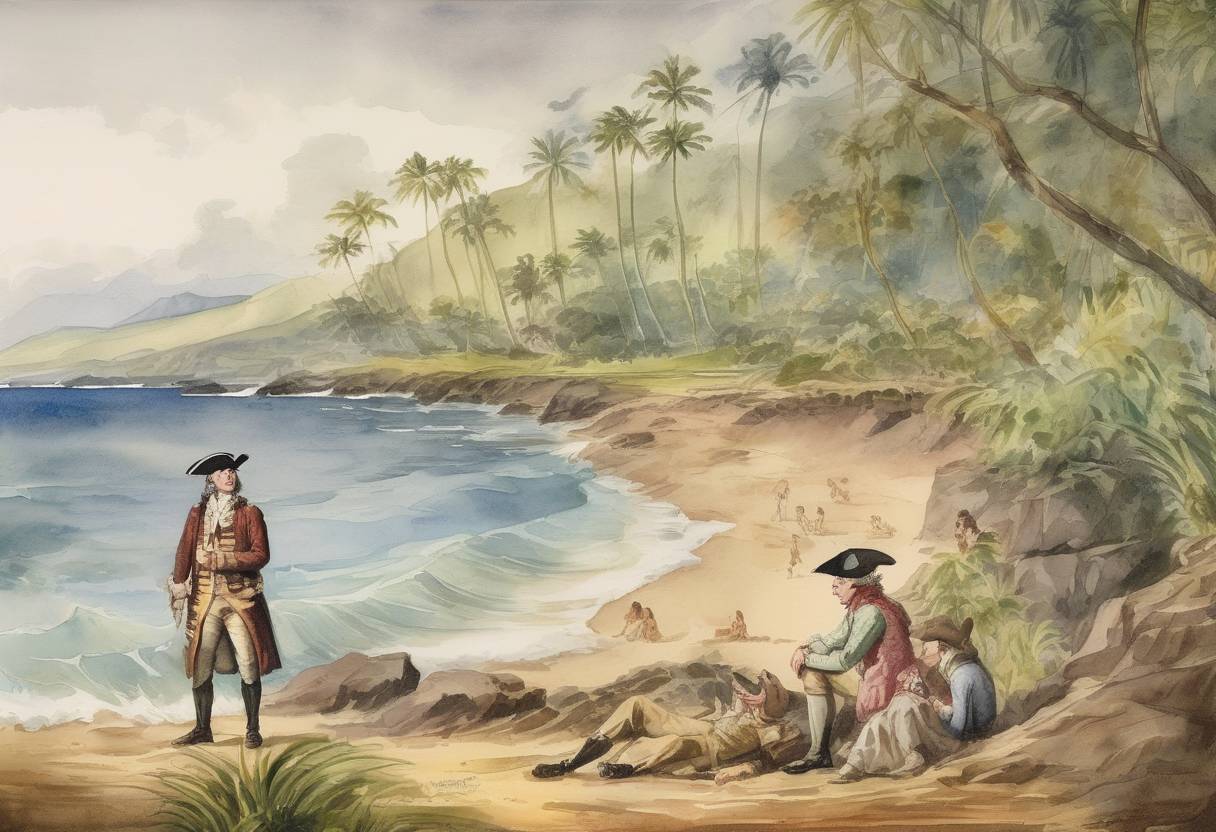
On November 26, 1778, Captain James Cook, the renowned British explorer and navigator, became the first European to visit the island of Maui in the Hawaiian archipelago. This event marked a significant moment in the history of European exploration in the Pacific.
Captain Cook was on his third and final voyage of exploration in the Pacific Ocean, which began in 1776. The primary objective of this expedition was to discover the Northwest Passage, a potential sea route connecting the Atlantic and Pacific Oceans. During this voyage, Cook also aimed to further explore the Pacific and establish contact with indigenous peoples.
In January 1778, Cook had already made contact with the Hawaiian Islands, initially landing on Kauai and Niihau. This marked the first recorded European contact with the Hawaiian Islands, which Cook named the “Sandwich Islands” in honor of the Earl of Sandwich, the First Lord of the Admiralty.
Cook’s arrival at Maui on November 26, 1778, was part of his continued exploration of the Hawaiian Islands. He approached the island aboard his ships, HMS Resolution and HMS Discovery. Cook and his crew were greeted with curiosity by the native Hawaiian population, who had never before encountered Europeans.
Cultural Exchange: Cook’s visit initiated a period of cultural exchange between Europeans and Hawaiians. The interactions included the exchange of goods, knowledge, and customs, although they also led to misunderstandings and conflicts.
Mapping and Documentation: Cook’s detailed maps and observations of the Hawaiian Islands were invaluable to future explorers and significantly contributed to Western knowledge of the Pacific region.
Impact on Hawaii: The arrival of Europeans, starting with Cook, eventually led to significant changes in Hawaiian society, including the introduction of new technologies, diseases, and eventually, political changes.
Cook’s exploration of the Hawaiian Islands continued until his death in February 1779 on the Big Island of Hawaii. His voyages had a lasting impact on the Pacific region, opening it up to further exploration and eventual colonization by European powers.
The visit to Maui and the Hawaiian Islands as a whole marked a pivotal moment in the history of exploration, highlighting both the potential for cultural exchange and the challenges of cross-cultural encounters. Cook’s legacy is complex, as his voyages brought both advancement and disruption to the indigenous societies he encountered.
Source: en.wikipedia.org