Ascension of Alexios I Komnenos: April 5, 1081
1081 · Constantinople, Byzantine Empire
Alexios I Komnenos ascends to the Byzantine throne, marking the start of the Komnenian dynasty, which would revitalize the Byzantine Empire.
December 11, 0969
Byzantine Emperor Nikephoros II Phokas is assassinated in his palace by a conspiracy led by his wife Theophano and her lover John I Tzimiskes, who then becomes emperor.
Constantinople, Byzantine Empire | Byzantine Empire
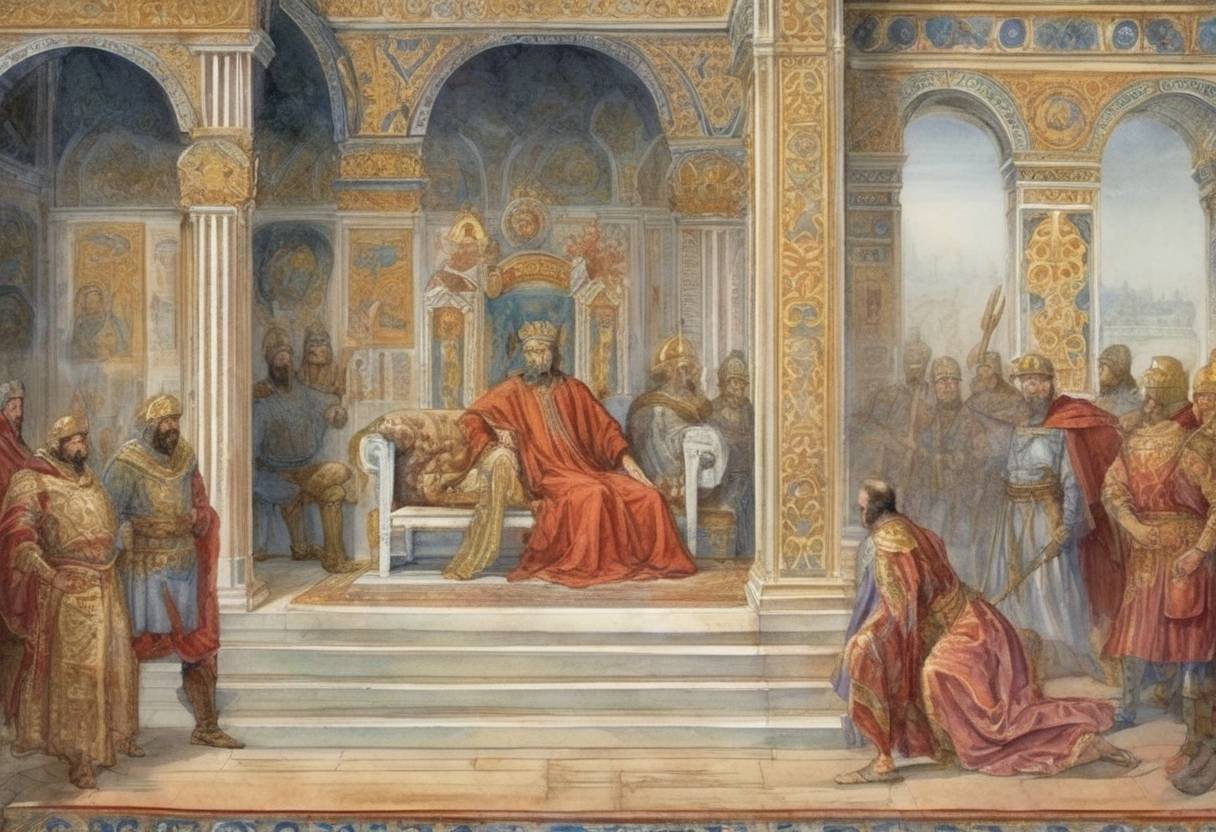
On December 11, 969, a significant and dramatic event unfolded in the Byzantine Empire: the assassination of Emperor Nikephoros II Phokas. This event was orchestrated by a conspiracy involving his wife, Theophano, and her lover, John I Tzimiskes, who subsequently ascended to the throne.
Nikephoros II Phokas, born around 912, was a distinguished military leader before becoming emperor. His military prowess was instrumental in the Byzantine reconquest of Crete in 961 and his campaigns against the Arabs in the East, which earned him the nickname “Pale Death of the Saracens.” His ascension to the throne in 963 was marked by his marriage to Theophano, the widow of his predecessor, Romanos II.
Despite his military successes, Nikephoros II’s reign was fraught with internal challenges. His austere lifestyle and heavy taxation to fund military campaigns made him unpopular among the aristocracy and the general populace. Additionally, his religious policies, which favored monasticism, alienated the secular clergy and the urban elite.
Theophano, known for her ambition and political acumen, became disillusioned with Nikephoros. Her affair with John I Tzimiskes, a capable general and a member of the powerful military aristocracy, set the stage for the conspiracy. Tzimiskes, who had been sidelined by Nikephoros, saw an opportunity to seize power.
The conspiracy was meticulously planned. On the night of December 11, 969, conspirators, including Tzimiskes, infiltrated the imperial palace. With Theophano’s assistance, they gained access to the emperor’s quarters. Nikephoros II Phokas was caught off guard and brutally murdered in his sleep.
Following the assassination, John I Tzimiskes was proclaimed emperor. To legitimize his rule, he married Theodora, a member of the Macedonian dynasty, and exiled Theophano to a monastery, distancing himself from the scandal of the murder.
Tzimiskes’ reign (969-976) was marked by military successes and administrative reforms. He continued Nikephoros’ campaigns in the East, securing Byzantine territories and expanding the empire’s influence. His rule is often seen as a continuation of the military and economic policies initiated by Nikephoros, albeit with a more diplomatic approach to internal politics.
The assassination of Nikephoros II Phokas highlights the volatile nature of Byzantine politics, where personal ambitions and alliances often led to dramatic shifts in power. It underscores the intricate interplay between military leaders and the imperial court, a recurring theme in Byzantine history. The event also reflects the broader challenges faced by the empire during this period, including internal dissent and the need for strong leadership to confront external threats.
In summary, the assassination of Nikephoros II Phokas was a pivotal moment in Byzantine history, illustrating the complexities of imperial rule and the ever-present danger of political intrigue.
Source: en.wikipedia.org