April 16, 1972

Apollo 16, the tenth crewed mission in the United States Apollo space program, was launched. It was the fifth mission to land on the Moon and the first to land in the lunar highlands.


Cape Canaveral, United States | NASA
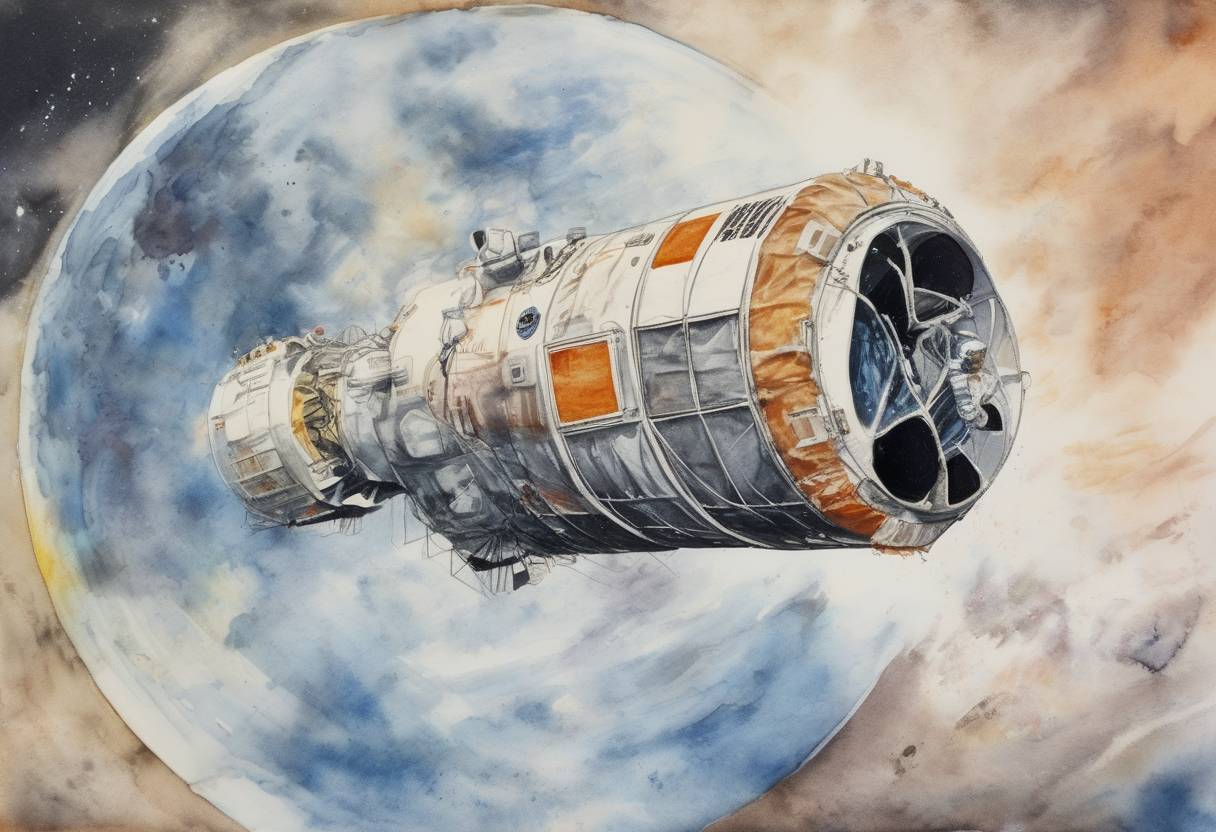
Watercolor painting based depiction of Apollo 16, the tenth crewed mission in the United States Apollo space program, was launched. It was the fifth mission to land on the Moon and the first to land in the lunar highlands. (1972)

Apollo 16: A Historic Lunar Mission

Launch Date: April 16, 1972
Mission Duration: 11 days, 1 hour, 51 minutes
Landing Site: Descartes Highlands, Moon

Overview

Apollo 16 was the tenth crewed mission in NASA’s Apollo space program and marked the fifth successful Moon landing. It was notable for being the first mission to target the lunar highlands, a region of the Moon that had not been explored in previous missions. The mission aimed to gather geological samples and conduct scientific experiments to enhance understanding of the Moon’s composition and history.

Crew

  • Commander: John W. Young
  • Command Module Pilot: Thomas K. Mattingly II
  • Lunar Module Pilot: Charles M. Duke Jr.

Mission Objectives

  1. Exploration of the Descartes Highlands: Apollo 16 aimed to investigate the highland region to gather data on the Moon’s crust and geological history.
  2. Scientific Experiments: The mission included a range of experiments, both on the lunar surface and in lunar orbit, to study the Moon’s surface and environment.
  3. Sample Collection: The astronauts were tasked with collecting lunar samples, particularly from the highlands, to bring back to Earth for analysis.

Key Events

  • Launch: Apollo 16 launched from Kennedy Space Center in Florida on April 16, 1972, aboard a Saturn V rocket.
  • Lunar Landing: The Lunar Module, named “Orion,” successfully landed in the Descartes Highlands on April 20, 1972.
  • Extravehicular Activities (EVAs): Over the course of three EVAs, Young and Duke spent approximately 20 hours on the lunar surface, traveling over 16 miles using the Lunar Roving Vehicle (LRV).
  • Scientific Discoveries: The mission collected 211 pounds (96 kg) of lunar samples, including rocks and soil, which provided insights into the Moon’s volcanic activity and geological history.

Notable Achievements

  • First Highlands Exploration: Apollo 16 was the first mission to explore the lunar highlands, providing valuable data that challenged previous theories about the Moon’s volcanic activity.
  • Lunar Roving Vehicle: The use of the LRV allowed the astronauts to cover more ground and conduct extensive scientific research.

Aftermath and Impact

Apollo 16’s successful exploration of the lunar highlands expanded scientific understanding of the Moon’s geology and composition. The mission’s findings contributed to the broader knowledge of lunar history and the processes that shaped the Moon’s surface. The samples and data collected continue to be a valuable resource for scientists studying the Moon and planetary geology.

Conclusion

Apollo 16 was a pivotal mission in the Apollo program, demonstrating the capability to explore diverse lunar terrains and enhancing the scientific legacy of human space exploration. Its achievements laid the groundwork for future lunar missions and provided a deeper understanding of our closest celestial neighbor.