Spain Ratifies a New Constitution: Transition from Dictatorship to Democracy
1978 · Madrid, Spain
Spain ratifies a new constitution, transitioning from dictatorship to democracy.
December 9, 1931
The Spanish Constitution of 1931 is enacted by the Second Spanish Republic. It established freedom of opinion, religion, and press, and introduced democratic reforms.
Madrid, Spain | Second Spanish Republic
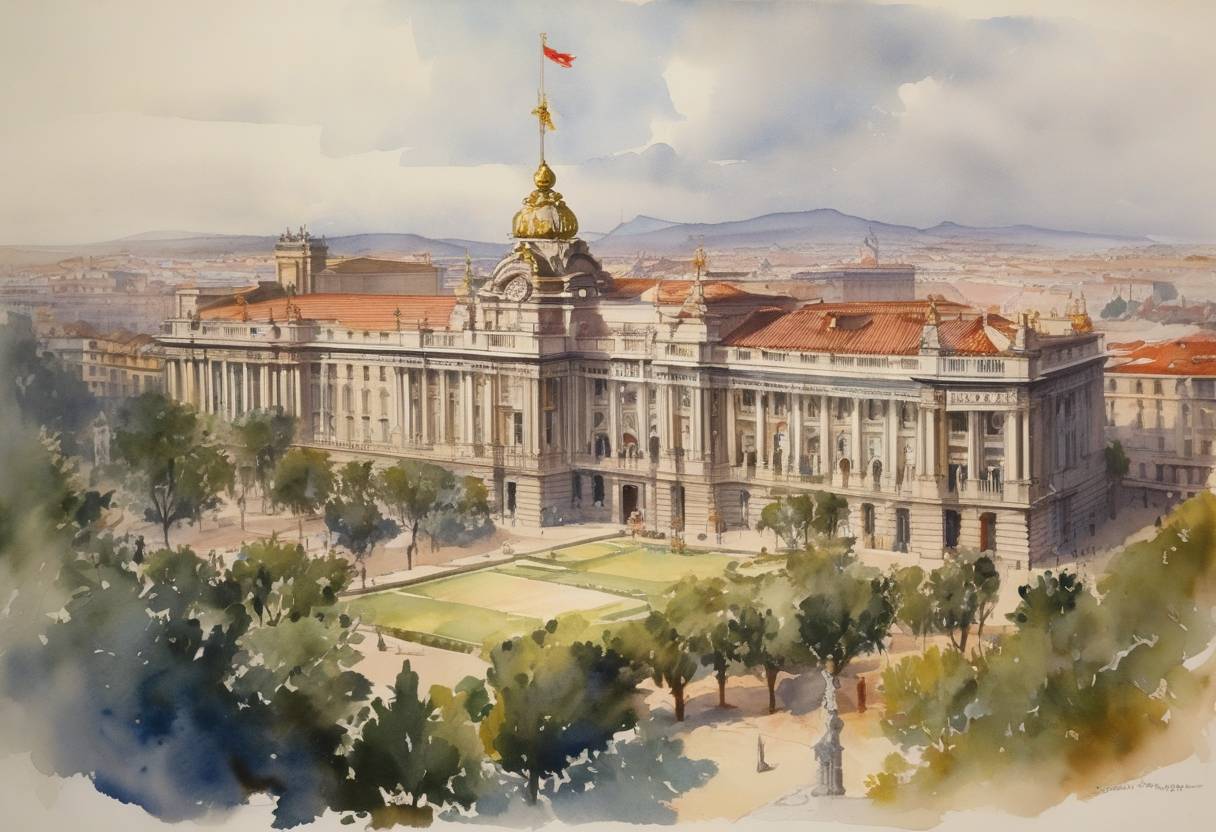
On December 9, 1931, the Second Spanish Republic enacted a new constitution that marked a significant transformation in Spain’s political landscape. This constitution introduced a raft of democratic reforms and signaled a shift towards a more progressive society, following the abdication of King Alfonso XIII and the establishment of the Republic in April 1931.
Freedom of Opinion, Religion, and Press: This constitution was groundbreaking for its explicit guarantee of fundamental freedoms. It affirmatively established freedom of speech, press, and religion, pillars of a democratic society that were pivotal in dismantling the previous authoritarian regime’s restrictions.
Secular State: The 1931 Constitution explicitly separated church and state, declaring Spain a secular state. This was a significant move away from the Catholic Church’s previous influence over the Spanish government and its policies, highlighting a commitment to modern secular governance.
Universal Suffrage: It enfranchised all men and women aged 23 and over, a forward-thinking reform at the time, as many countries had not yet achieved gender parity in electoral rights. This universal suffrage represented an essential step in promoting gender equality.
Progressive Social Reforms: The constitution also addressed a broad range of social reforms, including labor rights. It provided frameworks for agrarian reform, workers’ rights, and social welfare measures, aiming to rectify the profound socio-economic inequalities prevalent in Spain.
The creation of this constitution took place against a backdrop of political upheaval and social change. The fall of the monarchy and the declaration of the Second Republic promised a new era of reform and progress. The democratic ideals enshrined in the constitution sought to stabilize Spain’s volatile political environment and address the aspirations of a populace eager for modernization and social justice.
The Spanish Constitution of 1931 laid the foundation for the legislative and social transformations during the Second Republic. However, its progressive nature and the rapid pace of change engendered opposition from conservative factions, including monarchists, the military, and the Catholic Church, leading to significant political polarization.
This polarization contributed to the onset of the Spanish Civil War (1936–1939), as ideological divisions deepened. Ultimately, the war resulted in a Nationalist victory and the establishment of General Francisco Franco’s authoritarian regime, which nullified the 1931 Constitution.
Despite its relatively brief implementation, the Constitution of 1931 remains a critical document in Spain’s democratic history, symbolizing the ideals of freedom and democracy that would later resonate during the nation’s transition to democracy in the late 20th century.
Source: www.britannica.com