The Premiere of Igor Stravinsky's Ballet 'The Firebird'
1910 · Paris, France
Igor Stravinsky's ballet 'The Firebird' premiered at the Opéra de Paris.
December 3, 1925
The birth of the Concerto for Piano and Wind Instruments by Igor Stravinsky took place, with the composer himself performing the solo part in its debut.
Paris, France | Stravinsky and Ensemble
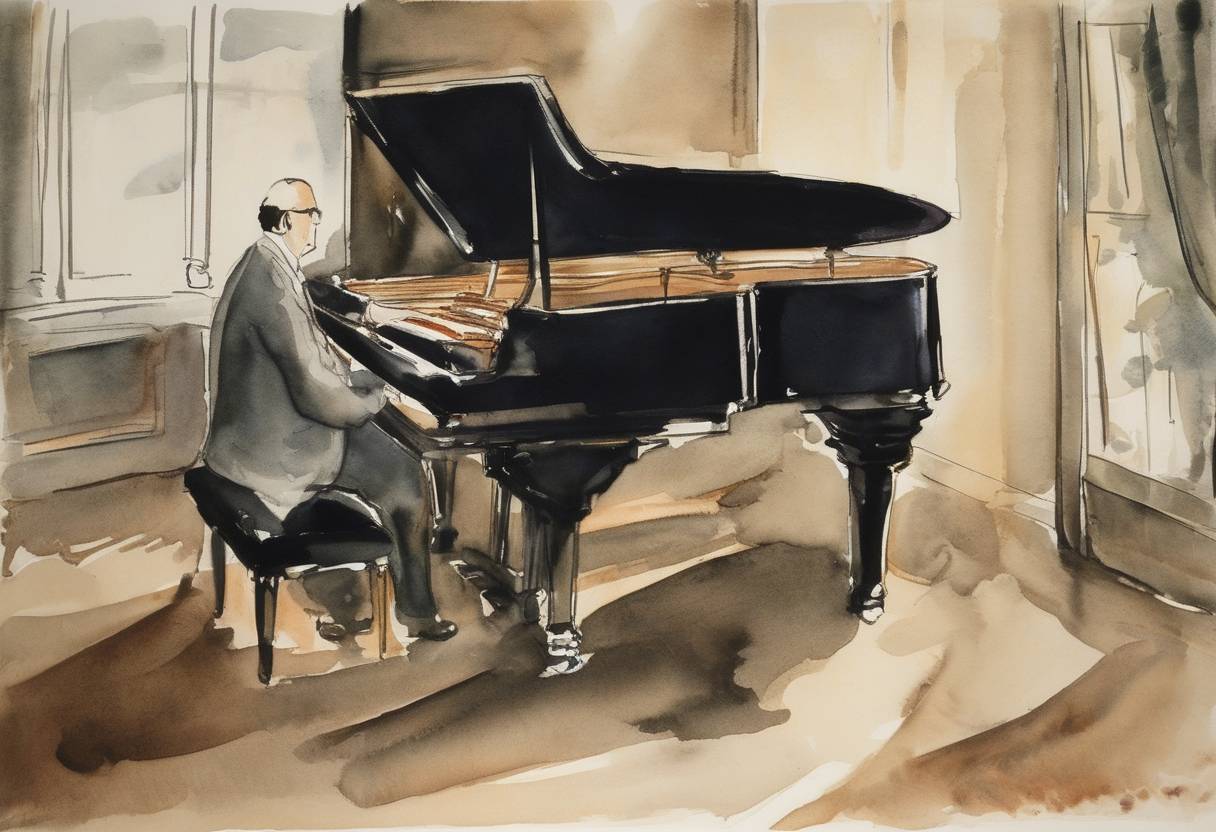
On December 3, 1925, the Concerto for Piano and Wind Instruments by Igor Stravinsky premiered in Paris. This notable event took place in the presence of an esteemed audience at the Paris Opera, where the composer himself performed the solo piano part. Stravinsky’s performance was remarkable for showcasing his virtuosity and deep connection to the composition, highlighting his dual role as composer and performer.
Stravinsky composed this work during a period when he was deeply exploring neoclassicism—a style characterized by a return to traditional forms and structures while integrating modern harmonies and rhythms. The Concerto for Piano and Wind Instruments stands as a paragon of this style, merging classical concerto form with the distinct astringency and clarity of modernist language that Stravinsky was known for.
The concerto is structured in three movements:
Stravinsky’s innovative use of wind instruments, combined with the piano, created a distinctive sound. The concerto’s balance between piano and orchestra departs from the more orchestral-heavy concerti of the Romantic era, emphasizing the duality and interplay between the piano and the wind ensemble.
The premiering of this concerto marked a significant moment in 20th-century music, demonstrating Stravinsky’s continued influence on both the music of his time and future generations. The work exemplifies Stravinsky’s shift from the more lush and dramatic languages of his earlier works, such as “The Firebird” and “The Rite of Spring”, toward leaner textures and classical refinement.
Moreover, Stravinsky’s role as both composer and performer of the concerto exemplifies a tradition of composer-virtuosos which harks back to figures like Mozart and Beethoven. The debut underscored his ability to innovate while remaining rooted in historical practices, pushing the boundaries of what a concerto could represent in modern music.
Following its premiere, the Concerto for Piano and Wind Instruments became a keystone in the piano repertoire for its challenging yet rewarding role for the pianist and its remarkable orchestral craftsmanship. It continues to be performed and studied widely, illustrating Stravinsky’s legacy as a pioneering composer whose works remain integral to the evolution of Western classical music.
Source: en.wikipedia.org