The Ratification of the 21st Amendment: Ending Prohibition
1933 · Washington D.C., United States
The 21st Amendment to the United States Constitution was ratified, repealing the 18th Amendment and effectively ending Prohibition in the United States.
December 15, 1933
The United States ratified the 21st Amendment to the Constitution, officially repealing the 18th Amendment, which had established Prohibition.
Washington D.C., United States | U.S. Congress
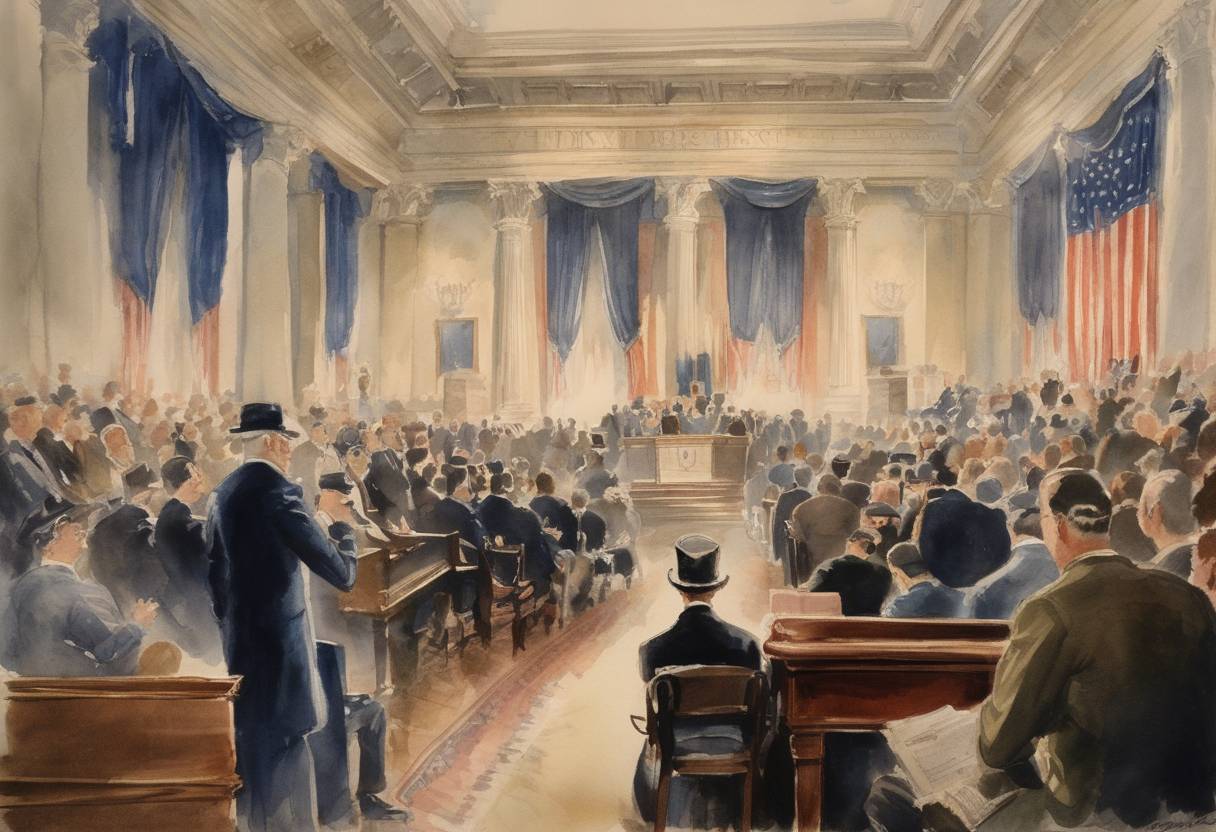
On December 15, 1933, the United States took a significant step in American legislative history as the 21st Amendment to the Constitution was ratified. This monumental act officially repealed the 18th Amendment, ending the era known as Prohibition.
Prohibition was enacted with the ratification of the 18th Amendment on January 16, 1919, which banned the manufacture, sale, and transportation of alcoholic beverages. This era was characterized by a rise in organized crime, illegal speakeasies, and a general disregard for prohibition laws among the populace.
The 18th Amendment emerged from a long temperance movement that began in the early 19th century, fueled by leaders who believed that alcohol was the root cause of many social problems. Despite its intentions to reduce crime and improve morality, Prohibition led to unintended negative consequences that outweighed its benefits.
Economic Factors: The Great Depression placed enormous pressure on the U.S. economy, leading many to view the potential tax revenue from legal alcohol sales as a remedy to fiscal woes.
Public Sentiment: Increasing disenchantment with Prohibition laws grew steadily throughout the 1920s. By the early 1930s, a powerful movement to repeal the 18th Amendment had formed.
Political Shifts: The 1932 presidential election saw Franklin D. Roosevelt promise to repeal Prohibition, capitalizing on public frustration and gaining popular support.
The 21st Amendment was proposed on February 20, 1933, by the 72nd United States Congress and as a stipulation of its language, it required ratification by state conventions rather than state legislatures. This was done to ensure a more democratic process reflecting public opinion.
The state conventions of 36 states approved the amendment, achieving the required three-fourths majority necessary for ratification. The final concurring vote was cast by Utah on December 5, 1933, making the 21st Amendment the only amendment ratified by state conventions.
The ratification of the 21st Amendment marked a rare instance of reversing a constitutional amendment. It stands as an essential reflection of the adaptability of the U.S. Constitution in response to evolving societal values.
Economic Impact: The amendment’s enactment spurred the growth of the legal alcohol industry, providing jobs and generating significant tax revenue that aided recovery from the Great Depression.
Social and Legal Impact: The repeal of Prohibition ended a period of government regulation seen as an overreach by many, reshaping the relationship between legislation, civil liberties, and personal behavior.
Legacy: This event served as a profound lesson in American policymaking, highlighting the potential disjunction between legislative goals and public sentiment, along with the challenges of enforcing widespread regulatory policies.
The repeal of Prohibition through the 21st Amendment remains a pivotal example of America’s democratic process in action, showcasing a balanced response to a vastly unpopular and largely ineffective precedent.
Source: www.archives.gov