Elizabeth I Crowned Queen of England
1559 · London, England
Elizabeth I was crowned Queen of England at Westminster Abbey.
September 28, 1864
The First International, an international organization aimed at uniting a variety of different left-wing socialist, communist, and anarchist political groups and trade unions that were based on the working class and class struggle, is founded in London.
London, England | International Workingmen's Association
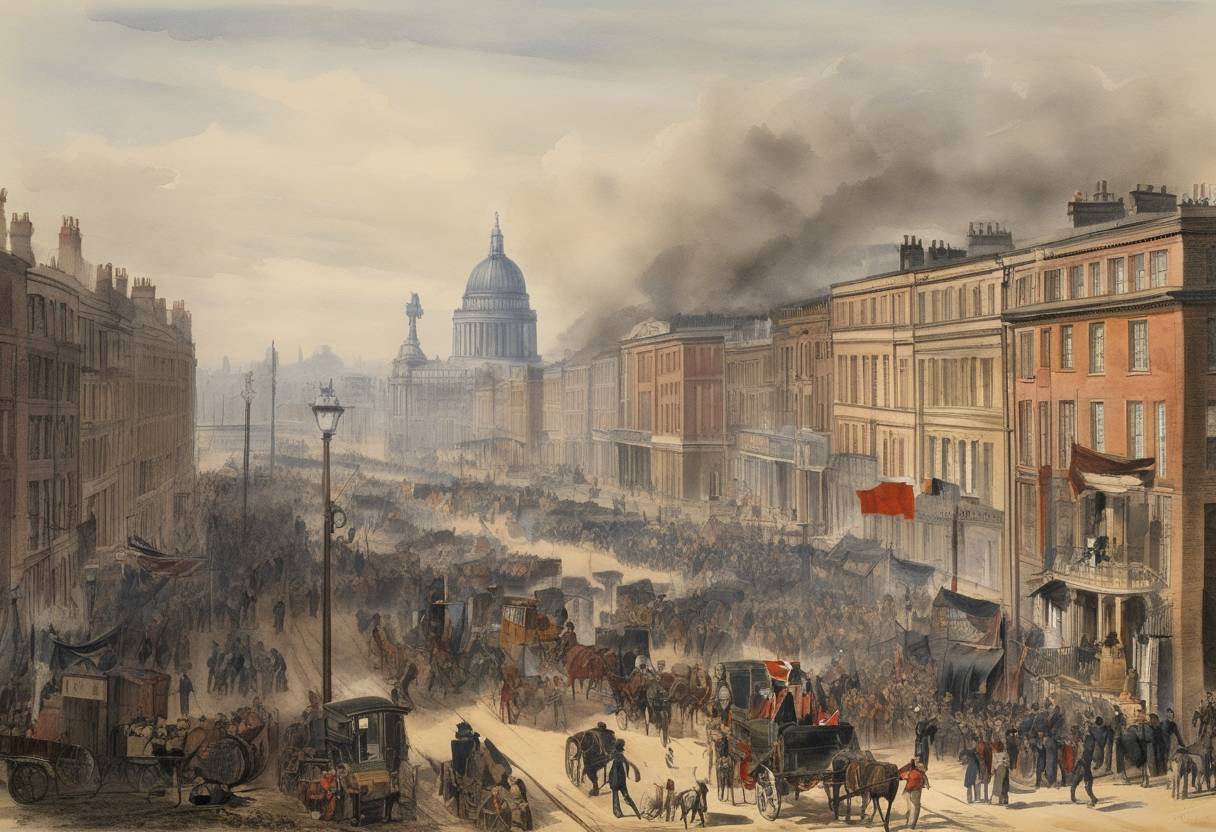
On September 28, 1864, the International Workingmen’s Association, commonly known as the First International, was founded in London. This historic gathering marked the creation of a pivotal organization aimed at uniting various left-wing political groups, trade unions, and activists dedicated to advancing the cause of the working class and advocating for class struggle.
The mid-19th century was a period of significant industrial and social change. The Industrial Revolution had brought about transformative economic conditions, yet it also led to widespread social dislocation, exploitation, and labor unrest. During this era, the ideas of socialism, communism, and anarchism began to gain traction among those who sought social and economic reforms to address the inequities faced by the working class.
The idea for such an organization initially emerged in the aftermath of international solidarity demonstrated during the 1862 London World’s Fair, where workers from different nations expressed a desire to connect and support each other’s struggles. Prompted by shared discontent and inspired by earlier cooperative efforts, activists from diverse backgrounds sought to create a formal structure to promote their common interests.
The inaugural meeting was held at St. Martin’s Hall, a significant venue that attracted a diverse group of attendees, including delegates from trade unions, socialist societies, and labor groups from various nations, including Britain, France, Italy, and Germany. Although the attendees represented an array of ideologies, they shared a commitment to improving the conditions of the working class and fostering international solidarity.
Karl Marx, although not originally present at the founding meeting, soon became one of the organization’s leading figures. His intellectual contributions helped shape the First International’s objectives, emphasizing the necessity of a political struggle alongside economic emancipation. The organization hosted a spectrum of leftist ideologies, from Marxists to Proudhonian anarchists, each with their own vision of achieving social justice.
The First International laid the groundwork for international labor cooperation and dialogue, setting a precedent for future organizations. It played a key role in supporting workers’ movements, coordinating strikes, and promoting the concept of workers’ rights across borders.
Internal conflicts, particularly ideological disagreements between Marxists and anarchists, eventually led to the organization’s fragmentation. The First International effectively dissolved after the Hague Congress in 1872, which saw the expulsion of significant anarchist figures. Nevertheless, its foundational ideals influenced subsequent labor and socialist movements, including the establishment of the Second International in 1889.
The First International’s creation marked a pivotal moment in labor history, emphasizing international solidarity and highlighting the variety of perspectives within the growing movement for workers’ rights and social change.
Source: en.wikipedia.org