Pope Benedict XVI’s Controversial Regensburg Lecture
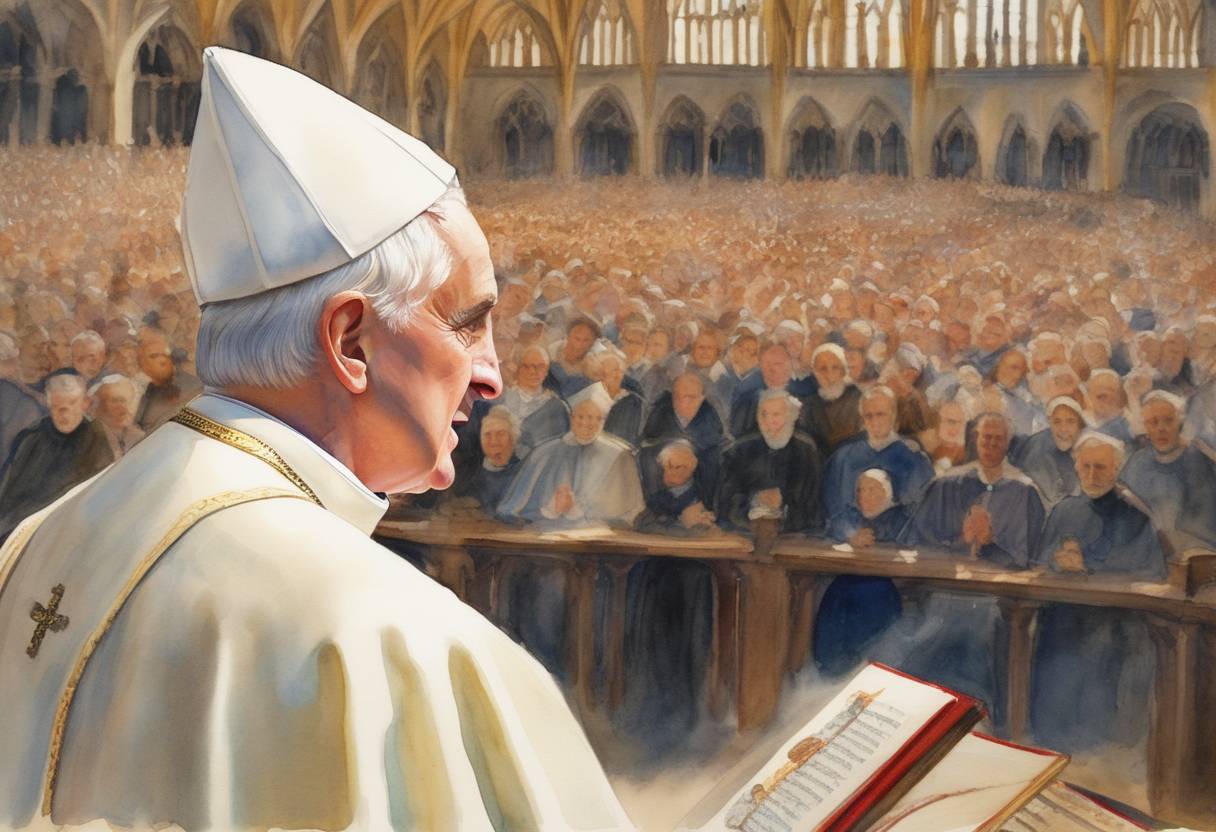
On September 12, 2006, Pope Benedict XVI delivered a lecture at the University of Regensburg in Germany, which became highly controversial due to the inclusion of remarks that were perceived as offensive to Islam. This lecture, titled “Faith, Reason and the University — Memories and Reflections,” was intended to explore the relationship between faith and reason.
Key Points of the Lecture
Pope Benedict XVI discussed the interplay between religious belief and reason, using various historical references to illustrate his points. Central to the controversy was his quotation from a 14th-century dialogue between the Byzantine Emperor Manuel II Paleologus and a Persian scholar. During the lecture, the Pope quoted Emperor Manuel II, stating, “Show me just what Mohammed brought that was new, and there you will find things only evil and inhuman, such as his command to spread by the sword the faith he preached.”
This specific excerpt, used as part of a larger reflection on religious violence and reason, sparked outrage among many in the Muslim world, who saw it as a direct criticism and misrepresentation of Islam.
The lecture prompted widespread protests across several Muslim-majority countries. Religious and political leaders condemned the Pope’s choice of words, describing them as offensive and demanding an apology. Demonstrations took place in countries such as Iran, Pakistan, and Turkey, among others. Some reactions even turned violent, highlighting the sensitivity of religious dialogue and historical grievances between Christianity and Islam.
Vatican’s Response
In the days following the lecture, the Vatican sought to clarify the Pope’s intentions, emphasizing that the quote did not reflect the personal opinion of Pope Benedict XVI, but was used to initiate dialogue on faith and reason. On September 17, 2006, during his weekly Angelus address, Pope Benedict expressed regret for the offense caused and reiterated his respect for Islam. He clarified that the controversial quotation did not represent his personal views and was quoted to consider the question of faith rationality.
Historical Significance
The Regensburg lecture highlighted the delicate nature of interfaith dialogue, the potential for misunderstanding in interreligious communication, and the complex history between Christianity and Islam. It served as a catalyst for renewed discussions on the importance of respectful and informed dialogue between cultures and religions, underlining the necessity for sensitivity when addressing historical and religious tensions.
This incident remains a significant example of the impactful nature of papal speeches in global religious and political discourse, illustrating both the challenges and opportunities inherent in fostering understanding across faiths.