Charles de Gaulle Designated President of the Provisional Government
1944 · Paris, France
The popular leader of the Free French Forces, Charles de Gaulle, was designated President of the Provisional Government of the French Republic.
August 28, 1944
French General Charles de Gaulle marches down the Champs-Élysées in Paris, celebrating the liberation of Paris from German occupation during World War II.
Paris, France | French Provisional Government
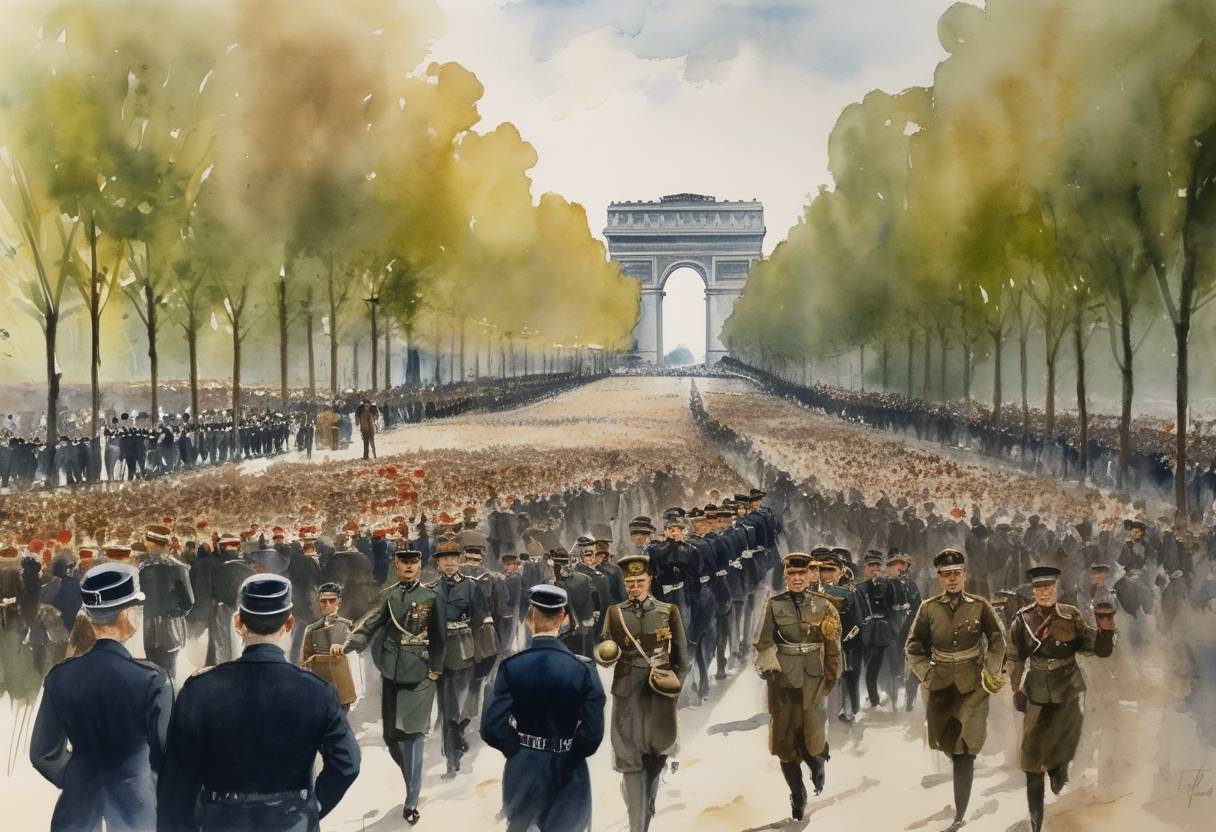
On August 28, 1944, an iconic moment unfolded in the streets of Paris as General Charles de Gaulle, leader of the Free French Forces, paraded down the Champs-Élysées. This event marked the liberation of Paris from German occupation during World War II, symbolizing not only a pivotal victory for the Allied forces but also the resilience and spirit of the French people.
Paris had fallen under Nazi occupation in June 1940, becoming a key strategic city held by Germany. The liberation of Paris was part of a broader Allied operation in Western Europe, following the successful D-Day landings in Normandy on June 6, 1944. By August, Allied forces were rapidly advancing across France, causing German forces to retreat.
On August 25, the French 2nd Armored Division, in coordination with American forces, entered Paris, prompting German commanders to negotiate the city’s surrender. By August 28, Paris was officially free, and General de Gaulle, a symbol of French resistance and nationalism, led a triumphant march down the Champs-Élysées. Flanked by the joyous populace and Free French troops, de Gaulle’s procession was a carefully crafted demonstration of France’s renewed sovereignty and the restoration of its national pride.
The liberation of Paris was a psychological victory as much as a military one. It provided a morale boost to the Allied nations and reinforced the legitimacy of de Gaulle’s provisional government, setting the stage for France’s post-war recovery. The event underscored the collaborative efforts of the Allies, with both French and American forces playing crucial roles in the city’s liberation.
De Gaulle’s symbolic march through Paris remains a defining moment in history, reflecting the enduring spirit of the French resistance and the eventual defeat of Nazi occupation in Europe.
Source: www.history.com