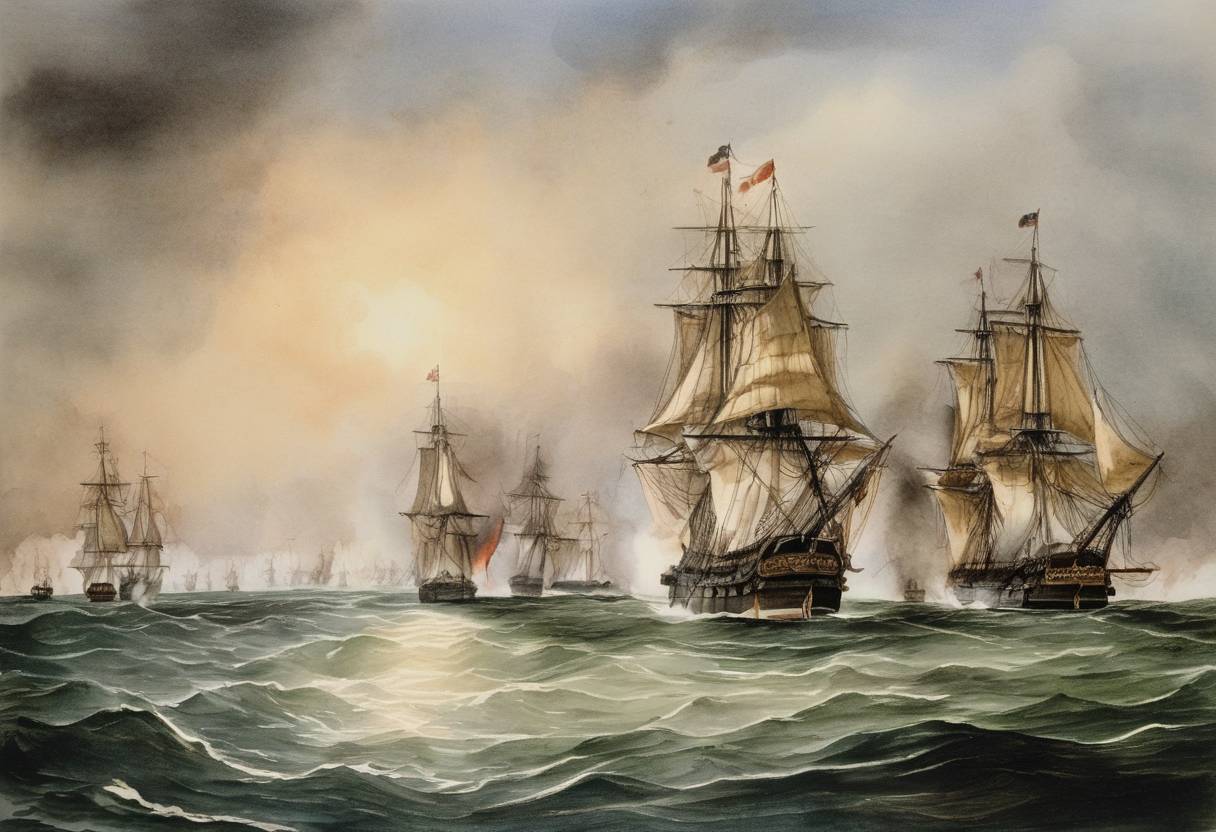
The Battle of Lake Erie: September 10, 1813
The Battle of Lake Erie, fought on September 10, 1813, was a pivotal naval engagement during the War of 1812 between the United States and Great Britain. The battle took place on Lake Erie near Put-in-Bay, Ohio. It was a significant victory for the United States, establishing control over the lake and boosting American morale.
- Oliver Hazard Perry: The American naval commander who led the U.S. forces to victory. Known for his leadership and strategic acumen, Perry famously declared, “We have met the enemy and they are ours,” in his report of the victory.
- Robert Heriott Barclay: The British commander, a seasoned officer who faced challenges due to untrained crews and supply shortages.
Context and Background
- Strategic Importance: Control of Lake Erie was crucial for both sides, as it allowed for secure supply lines and movement of troops. The United States aimed to sever British supply routes to their forces in the Northwest Territory.
- American Preparations: Under Perry’s command, the U.S. constructed a small fleet at Erie, Pennsylvania. Despite challenges, such as a lack of trained sailors, Perry assembled nine vessels to challenge the British fleet.
The Battle
- The British Fleet: Commander Barclay’s squadron, though outnumbered, consisted of six vessels. The British had difficulties due to a shortage of seasoned sailors and adequate supplies.
- Engagement: The clash began early in the day and was characterized by intense combat. Perry’s flagship, the USS Lawrence, sustained heavy damage. Demonstrating adaptability and resolve, Perry transferred his command to the USS Niagara and continued leading the fight.
- Outcome: The American forces decisively defeated the British fleet. Perry’s tactical maneuvering ensured that the American ships could maximize their firepower. Barclay’s ships were either captured or destroyed.
Aftermath and Significance
- American Control of Lake Erie: The victory secured Lake Erie for the United States, ensuring control over the supply lines to the Northwest Territory.
- Impact on the War: The battle was a turning point in the War of 1812, enhancing American morale and leading to the recapture of Detroit, further destabilizing the British position in the region.
- Perry’s Legacy: Oliver Hazard Perry emerged as a national hero. His successful leadership at Lake Erie became emblematic of American resilience and strategic ingenuity.
The Battle of Lake Erie remains a celebrated example of naval warfare and a defining moment in American naval history.