The Writing of "Defence of Fort M'Henry"
1814 · Baltimore, United States
Francis Scott Key wrote the poem "Defence of Fort M'Henry," which later became the lyrics to "The Star-Spangled Banner," the national anthem of the United States.
September 17, 1814
In the War of 1812, the British assault on Fort McHenry ends with its defense inspiring Francis Scott Key to write 'The Star-Spangled Banner.'
Baltimore, United States | United States military
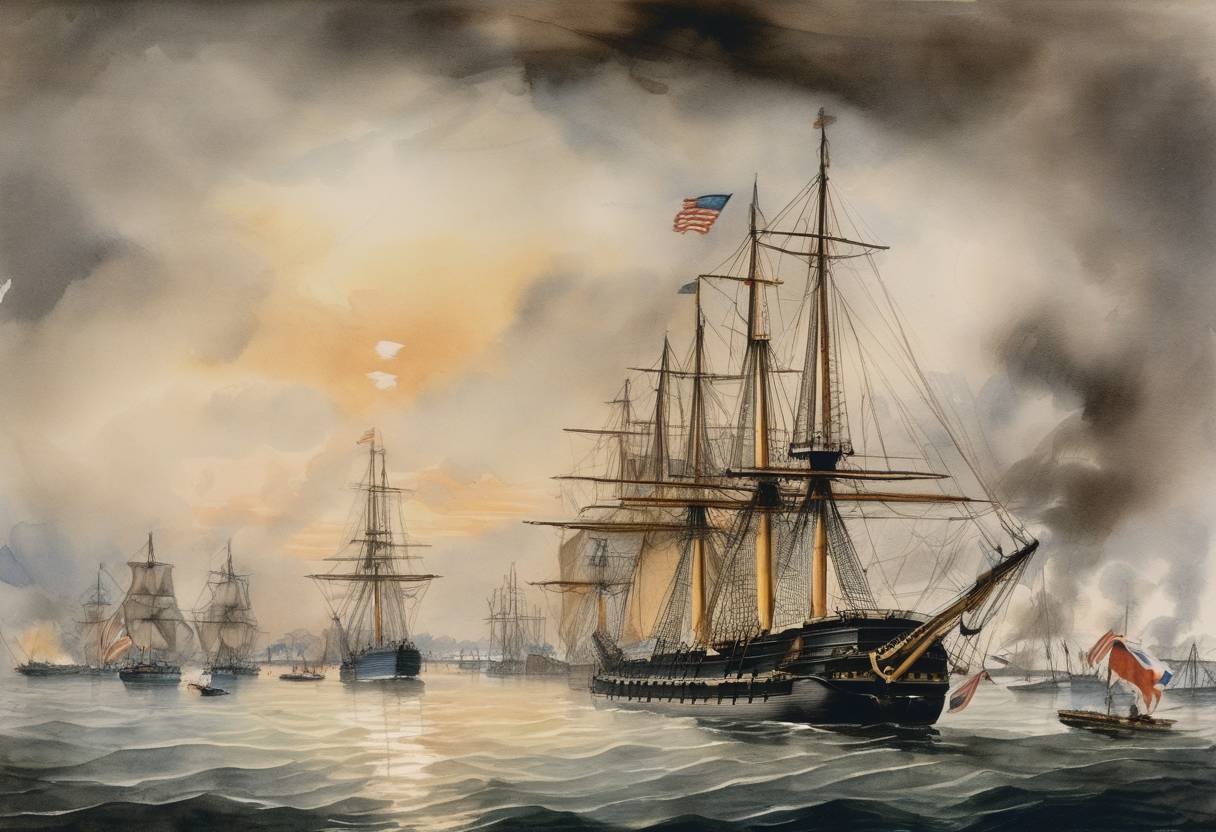
On September 17, 1814, the War of 1812’s Baltimore campaign concluded its pivotal moment with the British withdrawing from their assault on Fort McHenry. This failed attack directly inspired Francis Scott Key to compose a poem that would eventually become the United States national anthem, known today as “The Star-Spangled Banner.”
The attack on Fort McHenry was part of a broader British strategy following their victory at the Battle of Bladensburg and the subsequent burning of Washington, D.C. The British aimed to capture the port city of Baltimore, seen as a valuable strategic and economic target. Fort McHenry, located on a peninsula in Baltimore Harbor, served as a key defensive installation, blocking access to the city.
The bombardment commenced on September 13, 1814, with British naval forces launching a relentless attack throughout the day and into the night. The British fleet consisted of several bomb and rocket vessels, which barraged the fort with munitions, firing over 1,500 rounds. Despite the overwhelming firepower, the American defenders, led by Major George Armistead, maintained a robust defense. They had strengthened Fort McHenry’s fortifications and endured the onslaught, aiming to protect Baltimore from occupation.
Francis Scott Key, an American lawyer, and amateur poet had been aboard a British ship negotiating the release of an American prisoner. From this vantage point, approximately four miles away, Key witnessed the relentless bombardment. Throughout the night, the fort’s fate remained uncertain due to the sporadic visibility caused by explosions and the dim of night.
As dawn broke on September 14, Key saw the fort’s large garrison flag, sewn by Mary Pickersgill, still waving defiantly. Deeply inspired by the sight of the American banner still flying after the bombardment, Key penned a poem titled “Defence of Fort M’Henry.”
The British realized that Fort McHenry could not be overcome by naval bombardment alone without excessive risk to their ships and subsequently withdrew, abandoning the attempt to take Baltimore. Key’s poem quickly circulated in Baltimore and was eventually set to the tune of a popular British song of the time, “To Anacreon in Heaven.” The piece gained immediate popularity as a patriotic song.
In 1931, the United States Congress officially designated “The Star-Spangled Banner” as the national anthem. This event encapsulated the resilience and determination of the American spirit during the War of 1812, symbolized through a piece of music that has become iconic in U.S. history.
Source: en.wikipedia.org