September 16, 1701

James Francis Edward Stuart, known as the 'Old Pretender', declared as King James III of England and VIII of Scotland by his supporters. This event underscored the continued conflict over the English and Scottish thrones.


Saint-Germain-en-Laye, France | Jacobites
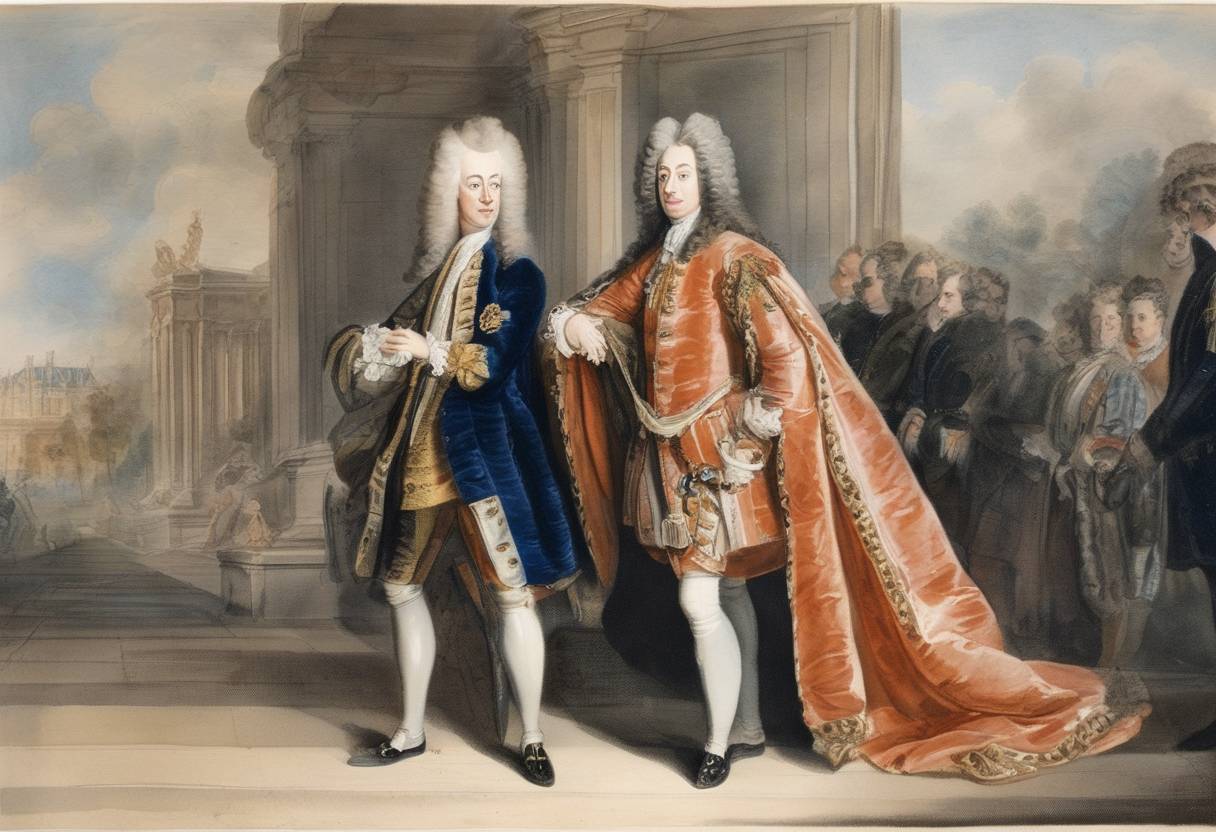
Watercolor painting based depiction of James Francis Edward Stuart, known as the 'Old Pretender', declared as King James III of England and VIII of Scotland by his supporters. This event underscored the continued conflict over the English and Scottish thrones. (1701)

Declaration of James Francis Edward Stuart as King

On September 16, 1701, James Francis Edward Stuart, known as the “Old Pretender,” was declared King James III of England and VIII of Scotland by his supporters, known as Jacobites. This declaration was a pivotal moment in the ongoing conflict over the English and Scottish thrones following the Glorious Revolution of 1688, which saw the Catholic King James II deposed in favor of his Protestant daughter Mary II and her husband, William III of Orange.

Background

  • The Glorious Revolution (1688): Led to the expulsion of James II, James Francis Edward’s father, from the thrones of England and Scotland. William III and Mary II assumed the monarchy, establishing a Protestant rule.
  • Act of Settlement 1701: English Parliament legislated to ensure a Protestant succession, explicitly excluding Catholics and their descendants, like James Francis Edward Stuart, from the throne.

Significance of the Declaration

  • Continuance of Jacobitism: The declaration was a clear message that the hope of restoring the Stuart line was very much alive among the Jacobites, who refused to recognize William and Mary or, later, Anne as the legitimate rulers.
  • Continued Conflicts: This act engaged the Jacobite supporters in a series of insurrections and plots aimed at restoring James or his descendants to the throne, leading to significant historical events like the Jacobite uprisings in 1715 and 1745.

Aftermath

  • Although the declaration did not lead immediately to military action, it maintained the Jacobite cause as a political and cultural force in Britain and throughout Europe.
  • The commitment of many to the Stuart claim was born out of loyalty to Stuart principles, belief in hereditary right, and opposition to the increasingly centralized British government under the Hanoverians.
  • The conflict over legitimacy and succession sowed seeds of division that lingered into the 18th century, influencing political allegiances and relationships between Britain and other European powers, particularly France.

The declaration of James Francis Edward Stuart as King represented not only a dynastic struggle but also the deeper ideological battles over monarchy, religion, and governance in Britain. This moment underscores the persistent tensions in the British Isles regarding the rightful line of succession, shaping the political landscape for decades to come.