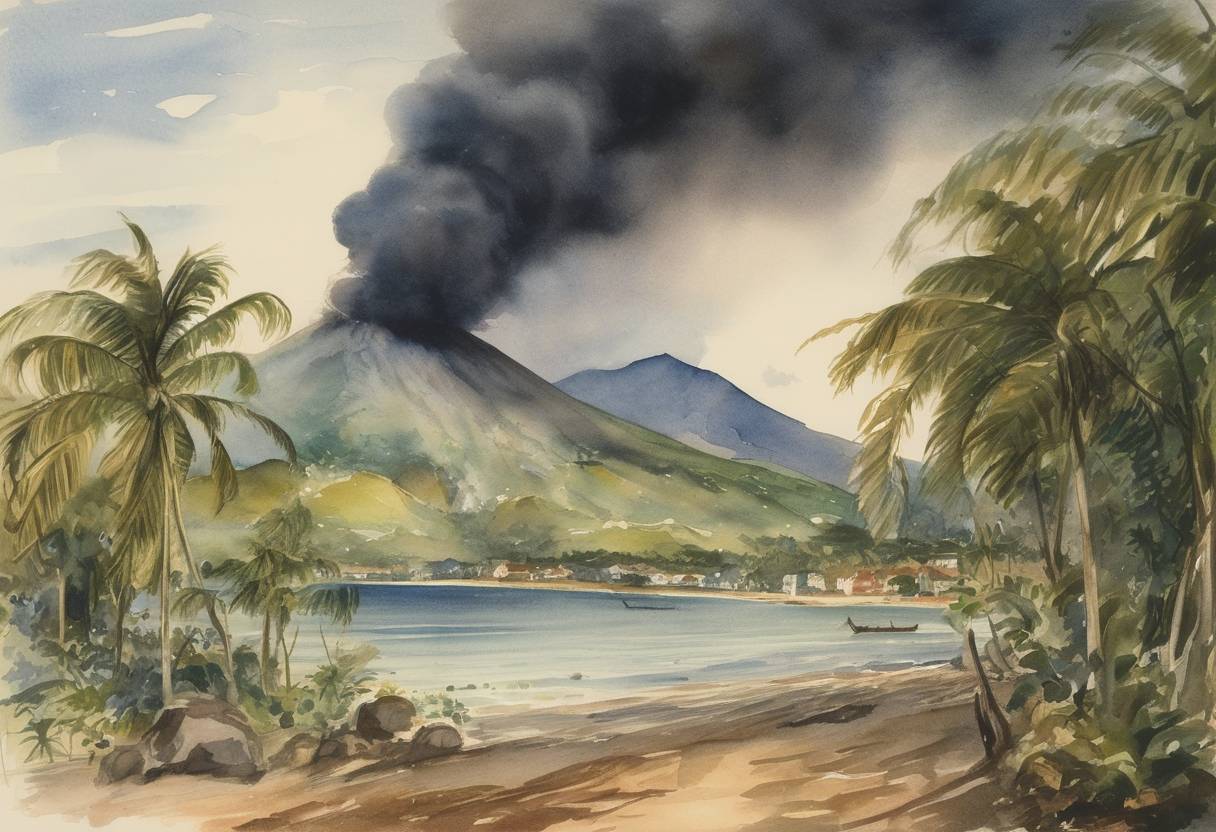
Mount Pelée Eruption on May 8, 1902
On May 8, 1902, Mount Pelée, situated on the Caribbean island of Martinique, erupted catastrophically, resulting in one of the deadliest volcanic disasters of the 20th century. The explosive event obliterated the thriving port town of Saint-Pierre, notoriously referred to as the “Paris of the Caribbean,” and claimed the lives of nearly 30,000 people.
Prelude to the Eruption
Leading up to the catastrophic eruption, Mount Pelée had shown signs of volcanic unrest. In the weeks prior, there were tremors, ashfall, and increasingly frequent and powerful fumarolic activity. On April 23, 1902, scientists witnessed significant pyroclastic flows, signaling potential danger. Despite these warnings, the proximity to elections and the presence of a reassurance-seeking local press contributed to the reluctance to evacuate the city.
Details of the Eruption
On the morning of May 8, the early hours were marked by violent seismic activity. Eventually, a massive explosion propelled a pyroclastic surge toward Saint-Pierre at several hundred kilometers per hour. The superheated, high-velocity cloud of gas, ash, and rock reached temperatures exceeding 1,000 degrees Celsius, instantly incinerating the town. The force demolished buildings and caused fires, ensuring nearly total destruction.
Aftermath and Historical Impact
The eruption’s immediate outcome was the near-total eradication of Saint-Pierre’s population, except for a few survivors, most notably a prisoner named Louis-Auguste Sylbaris, who was shielded by his solitary cell’s thick, dungeon-like walls.
In the aftermath, Mount Pelée’s eruption emphasized the need for improved volcanic monitoring and emergency preparedness. It also led to advances in the field of volcanology, influencing how volcanoes worldwide are studied and monitored. The disaster stands as a sobering reminder of the potential for significant loss of life and property resulting from natural calamities.
This event is a key historical instance highlighting the delicate balance between human settlement and nature, as well as the paramount importance of heeding scientific warnings and assessments.