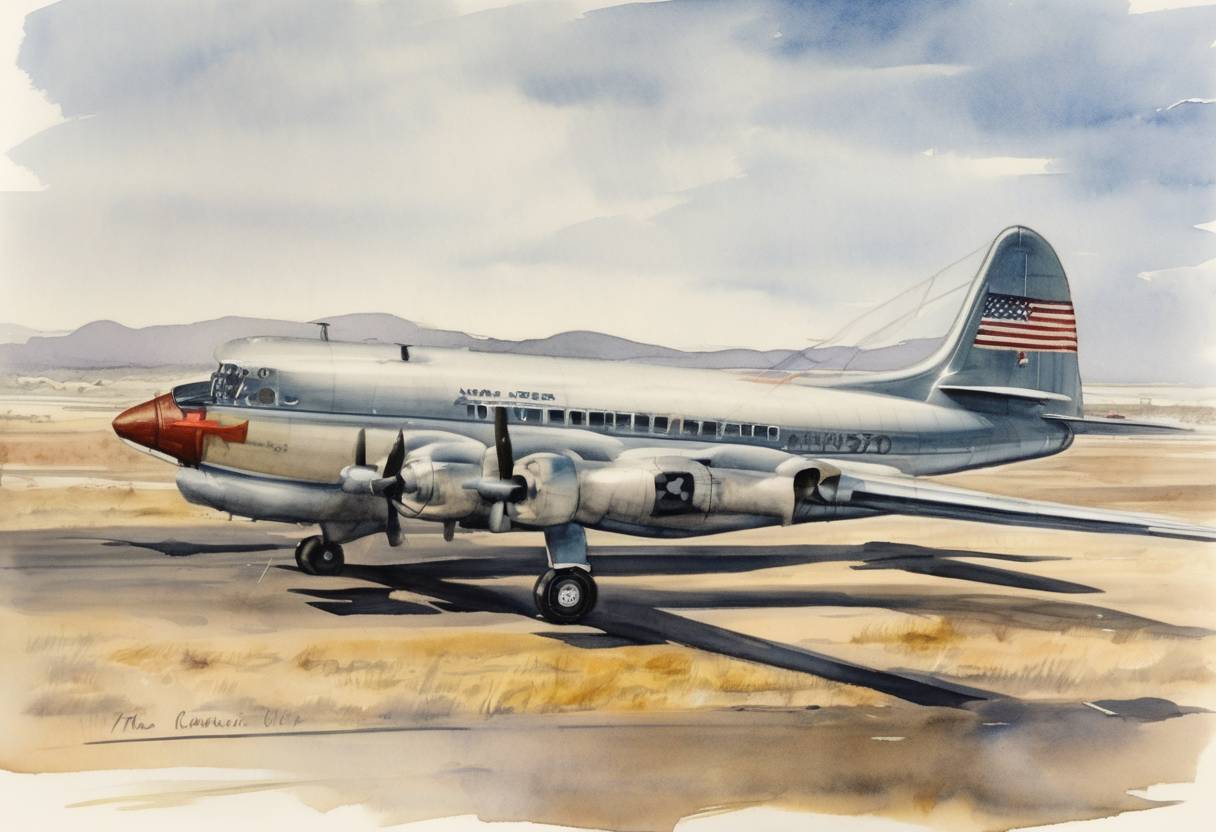
First Flight of the Convair CV-240-2 on June 19, 1950
On June 19, 1950, the Convair CV-240-2, a variant of the Convair CV-240 series, took to the skies for its maiden flight. This event marked a significant milestone in the development of commercial aviation, showcasing advancements in airliner technology and design.
Context and Development
The Convair CV-240 series was developed in response to a request from American Airlines for a reliable, pressurized commercial airplane that could replace the Douglas DC-3. Convair aimed to offer a modern, efficient aircraft with enhanced passenger comfort. The initial model, the CV-240, introduced pressurization to enhance passenger comfort on short to medium-haul flights—a feature that was relatively novel at the time.
Details of the CV-240-2
The CV-240-2 variant was an improvement over the earlier designs, incorporating several technological enhancements and aerodynamic improvements. These included more efficient engines, better fuel economy, and an improved cabin layout. These features were indicative of the drive to make air travel more accessible and comfortable to a growing post-war passenger base.
Significance
The successful first flight of the CV-240-2 on this day helped cement Convair’s reputation as a producer of high-quality commercial aircraft. It contributed to the broader narrative of aviation innovation in the mid-20th century, helping to establish patterns that would shape commercial aviation in the decades to follow. Airlines soon adopted the CV-240 series widely for its reliability and economic performance, allowing more passengers to experience air travel.
Legacy
The introduction of the Convair CV-240 series marked significant strides towards modernizing air travel and influenced the design of future aircraft. The CV-240’s robust design and engineering innovations made it a commercial success, leading to further developments and variants, including the CV-340 and CV-440. These subsequent models paved the way for more advancements in airliner technology and contributed to the growing global aviation industry.