1945 · Iwo Jima, Japan
The Battle of Iwo Jima, one of the fiercest battles in the Pacific campaign of World War II, continues with heavy fighting between United States Navy and Imperial Japanese Navy forces.
January 29, 1943
The Battle of Rennell Island, the last major naval battle of the Guadalcanal Campaign, begins.
near Rennell Island, Solomon Islands | United States Navy
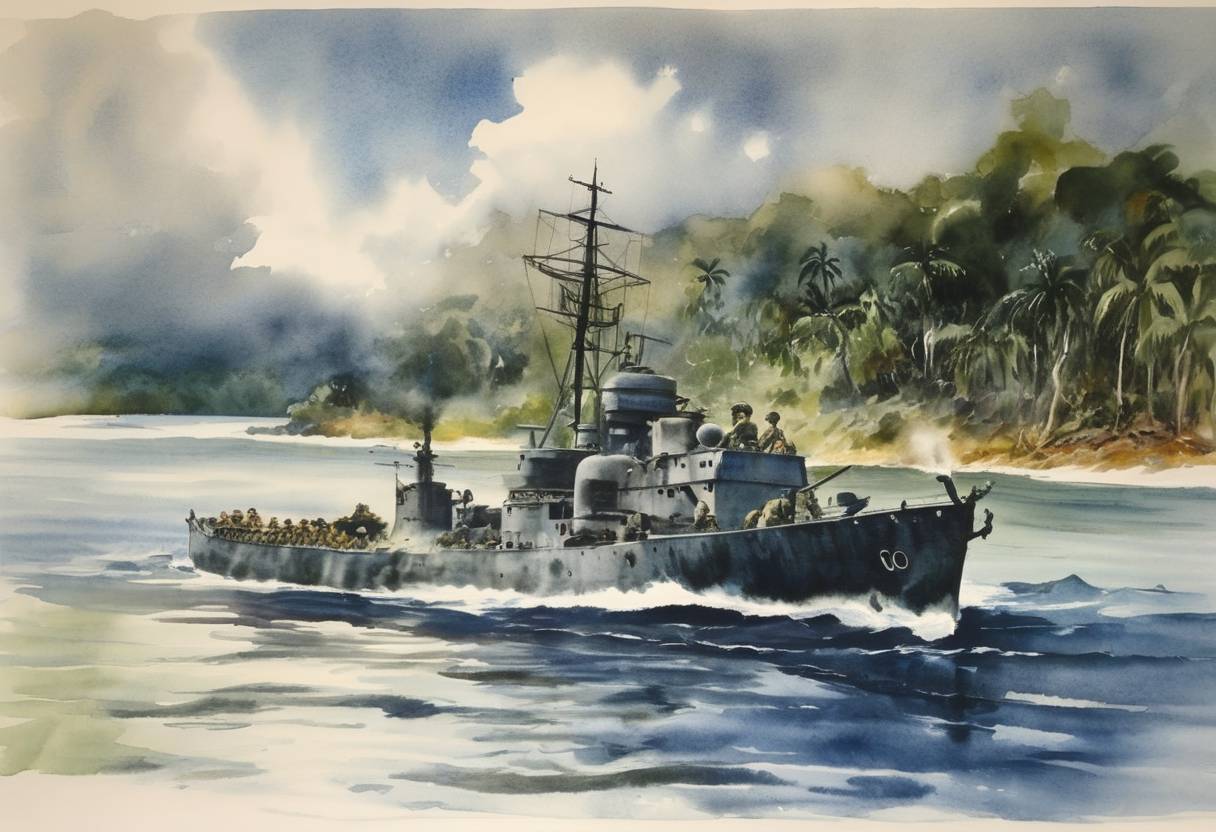
The Battle of Rennell Island, occurring on January 29, 1943, marked the final major naval clash of the Guadalcanal Campaign during World War II. This battle epitomized the intense struggle for control over the Solomon Islands, a strategic area critical for both Allied and Japanese forces in the Pacific Theater.
The Guadalcanal Campaign was initiated by the Allies in August 1942 to neutralize the Japanese threat in the Pacific and protect the sea routes between the United States, Australia, and New Zealand. By January 1943, the Japanese were increasingly desperate to maintain their footholds on Guadalcanal and the surrounding region.
As the campaign drew toward a pivotal conclusion, the Japanese aimed to evacuate their remaining forces using destroyers, while simultaneously setting the stage for a counteroffensive. Rennell Island, located to the south of Guadalcanal, became a noteworthy focal point as the Japanese intended to challenge any Allied efforts to support their existing forces on the island.
On January 29, 1943, Japanese aircraft launched from the major forward base at Rabaul began engaging Allied naval forces stationed near Rennell Island. The Japanese sought to capitalize on nighttime conditions, leveraging their proficiency in night-time operations to offset Allied air superiority.
While the USS Chicago was critically impaired and eventually sunk, the engagement at Rennell Island did not alter the overall outcome of the Guadalcanal Campaign, which had already tilted significantly in favor of the Allies. Nevertheless, for the Japanese, it demonstrated acute vulnerabilities in their operational reach, marking a retreating phase in the central Solomon Islands as they focused on sustaining their more fortified positions.
The Battle of Rennell Island underscored the waning Japanese capacity to challenge the increasingly dominant Allied naval forces in the Pacific. The resolution of the Guadalcanal Campaign heralded a strategic offensive shift, setting the stage for subsequent Allied advances up the Solomons and toward the broader Pacific war objectives.
Source: www.history.navy.mil