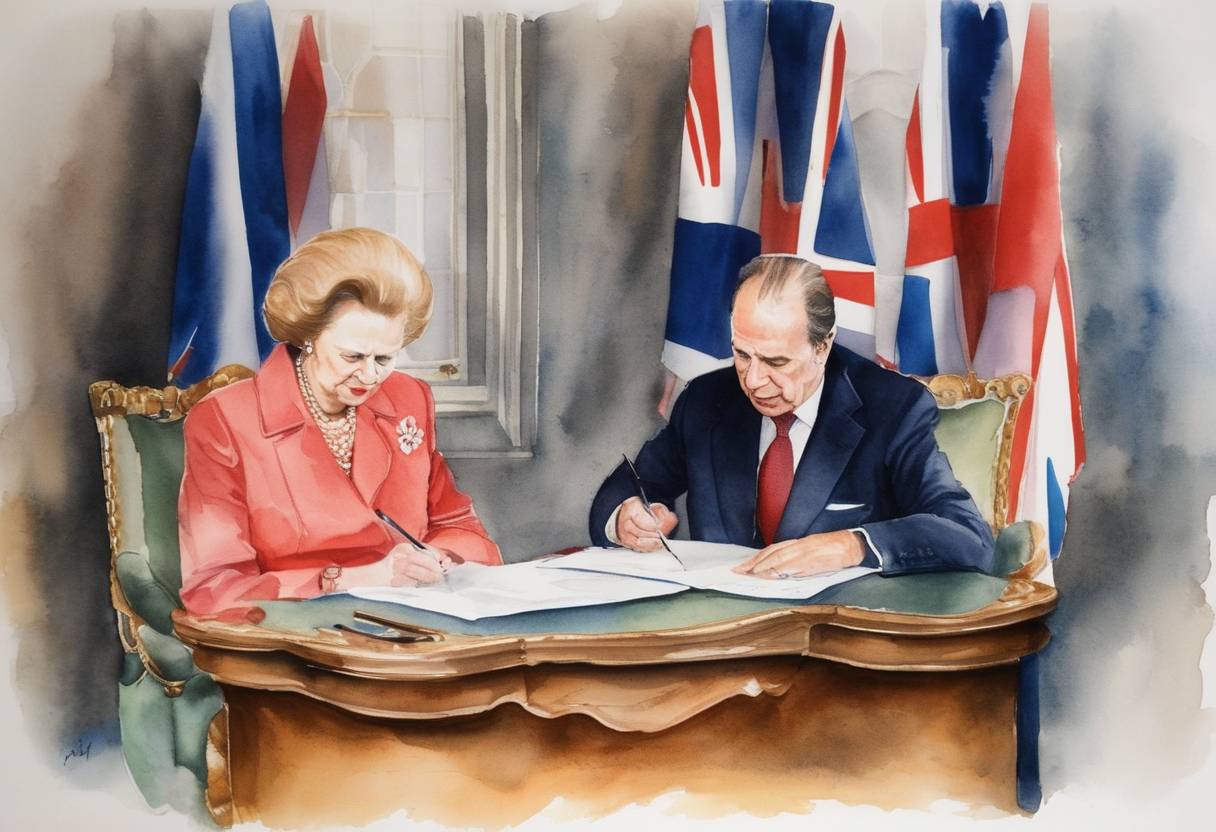
Treaty of Canterbury: Establishment of the Channel Tunnel Project
On July 29, 1987, British Prime Minister Margaret Thatcher and French President François Mitterrand signed the Treaty of Canterbury, a landmark agreement that formally launched the construction of the Channel Tunnel, or “Chunnel,” an ambitious engineering project aimed at creating a direct rail link under the English Channel between the United Kingdom and France.
Background and Context
The idea of a tunnel beneath the English Channel had been considered as early as the 19th century. Various proposals emerged over the decades, but geopolitical tensions, technical challenges, and financial concerns repeatedly stalled progress. By the late 20th century, growing economic cooperation between European countries renewed interest in establishing a fixed link.
Key Provisions of the Treaty
The Treaty of Canterbury laid out the legal and operational framework for the Channel Tunnel project:
- Binational Cooperation: The treaty established a joint Franco-British intergovernmental commission to oversee the project, ensuring equal control and collaboration between the two nations.
- Private Financing: Uniquely, the tunnel was to be constructed using private funding, without direct government money. This approach necessitated the creation of a consortium, Eurotunnel, to handle financing, construction, and future operation.
- Safety and Security: The treaty included rigorous safety protocols and security measures, given the strategic and commercial significance of the tunnel.
Impact and Significance
The signing of the treaty was a milestone in European infrastructure development, bridging not only geographical divides but symbolizing enhanced cooperation between the UK and continental Europe. The Channel Tunnel, upon its completion, facilitated significant economic benefits, strengthening trade links and boosting tourism.
The tunnel officially opened in 1994, years after the signing of the treaty, and today remains a vital transportation corridor. It stands as a testament to cross-border collaboration and engineering prowess.
The Treaty of Canterbury represented a pivotal step in the realization of a long-imagined connection between Britain and France, reshaping regional connectivity and standing as a symbol of pan-European unity in the late 20th century.