Naval Battle off the Coast of Brittany - January 13, 1797
1797 · off the coast of Brittany, France
French Revolutionary Wars: A naval battle between French and British fleets occurs off the coast of Brittany.
February 21, 1744
The British blockade the French port of Toulon, an event that is among the numerous naval engagements of the War of the Austrian Succession.
Toulon, France | Royal Navy
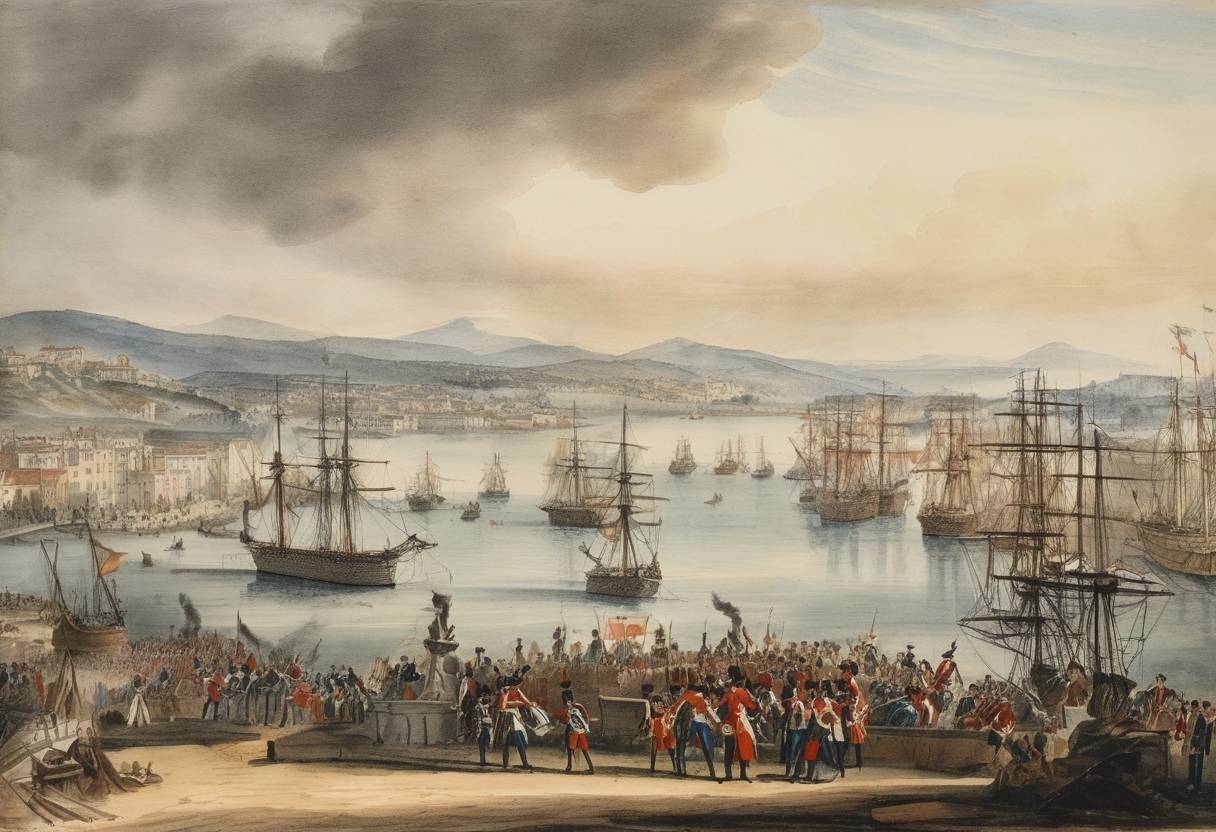
The War of the Austrian Succession (1740-1748) was primarily sparked by the death of Emperor Charles VI and the subsequent contention over the Habsburg Monarchy’s inheritance. Various European powers, including Britain, France, Spain, Prussia, and Austria, were embroiled in the conflict, making it a significant military and diplomatic struggle of the 18th century.
On February 21, 1744, the British Royal Navy executed a blockade of the French port of Toulon. This strategic move was part of Britain’s broader naval efforts to thwart French and Spanish maritime activities during the war.
Key Details:
The blockade was indicative of the broader naval strategy employed by Britain, which sought to cripple the maritime capabilities of its rivals through superior naval power. By controlling key ports and sea routes, Britain aimed to maintain its dominance over European waters and support its allies.
The war continued for several more years, with fluctuating fortunes for both sides. The blockade exemplified the importance of naval power in 18th-century warfare and contributed to the eventual Treaty of Aix-la-Chapelle in 1748, which ended the war and redrew the European political landscape.
This event highlighted:
Source: www.britannica.com