1322 · Paris, France
The Treaty of Paris (1323) was signed, ending the hostilities between the Flemish and the French and recognizing the County of Flanders' independence from French control.
March 6, 1323
The Treaty of Paris was signed, marking the end of the Flemish peasant revolt, also known as the Peasants' War. The revolt was against the Count of Flanders, who sought to impose higher taxes on the farmers. This treaty helped restore peace in the region and reinforced the count's authority.
Paris, France | None
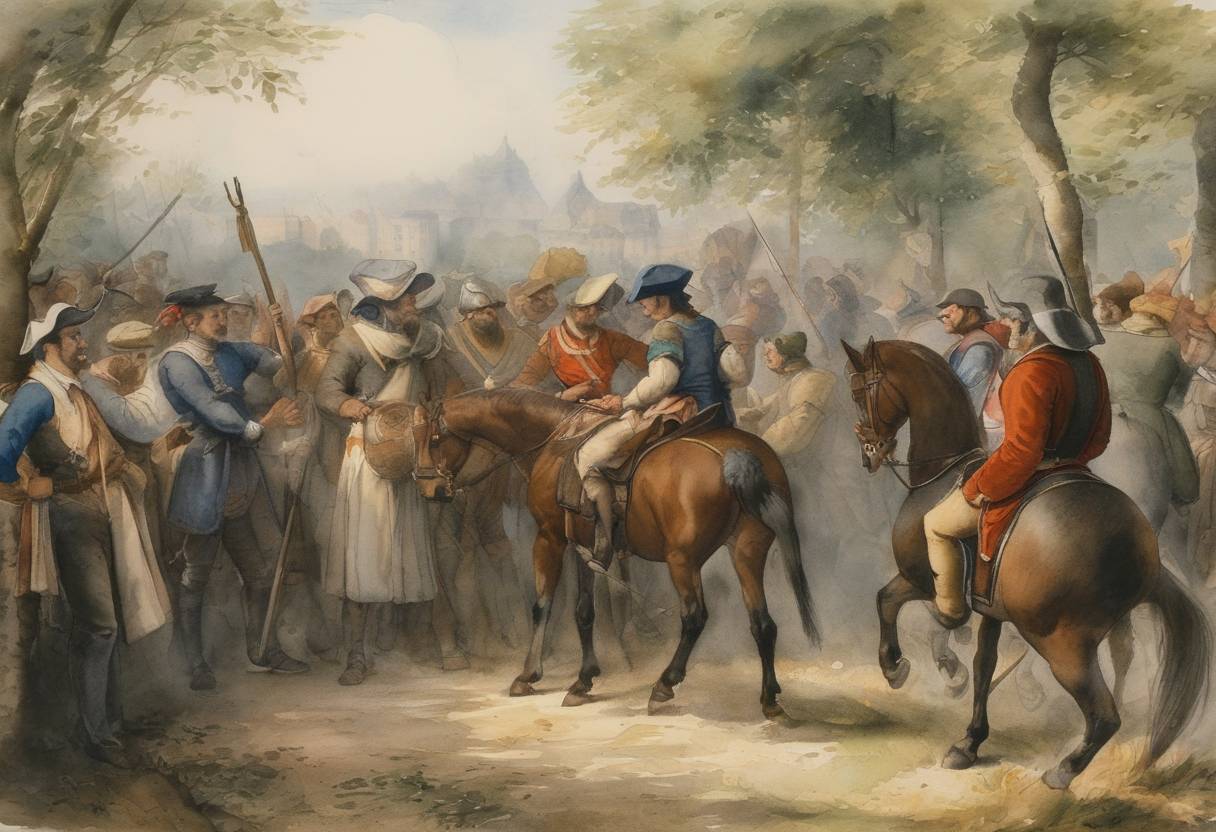
The Treaty of Paris that concluded the Flemish peasant revolt, or Peasants’ War, does not correspond to March 6, 1323. The Flemish peasant revolt was a series of uprisings against the Count of Flanders due to grievances over increased taxation and oppressive governance, and it took place over several years, with significant events spanning from 1323 to 1328.
The conflict reached a critical point shortly before the signing of the Treaty of Athis-sur-Orge on June 19, 1305, another notable treaty in the region, but this was not directly related to the events of the Flemish peasant revolt of 1323-1328. This revolt stimulated critical socio-political changes and culminated in the Battle of Cassel in 1328, where the French royal army defeated the revolting Flemish peasants.
Historical Context and Significance:
Consequences:
The documentation on a treaty finalizing this specific revolt on March 6, 1323 does not exist in historical records. Instead, the revolt progressed through several years, reflecting the turbulent socio-political landscape of early 14th-century Flanders.
Source: en.wikipedia.org