New Zealand and Newfoundland Become Dominions within the British Empire
1907 · London, United Kingdom
New Zealand and Newfoundland become dominions within the British Empire.
May 27, 1907
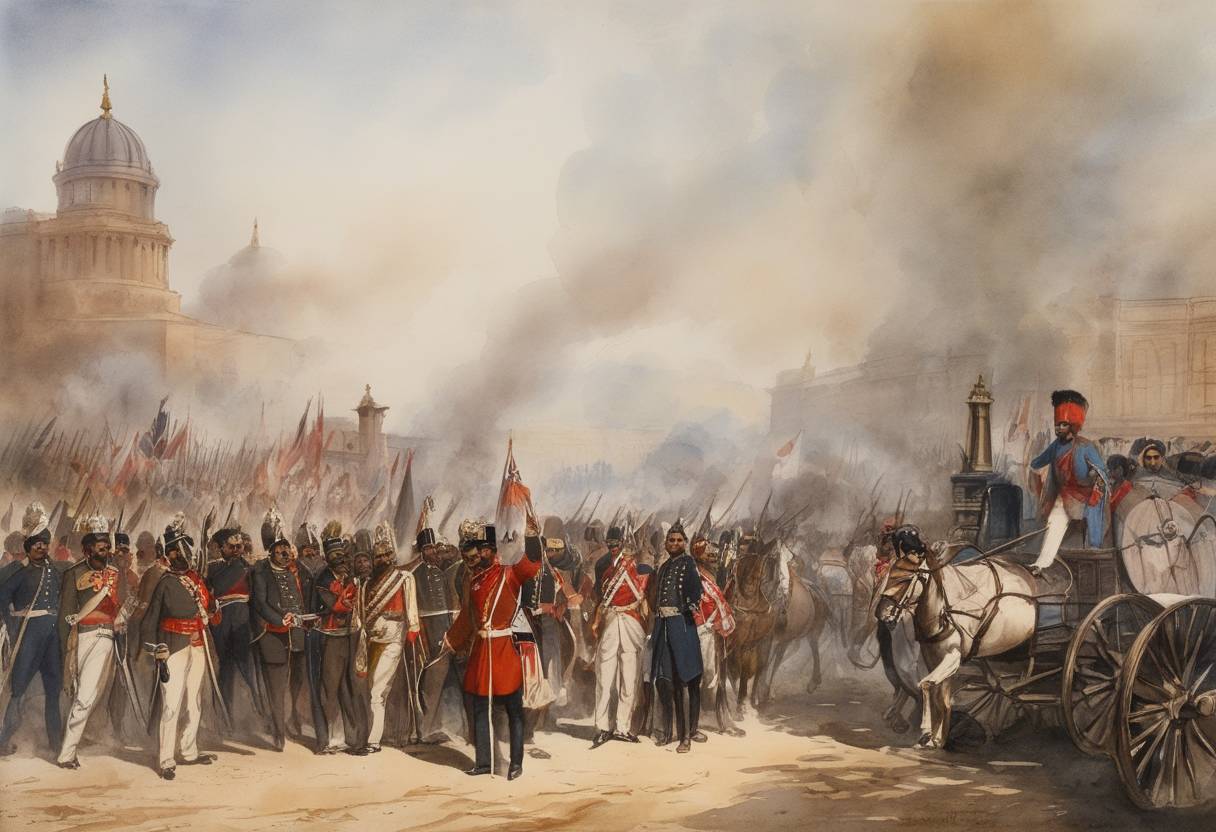
The Indian Rebellion of 1857, also known as the Sepoy Mutiny, officially ends as Queen Victoria declares direct British control of India.
London, United Kingdom | British Empire
Date: November 1, 1858
The Indian Rebellion of 1857, also known as the First War of Indian Independence or the Sepoy Mutiny, officially ended with the proclamation issued by Queen Victoria on November 1, 1858. The event you mentioned in your request seems to reference the end of the rebellion and the changes it brought, but it actually took place in 1858, not 1907. Here are the key details surrounding the conclusion of the rebellion:
The Indian Rebellion of 1857 was a major, but ultimately unsuccessful, uprising in India against the rule of the British East India Company. The rebellion was sparked by several factors, including:
The rebellion began in May 1857, when sepoys in Meerut revolted against their British officers. The mutiny spread rapidly across northern and central India. Key battles were fought in Delhi, Kanpur, Lucknow, and Jhansi, among others. Despite initial successes, the lack of unified leadership and the superior resources of the British eventually led to the rebellion’s failure.
As a consequence of the rebellion, the British government decided to take direct control of India, thus ending the rule of the British East India Company. On November 1, 1858, Queen Victoria issued a declaration known as the Queen’s Proclamation or the Royal Proclamation, which was read out by Lord Canning, the first Viceroy of India, in Allahabad. Key aspects of the proclamation included:
The direct control marked the beginning of the British Raj, which lasted until 1947. This change in administration laid the foundation for significant political and social changes in India, but also consolidated British imperial control, which continued to fuel Indian resistance that ultimately led to independence in 1947. The shift also prompted reforms aimed at integrating Indians into the civil service and bringing economic development, although these were often limited and served Britain’s interests.
The proclamation symbolizes a major turning point in Indian history—an end to company rule, heightened British control, and the precursor to modern Indian nationalism.
Source: www.britannica.com