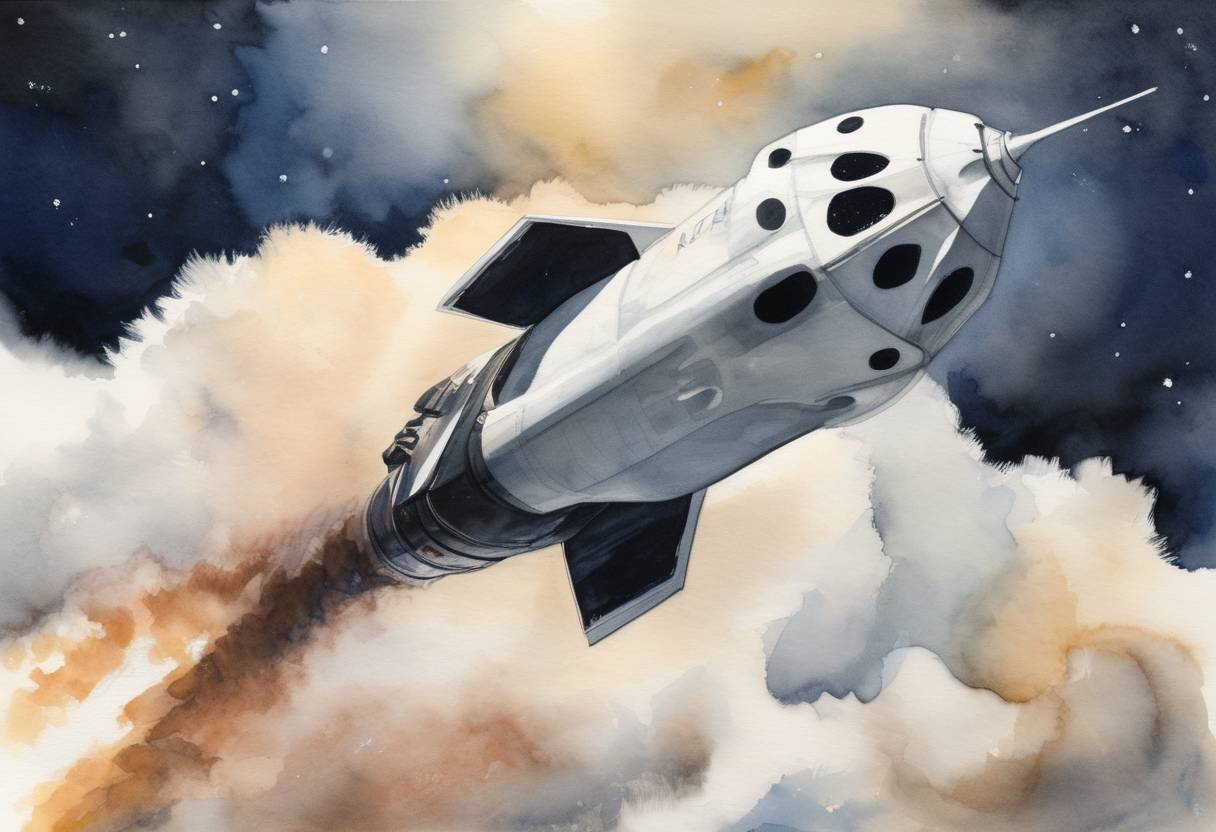
SpaceX Crew Dragon: Maiden Flight DM-1
Date: March 2, 2019
Location: Kennedy Space Center, Florida, USA
Event Overview
On March 2, 2019, SpaceX’s Crew Dragon spacecraft embarked on its first uncrewed test flight, termed DM-1, as part of NASA’s Commercial Crew Program. This milestone marked a significant step toward reestablishing the United States’ capacity to send astronauts to the International Space Station (ISS) from American soil—a capability unavailable since the retirement of the Space Shuttle program in 2011.
Prelude to Launch
Before this historic flight, SpaceX had undergone rigorous testing and development of the Crew Dragon spacecraft. The DM-1 mission aimed to demonstrate the vehicle’s capabilities to safely transport astronauts to and from the ISS.
Key Moments of the Launch
Launch Vehicle: The mission utilized a Falcon 9 rocket, known for its reliability and reusability. It was launched precisely at 2:49 a.m. EST from Launch Complex 39A at NASA’s Kennedy Space Center.
Objectives: The primary goal was to validate the Crew Dragon’s end-to-end performance, including launch, on-orbit, docking, landing, and recovery operations. It also tested the spacecraft’s environmental control system, propulsion, communications, and navigation systems.
Docking with the ISS: Approximately 27 hours post-launch, on March 3, 2019, the Crew Dragon autonomously docked with the ISS’s Harmony module. This was the first time a U.S. commercial spacecraft designed for astronauts autonomously docked with the space station.
Significance and Aftermath
The success of DM-1 demonstrated significant progress in SpaceX’s partnership with NASA and the Commercial Crew Program’s goal of supporting routine transport to low Earth orbit.
Technological Milestones: The Crew Dragon was equipped with advanced touchscreen interfaces and various safety features, setting new standards for manned spaceflight.
Future Missions: The data acquired from DM-1 was instrumental in paving the way for Crew Dragon’s eventual crewed missions, potentially reducing reliance on Russian Soyuz rockets.
Broader Impact
DM-1 was more than a technical achievement; it represented the culmination of years of collaboration between NASA and private industry, exemplifying a new model for space exploration. The mission brought the U.S. closer to achieving autonomous control over its manned space missions, enhancing its position in space exploration and fostering the global low Earth orbit economy.