Britain and France Declare War on Germany: September 3, 1939
1939 · London, United Kingdom
Britain and France declared war on Germany following Germany's invasion of Poland, marking the beginning of World War II.
August 25, 1939
The United Kingdom and Poland sign a mutual assistance treaty, ensuring mutual support in the event of a military threat.
London, United Kingdom | Government of the United Kingdom
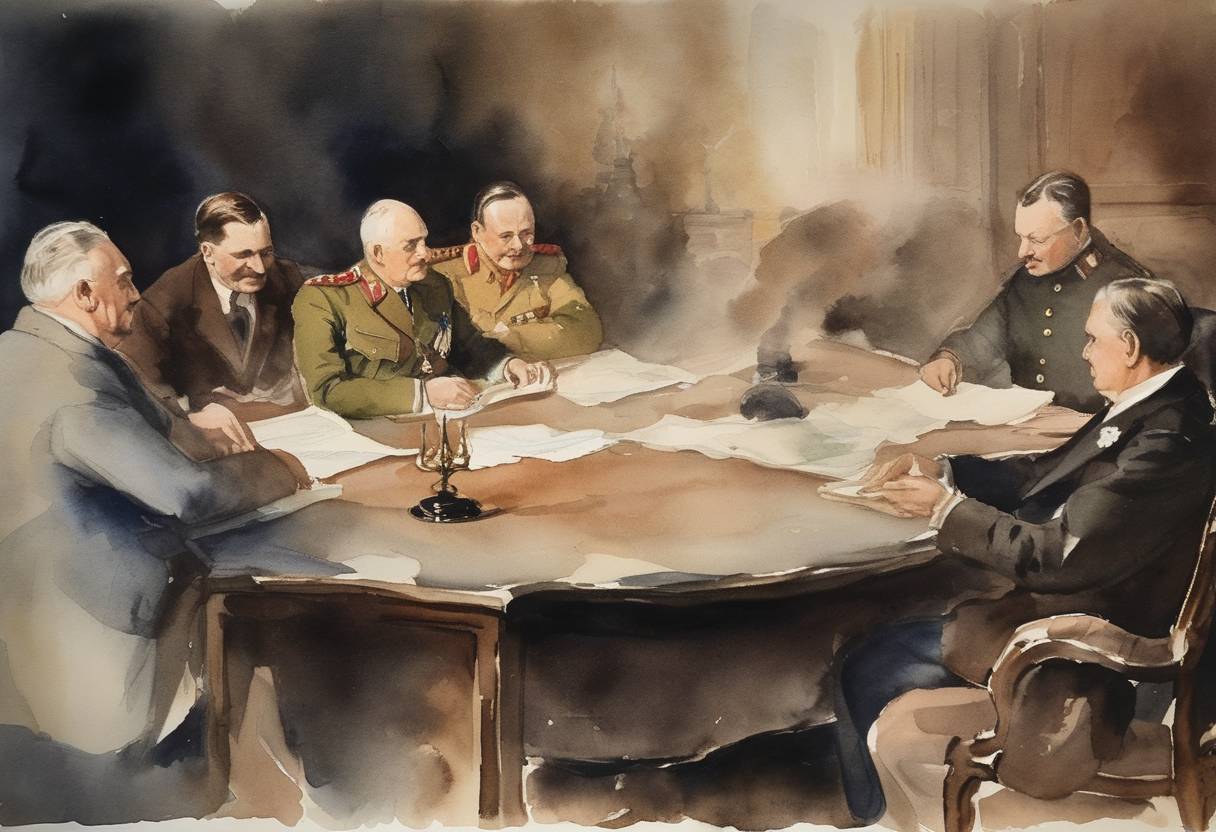
On August 25, 1939, the United Kingdom and Poland formalized their strategic partnership against potential aggression by signing a Mutual Assistance Treaty. This agreement was a pivotal moment on the eve of World War II, designed to counteract the growing threat posed by Nazi Germany.
Throughout the late 1930s, Adolf Hitler’s expansionist policies and aggressive maneuvers in Europe had been met with increasing alarm. Following the annexation of Austria and the Sudetenland, the European powers were in dire need of strong alliances to deter further German aggression.
The UK had initially pursued a policy of appeasement, most notably articulated in the Munich Agreement of 1938, hoping to maintain peace by conceding to some of Hitler’s demands. However, the subsequent invasion of Czechoslovakia in March 1939 undermined confidence in this strategy. By April 1939, Britain issued a guarantee to ensure Polish independence, indicating a critical shift in British foreign policy from appeasement to a more deterrent strategy.
The Anglo-Polish Mutual Assistance Treaty contained several crucial clauses:
The treaty significantly bolstered Poland’s strategic position. For the United Kingdom, it was part of a broader effort to assemble a coalition to counterbalance Nazi Germany. The signing of the pact made it clear that Britain was prepared to go to war should Poland be attacked.
Hitler, preparing for an invasion of Poland, was initially taken aback by this development. The treaty compelled him to postpone the invasion briefly, though he proceeded once further diplomatic machinations failed to produce a peaceful resolution.
Soon after the treaty’s ratification, the world would witness the rapid escalation of tensions that led directly to the outbreak of World War II on September 1, 1939, when Germany invaded Poland. The Anglo-Polish alliance, therefore, stands as a cornerstone of the Allied response in the early stages of the conflict, underscoring the intent to resist fascist expansion and uphold national sovereignty in Europe.
Source: ww2db.com