Operation Shingle: The Allied Amphibious Landing at Anzio
1944 · Anzio, Italy
Operation Shingle, the Allied amphibious landing at Anzio, Italy, begins during World War II.
June 11, 1940
World War II: The Western Allies launched their first large-scale attack in the Battle of Narvik. Although the battle was ultimately a tactical victory, strategic complications led to an evacuation from Norway days later.
Narvik, Norway | Allied Forces
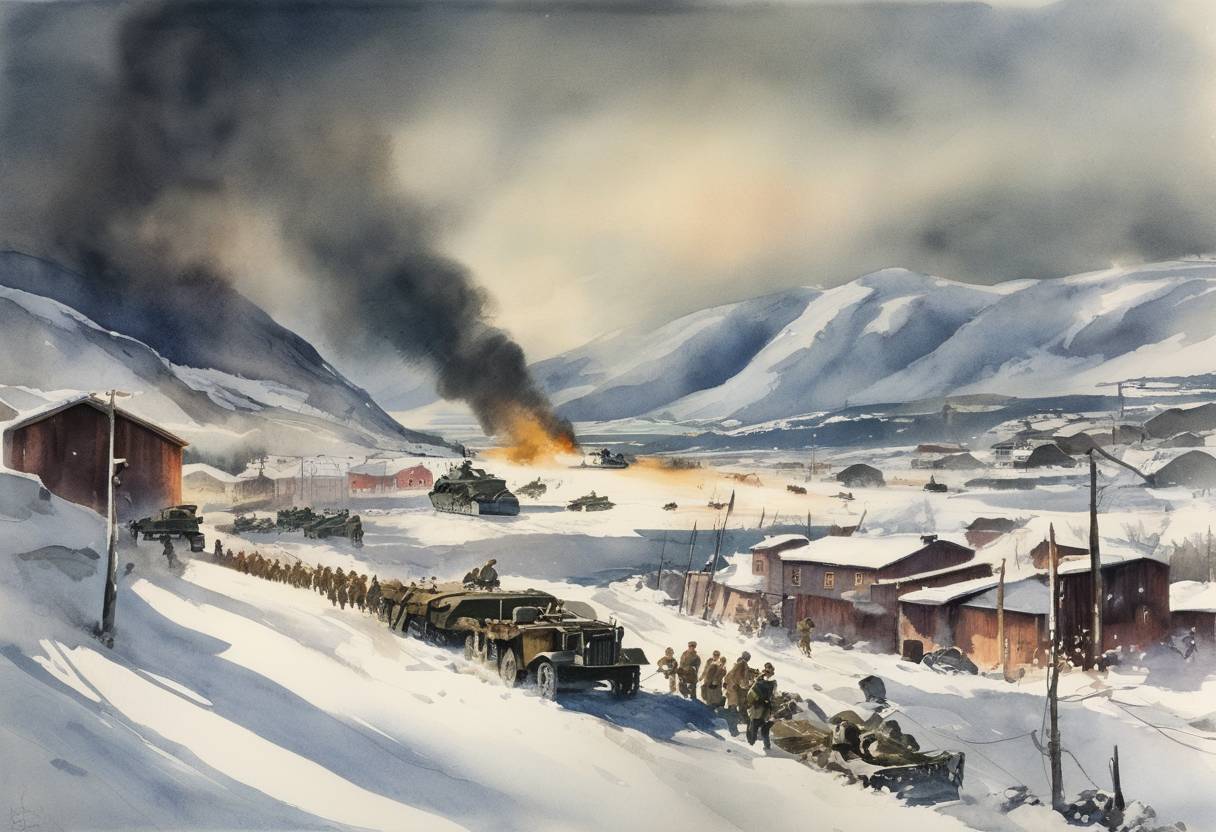
On June 11, 1940, the Western Allies launched their first substantial large-scale ground offensive against German forces in the Battle of Narvik during World War II. This battle was part of the Campaign in Norway, which aimed to hinder German access to Swedish iron ore vital for their war efforts.
The strategic port of Narvik in Northern Norway was vital due to its role in exporting iron ore. The German Wehrmacht had secured Narvik early in their Norwegian Campaign beginning in April 1940. In response, the Allies launched operations to regain control of this critical location, recognizing its significance in disrupting German resources.
By June 11, Allied forces, comprising mainly British, French, Polish, and Norwegian troops, had engaged in a series of confrontations with the German occupiers in Narvik. These efforts were marked by intense combat characterized by their adverse weather conditions and challenging mountainous terrain. The Allies established initial tactical successes and managed to recapture the town after prolonged engagements, marking what appeared to be a promising development in the Norwegian Campaign.
Despite the tactical victory at Narvik, the broader strategic situation rapidly deteriorated for the Allies. Germany’s swift advance in the Western Front, particularly across the Low Countries and France, forced the reevaluation of military priorities. As German forces approached Paris, the need to concentrate resources and manpower towards the defense of more critical fronts became evident.
With the broader geopolitical landscape shifting unfavorably, the Allied High Command made a strategic calculation. By early June, a decision to evacuate forces from Norway was reached. This necessity culminated in the withdrawal of Allied troops from Narvik, with the process commencing in earnest soon after their victory. The Germans subsequently reoccupied Narvik following this evacuation, cementing their control over Norway for the remainder of the war.
The Battle of Narvik, while demonstrating the Allies’ ability to execute a successful large-scale offensive, showcased the fluidity of the war’s early phases. It underscored the strategic constraints they faced, balancing regional operations against the overwhelming pressure of the German advance elsewhere in Europe.
The operations around Narvik had lasting implications for the Norwegian Campaign and the early war strategy of the Western Allies. Despite their withdrawal, lessons learned in Arctic warfare, joint operations, and logistical challenges contributed to evolving Allied strategies that would later come to bear in subsequent operations across various theaters of World War II.
Source: www.history.com