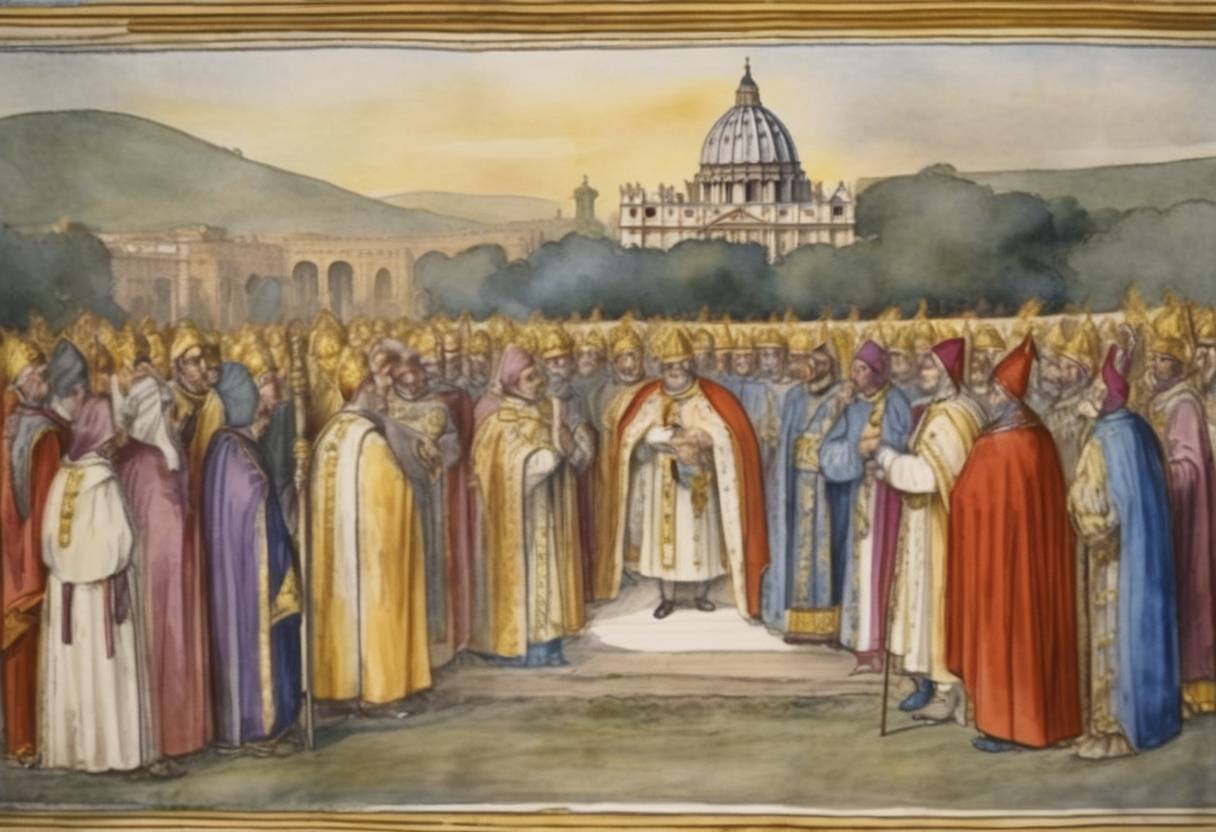
February 15, 1145: Pope Eugene III Issues ‘Quantum Praedecessores’
On February 15, 1145, Pope Eugene III issued the papal bull titled Quantum Praedecessores, which formally initiated the call for the Second Crusade. This monumental decree came in response to the fall of the County of Edessa in December 1144 to the forces of Zengi, the atabeg of Mosul and Aleppo.
Context and Background
The County of Edessa, the first of the Crusader states established during the First Crusade, had fallen under the rule of Baldwin of Boulogne in 1098. By the mid-12th century, Edessa was a key frontier of the Christian presence in the Near East. However, its strategic position also made it vulnerable to attacks from surrounding Muslim forces, eager to reclaim lost territories.
In December 1144, the adept Muslim general, Zengi, capitalized on internal divisions among the Christian states and successfully captured the city of Edessa. This conquest marked the first significant loss for the Crusaders and sent shockwaves through Christian Europe, prompting calls for a renewed military campaign to recover lost territories and solidify Christian holdings in the Holy Land.
Issuance of Quantum Praedecessores
Quantum Praedecessores is notable for being the first papal bull that called for a crusade, setting a precedent for how future campaigns would be launched. In this document, Eugene III lamented the plight of the Christians in the East and emphasized continuity with the efforts of his papal predecessors. He exhorted the Christian rulers of Europe to once again take up the cross and join forces in what would become the Second Crusade.
Key Contents and Appeals
The bull appealed to various European monarchs and featured several key elements:
- Spiritual Motivation: It reinforced the idea of crusading as an act of piety, promising spiritual rewards for those who took up the cross.
- Indulgences: Participants were assured remission of sins, a potent incentive during a time of strong religious devotion.
- Unity Call: The document urged the unity of Christians to confront the growing threat posed by Muslim powers.
- Protection: Provisions were made to safeguard the properties and families of those who joined the crusade, addressing concerns that might deter potential crusaders.
Aftermath and Consequences
Following the bull’s issuance, leaders such as King Louis VII of France and Emperor Conrad III of Germany heeded the call with varying degrees of enthusiasm. Despite being launched with high hopes and considerable resources, the Second Crusade (1147-1149) ultimately failed to achieve its primary goal of recapturing Edessa or expanding the Crusader territories. The campaign ended with substantial losses and did little to reverse the gains made by Muslim forces.
This failure marked a critical juncture in the history of the Crusades, leading to increased skepticism about the effectiveness of such missions and altering the strategies of subsequent crusading endeavors. Nevertheless, the eagerness to answer Eugene III’s call demonstrated the enduring resonance of the papacy’s influence over European geopolitics and religious fervor during the 12th century.