Death of Pope Honorius III and Subsequent Papal Transition
1223 · Rome, Papal States
Upon the death of Pope Honorius III, the papal conclave to elect his successor began, ultimately leading to the election of Pope Gregory IX in March 1227.
March 20, 1191
Pope Clement III died. He played a significant role in mediating between the Holy Roman Empire and the Kingdom of Sicily, and also launched the Third Crusade in an effort to reclaim the Holy Land for Christendom.
Rome, Papal States | Catholic Church
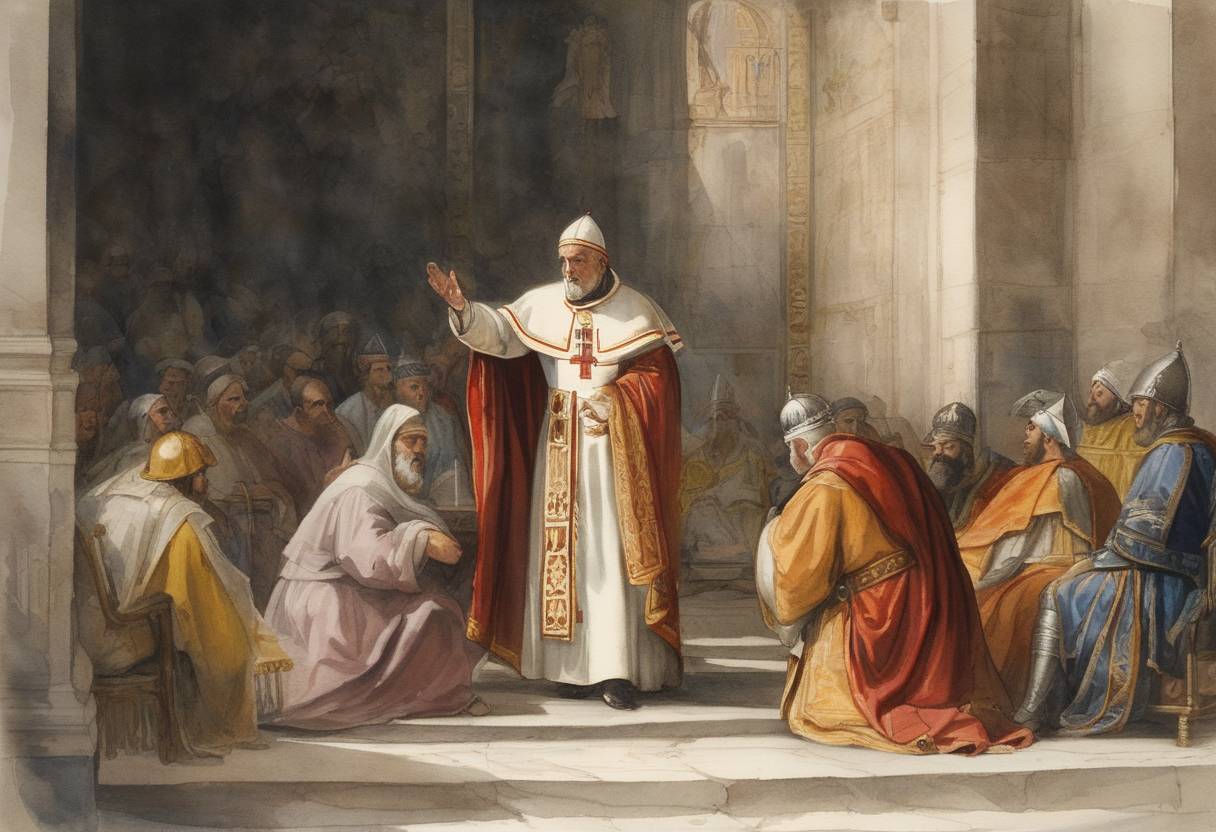
Pope Clement III passed away on March 20, 1191. His papacy, which began in December 1187, was marked by significant efforts in diplomacy and religious campaigns that sought to address major ecclesiastical and political challenges of the time.
Clement III played a pivotal role in brokering peace between the Holy Roman Empire and the Kingdom of Sicily. During this period, the papacy was intensely involved in the complex web of European politics. Clement’s diplomacy was focused on easing tensions between Emperor Frederick I Barbarossa and the Sicilian kingdom. By adopting a conciliatory approach, Pope Clement III aimed to secure the Papal States and prevent conflict that could destabilize the region, reflecting his broader strategic goals of maintaining and extending papal influence.
An important aspect of Clement III’s papacy was his initiative in calling for the Third Crusade. Following the fall of Jerusalem to Saladin in 1187, the Western Christian powers were galvanized into action. Clement III’s call for a crusade was a major effort to mobilize European monarchies and military resources towards the goal of reclaiming the Holy Land. This call led to the involvement of prominent leaders such as Richard the Lionheart of England, Philip II of France, and Frederick I Barbarossa. The Third Crusade would become one of the most documented and storied crusading expeditions, though it ultimately failed to recapture Jerusalem itself.
Clement III’s influence on European affairs during his papacy had long-lasting impacts. His ability to mediate between powerful entities like the Holy Roman Empire and the Kingdom of Sicily exemplifies the significant diplomatic role the papacy could exercise. The calling of the Third Crusade, while not an unqualified success, demonstrated the enduring allure and influence of the spiritual and political ambitions tied to the crusading movement.
Clement’s death in 1191 left his successors to continue dealing with the political machinations of both church and state, while also managing the ongoing crusading efforts in the Holy Land. His papacy remains a testament to the complexities and challenges faced by the medieval church in a time of religious and political upheaval.
Source: www.britannica.com