The End of the Battle of the Bulge: January 25, 1945
1945 · Ardennes, Belgium
The Battle of the Bulge ended with an Allied victory which repelled the last major German offensive of World War II.
January 28, 1945
The Battle of the Bulge ended with an Allied victory, marking a turning point in the European theater of World War II as German forces were pushed back across the Western front in Europe.
Ardennes, Belgium | Allied Forces
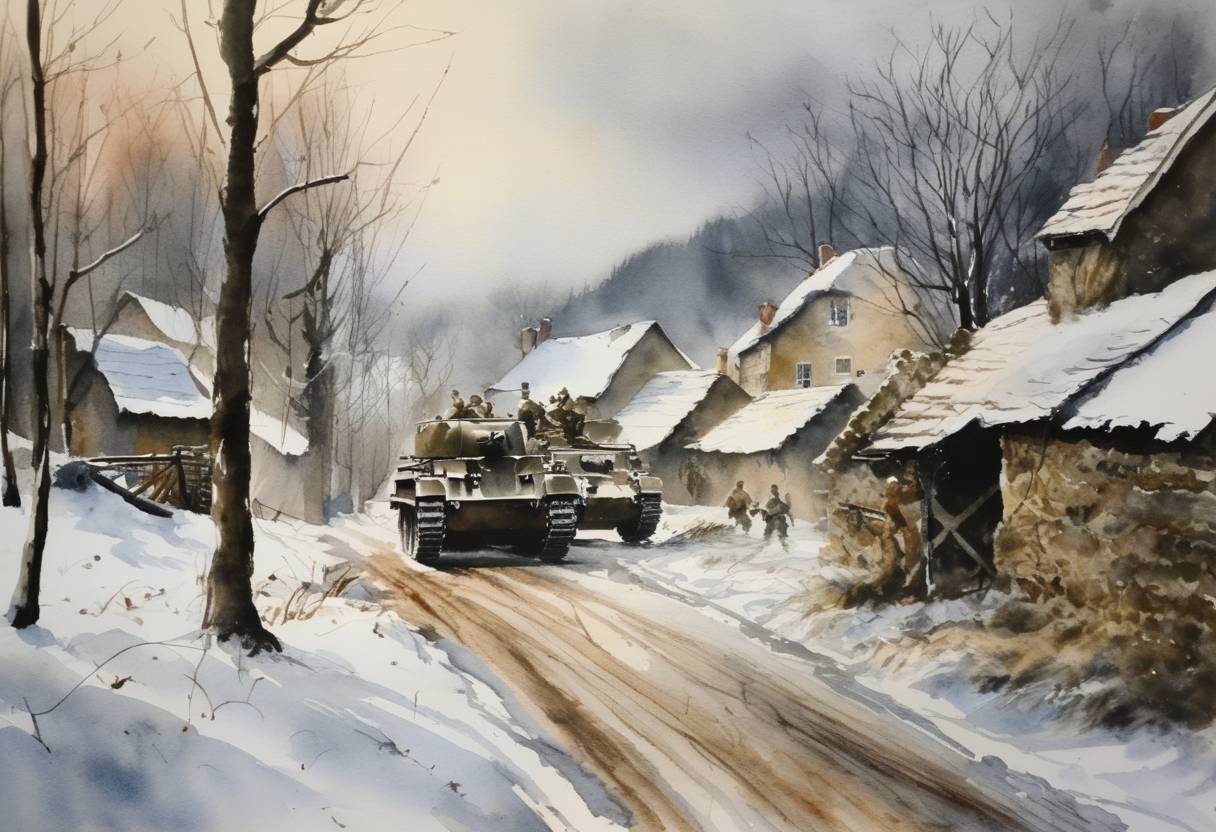
On January 28, 1945, the Battle of the Bulge concluded with an Allied victory, marking a pivotal turning point in the Western European theater during World War II. This battle, which was one of Germany’s last major offensives against the Allies, had begun on December 16, 1944, in the densely forested Ardennes region of Belgium, France, and Luxembourg.
By late 1944, the Allies had liberated much of France and were advancing towards Germany. The German High Command, desperate to halt the Allies’ progress and obtain a better negotiating position, planned a surprise offensive. The goal was to split the Allied forces, capture the strategically important Belgian city of Antwerp, and encircle and destroy four Allied armies.
The German attack caught the Allies off guard, initially creating a “bulge” in the front lines, hence the name. The offensive involved over 200,000 German troops and nearly 1,000 tanks, moving through the Ardennes—a difficult terrain that had been considered relatively secure by Allied commanders.
Despite the surprise and successful initial push, several factors contributed to the eventual Allied success:
By January 28, the German forces had been pushed back to their initial positions, marking the failure of their offensive. The battle was the largest fought by the United States Army during World War II, involving over 600,000 American troops, and was costly, with significant casualties on both sides.
The conclusion of the Battle of the Bulge depleted German resources and morale, preventing them from launching further major offensives. This weakened state facilitated the Allied invasion of Germany and bolstered the advance from the west, contributing significantly to the eventual Allied victory in Europe.
In sum, the battle demonstrated the resilience and strategic effectiveness of Allied forces, reinforcing their momentum towards the final defeat of Nazi Germany in May 1945.
Source: www.history.com