Perseverance Rover's Successful Landing on Mars
2021 · Mars, N/A
NASA's Perseverance rover successfully landed on Mars, beginning its mission to search for signs of past life and collect samples for future return to Earth.
November 26, 2018
NASA's InSight lander successfully touched down on Mars. The mission's goal was to study the interior of Mars and gather data on its seismic activity, heat flow, and planetary rotation.
Mars, N/A | NASA
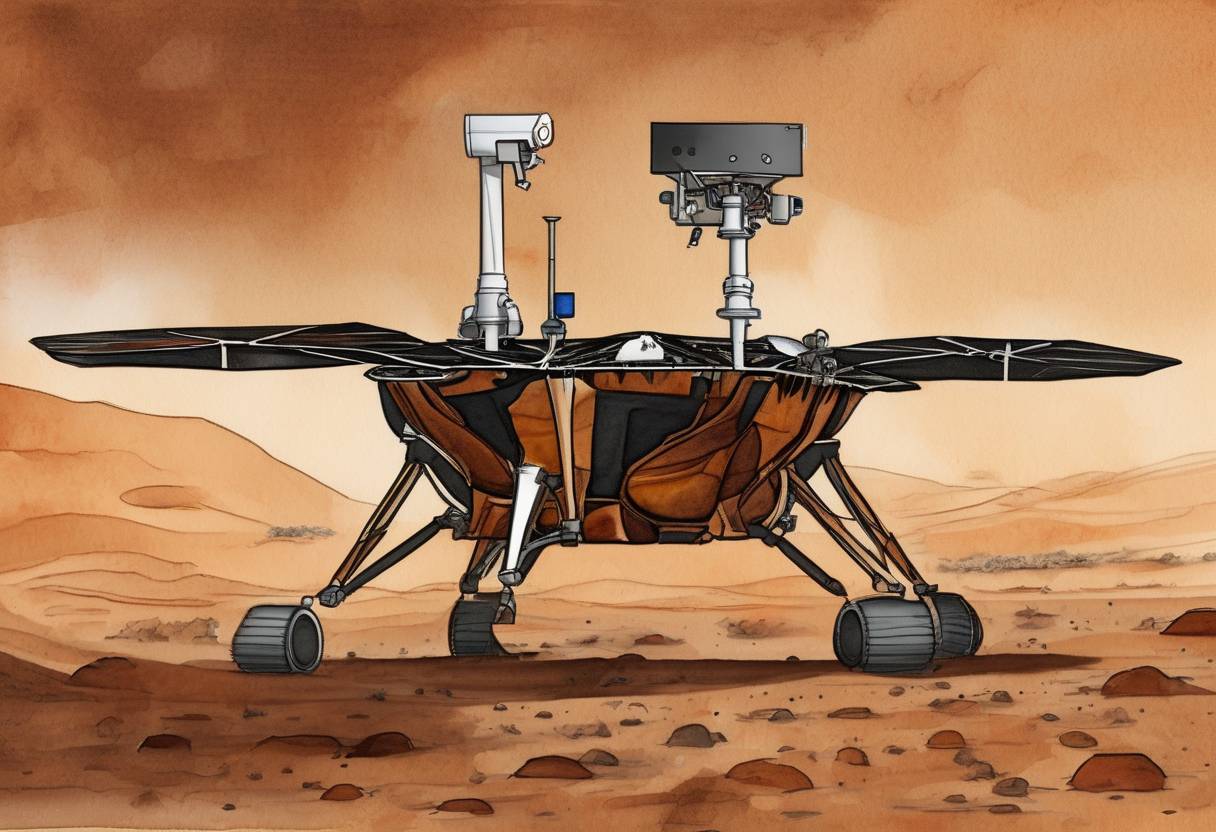
On November 26, 2018, NASA’s InSight lander successfully touched down on the surface of Mars, marking a significant milestone in the exploration of the Red Planet. The mission’s primary objective was to study the interior of Mars, providing unprecedented insights into the planet’s seismic activity, heat flow, and rotational dynamics.
The InSight mission was designed to delve beneath the surface of Mars to gather data that would help scientists understand the planet’s internal structure and processes. Key objectives included:
Seismic Activity: Using the Seismic Experiment for Interior Structure (SEIS), InSight aimed to detect “marsquakes” and other seismic activities, which would provide clues about the planet’s internal structure and tectonic activity.
Heat Flow: The Heat Flow and Physical Properties Package (HP^3) was intended to measure the heat emanating from Mars’ interior, offering insights into the planet’s thermal history and geological activity.
Planetary Rotation: The Rotation and Interior Structure Experiment (RISE) was designed to track the wobble in Mars’ rotation, helping scientists understand the size and composition of the planet’s core.
Launch: InSight was launched aboard an Atlas V rocket from Vandenberg Air Force Base in California, marking the first interplanetary mission to launch from the West Coast of the United States.
Cruise Phase: The spacecraft traveled approximately 300 million miles (about 485 million kilometers) over six months to reach Mars.
Entry, Descent, and Landing (EDL): The “seven minutes of terror” involved a complex sequence of maneuvers to slow the spacecraft from 12,300 mph (19,800 kph) to a gentle landing on the Martian surface.
Scientific Discoveries: InSight’s data has provided valuable information about Mars’ internal structure, including the detection of marsquakes, which confirmed that the planet is seismically active.
Technological Achievements: The mission demonstrated advanced landing technologies and contributed to the development of future Mars exploration missions.
Broader Impact: By understanding Mars’ interior, scientists can draw parallels to the early formation and evolution of Earth and other rocky planets in the solar system.
InSight’s successful landing and subsequent scientific contributions have significantly advanced our understanding of Mars, paving the way for future exploration and the potential for human missions to the Red Planet.
Source: en.wikipedia.org