Adolf Hitler's Suicide on April 30, 1945
1945 · Berlin, Germany
Adolf Hitler, the leader of Nazi Germany, committed suicide in his underground bunker in Berlin as Soviet forces closed in on the city.
December 11, 1941
Germany and Italy declare war on the United States during World War II, following the attack on Pearl Harbor.
Berlin, Germany | Nazi Germany
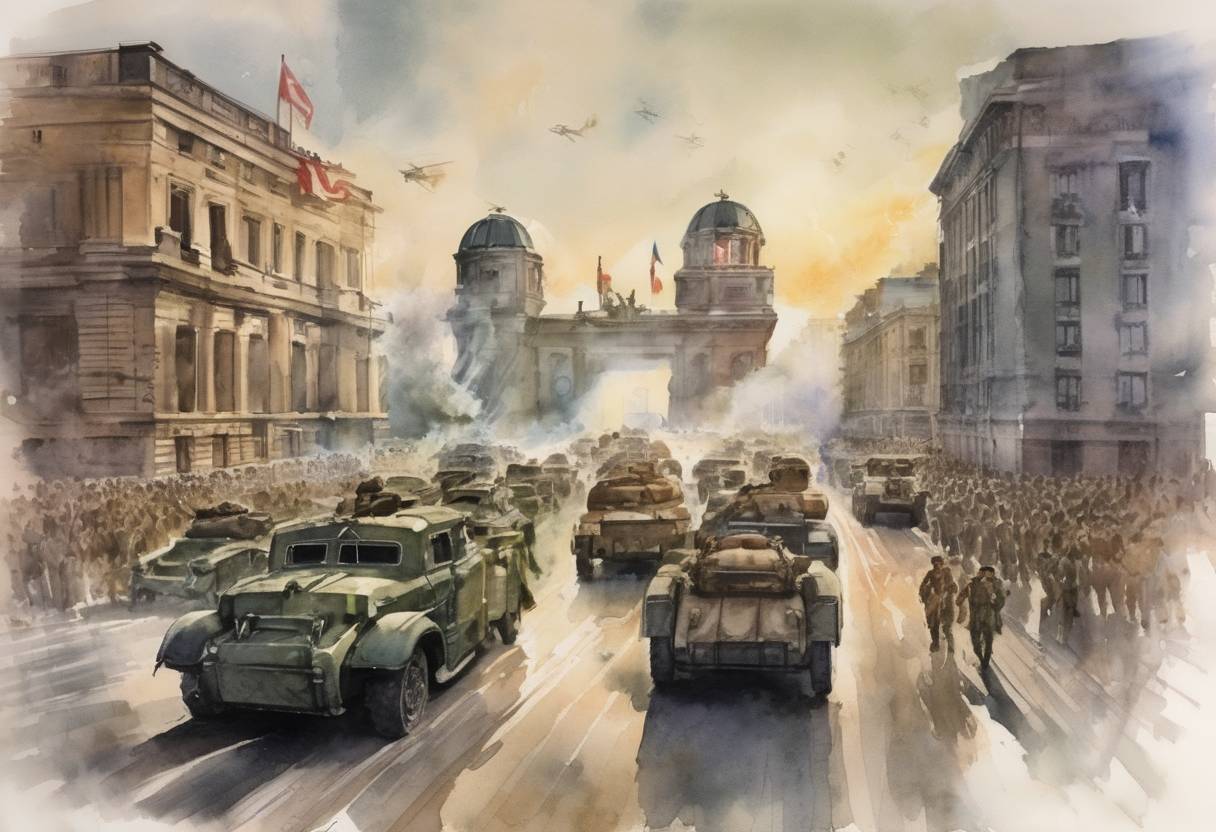
On December 11, 1941, just four days after the Japanese attack on Pearl Harbor, Germany and Italy declared war on the United States, marking a significant escalation in World War II. This event was a pivotal moment in the global conflict, as it officially brought the United States into the European theater of war.
Pearl Harbor Attack: On December 7, 1941, Japan launched a surprise military strike against the United States naval base at Pearl Harbor, Hawaii. This attack led to the United States declaring war on Japan on December 8, 1941.
Tripartite Pact: Germany, Italy, and Japan were part of the Tripartite Pact, signed in September 1940, which was a defensive military alliance. The pact stipulated that if any of the signatories were attacked by a country not already involved in the war, the others would come to its aid. However, the United States had declared war on Japan, not the other way around, which technically did not obligate Germany and Italy to declare war on the U.S.
Germany’s Declaration: Adolf Hitler, the leader of Nazi Germany, announced the declaration of war on the United States. In a speech to the Reichstag, Hitler cited various grievances against the U.S., including its support for the Allies and economic sanctions against Germany.
Italy’s Declaration: Following Germany’s lead, Italy, under the leadership of Benito Mussolini, also declared war on the United States. The declarations were largely symbolic, as both countries were already engaged in hostilities with nations allied to the U.S.
U.S. Entry into European Theater: The declarations of war by Germany and Italy solidified the United States’ involvement in the European theater. This expanded the scope of the conflict and led to increased military and economic support for the Allies.
Allied Strategy: The United States, now fully engaged in a two-front war, had to strategize its military resources and efforts across both the Pacific and European theaters. This led to significant military campaigns in North Africa, Europe, and the Pacific.
Global Impact: The entry of the United States into the war marked a turning point, as American industrial and military power significantly bolstered the Allied forces. This shift in dynamics contributed to the eventual defeat of the Axis powers.
In summary, the declarations of war by Germany and Italy on December 11, 1941, were crucial in shaping the course of World War II. They marked the formal entry of the United States into the global conflict, leading to a series of strategic military engagements that would ultimately influence the outcome of the war.
Source: en.wikipedia.org