Ascension of Edward III to the English Throne
1328 · London, England
Edward III of England is declared King of England after his father Edward II is deposed.
September 21, 1327
King Edward II of England was murdered at Berkeley Castle.
Berkeley, England | English Monarchy
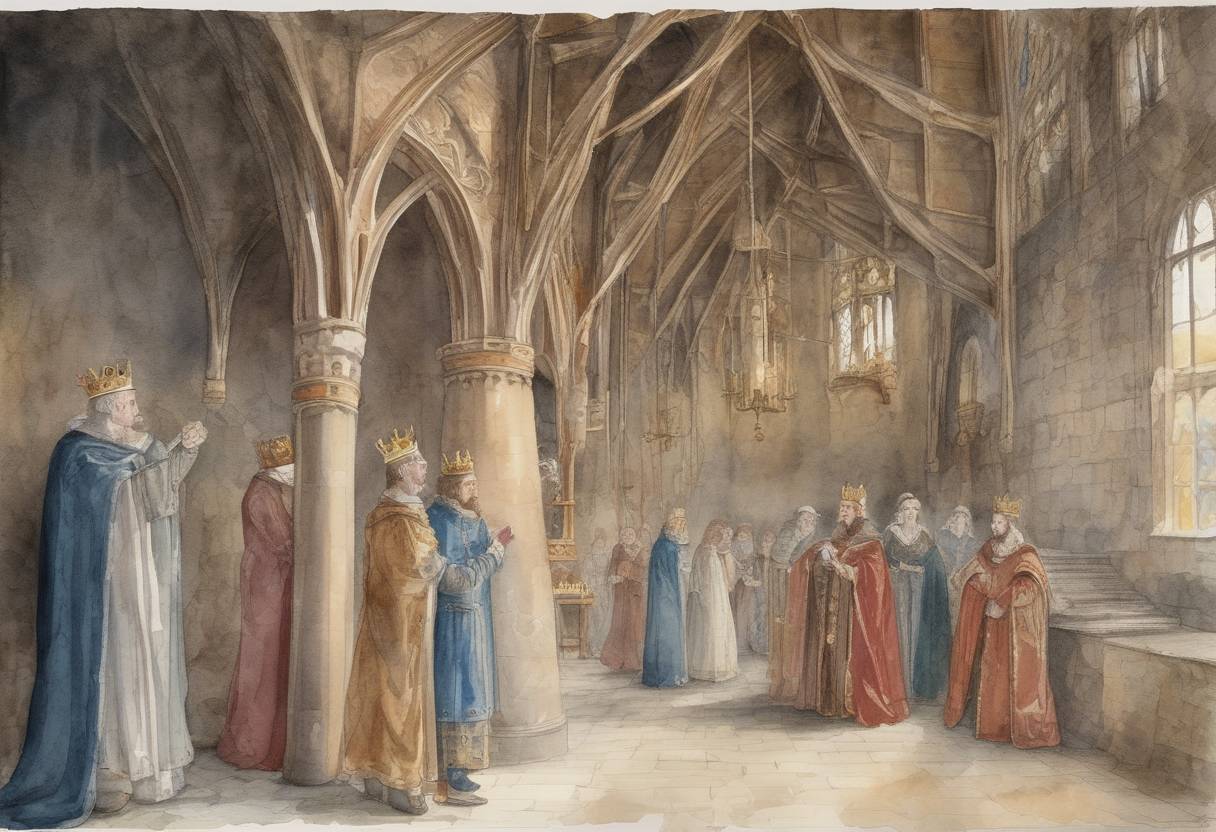
On September 21, 1327, King Edward II of England met a grim fate at Berkeley Castle in Gloucestershire. His death marked the end of a tumultuous reign characterized by political strife and personal controversies.
Edward II ascended to the English throne in 1307, following the death of his father, Edward I. His reign was marred by military failures, notably the defeat at the Battle of Bannockburn in 1314, which solidified Scottish independence under Robert the Bruce. Edward’s reliance on unpopular favorites, such as Piers Gaveston and later Hugh Despenser the Younger, alienated the nobility and led to significant internal conflict.
By 1326, discontent with Edward’s rule had reached a boiling point. His wife, Queen Isabella, and her lover, Roger Mortimer, led an invasion from France, capturing Edward and forcing his abdication in January 1327 in favor of his son, Edward III. Edward II was subsequently imprisoned, initially at Kenilworth Castle and later transferred to Berkeley Castle.
The exact details of Edward II’s death remain shrouded in mystery and controversy. It is widely believed that he was murdered on September 21, 1327, although the method of his death is debated. Some accounts suggest he was killed in a particularly brutal manner, while others propose that he died of natural causes or was smothered.
The murder of Edward II had significant implications for English politics. It solidified the power of Isabella and Mortimer, who effectively ruled on behalf of the young Edward III. However, their dominance was short-lived; in 1330, Edward III executed Mortimer and assumed full control of the throne.
Edward II’s death also contributed to the enduring legend and speculation surrounding his life and reign. His story has been the subject of various historical and literary interpretations, reflecting the complexities of his character and the turbulent times in which he lived.
In summary, the murder of King Edward II at Berkeley Castle was a pivotal event in English history, marking the violent end of a controversial reign and setting the stage for the eventual rise of Edward III.
Source: en.wikipedia.org