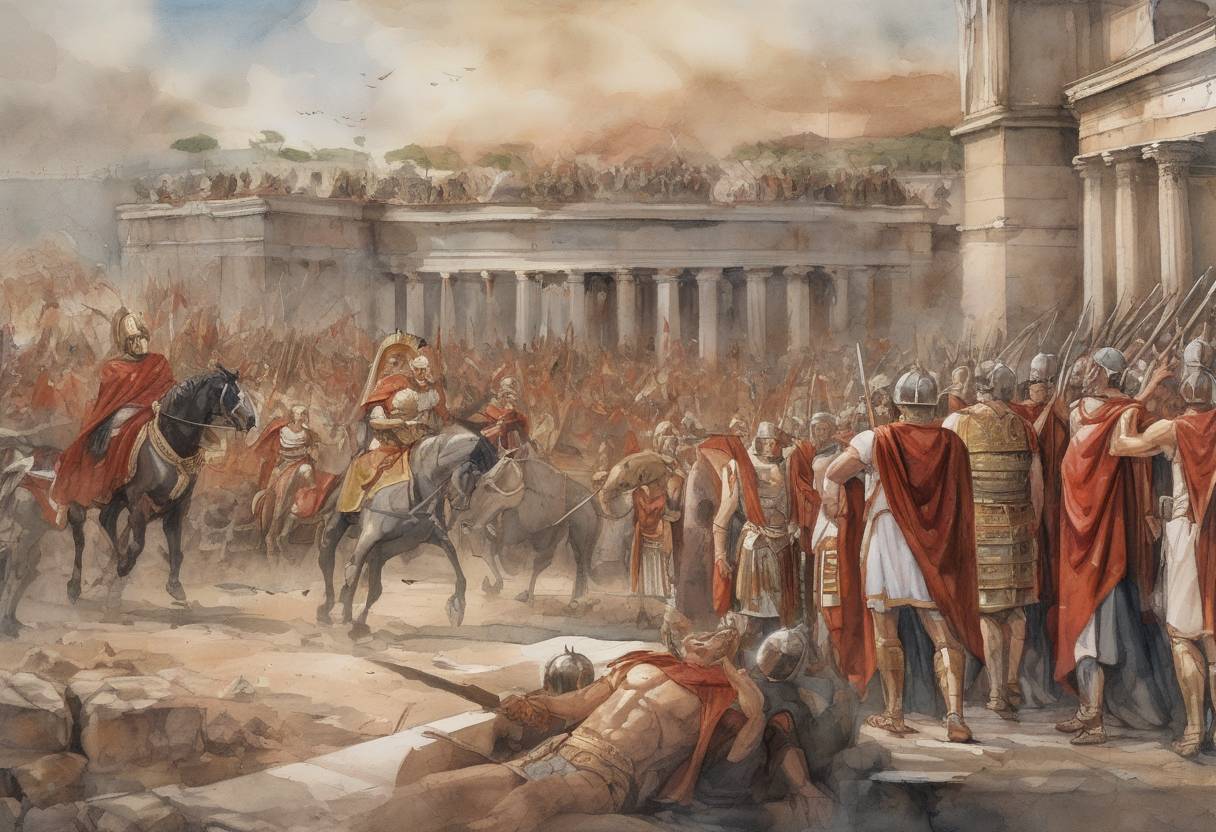
Licinius Abdicates as Roman Emperor - December 19, 324
On December 19, 324, a significant event unfolded in the Roman Empire: Licinius, the co-emperor, abdicated his position following his defeat by Constantine the Great. This moment marked a pivotal shift in Roman history, leading to the consolidation of power under Constantine and setting the stage for the establishment of Constantinople as the new capital.
Background
Licinius had been a prominent figure in the Roman Empire, initially rising to power as a colleague of Emperor Galerius. He eventually became the Augustus of the Western Roman Empire. His reign was marked by a series of conflicts with Constantine, who ruled the Eastern Roman Empire. The rivalry between the two emperors was fueled by both political ambitions and religious differences, as Constantine was a proponent of Christianity, while Licinius was seen as a defender of pagan traditions.
The Battle of Chrysopolis
The decisive conflict between Licinius and Constantine occurred at the Battle of Chrysopolis on September 18, 324. This battle was the culmination of a series of military engagements between the two emperors. Constantine’s forces decisively defeated Licinius, effectively ending his reign. The victory at Chrysopolis allowed Constantine to emerge as the sole ruler of the Roman Empire.
Abdication and Aftermath
Following his defeat, Licinius was initially spared by Constantine due to the intercession of Constantine’s sister, Flavia Julia Constantia, who was married to Licinius. However, on December 19, 324, Licinius was compelled to abdicate his position as emperor. He was subsequently exiled to Thessalonica, but his life was cut short in 325, reportedly executed on charges of conspiring against Constantine.
Significance
The abdication of Licinius and the consolidation of power under Constantine had profound implications for the Roman Empire:
Unification of the Empire: Constantine’s victory and the subsequent unification of the Roman Empire under a single ruler marked the end of the Tetrarchy, a system of rule by four emperors, and restored a centralized imperial authority.
Foundation of Constantinople: With the consolidation of power, Constantine initiated the transformation of Byzantium into Constantinople (modern-day Istanbul), which would become the new capital of the Roman Empire in 330. This strategic move not only fortified the eastern frontiers but also symbolized the shift of power from Rome to the East.
Christianization of the Empire: Constantine’s reign marked a turning point in the religious landscape of the Roman Empire. His support for Christianity laid the groundwork for its spread throughout the empire, culminating in the Edict of Milan in 313, which granted religious tolerance to Christians.
In summary, the abdication of Licinius on December 19, 324, was a critical juncture in Roman history, leading to the establishment of a unified empire under Constantine and setting the stage for significant cultural and political transformations.