1447 · Rome, Papal States
Nicholas V is elected as the new pope, succeeding Pope Eugene IV.
October 6, 0891
Formosus is elected Pope, succeeding Stephen V. His papacy would later become infamous for the Cadaver Synod, where his corpse was put on trial.
Rome, Papal States | Catholic Church
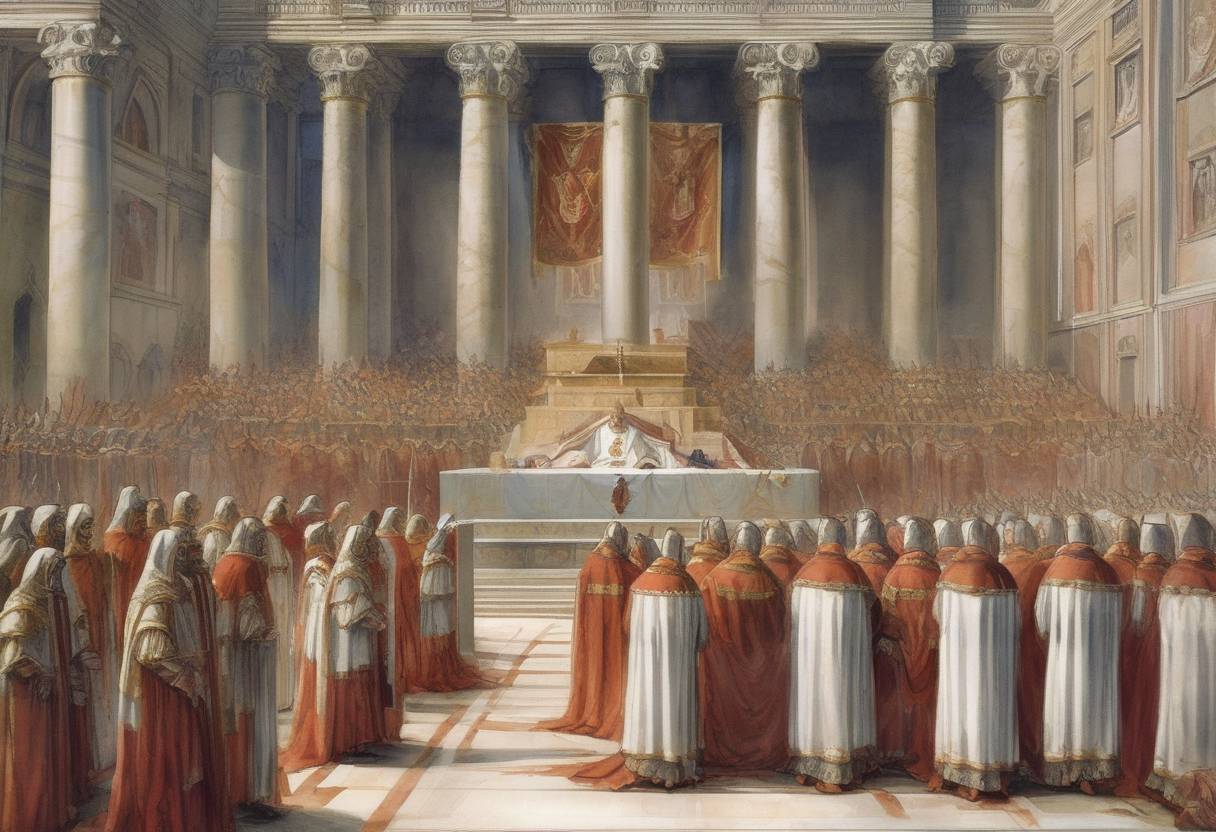
On October 6, 891, Formosus was elected as the Pope, succeeding Stephen V. His papacy is particularly notable for the infamous event known as the Cadaver Synod, which occurred after his death.
Formosus was born around 816 in Rome and had a distinguished career within the Church prior to his papacy. He served as the Bishop of Porto and was a respected diplomat, undertaking missions for the papacy to Bulgaria and France. His reputation and influence grew, leading to his election as pope.
During his tenure as pope, Formosus faced numerous challenges, including political instability within the Papal States and the broader Carolingian Empire. His papacy was marked by efforts to navigate these turbulent political waters, often involving complex alliances and conflicts with various European powers.
The most infamous event associated with Formosus occurred posthumously. In January 897, Pope Stephen VI, one of Formosus’ successors, ordered the exhumation of Formosus’ corpse to stand trial in what is known as the Cadaver Synod (or Synodus Horrenda). The macabre trial was held in the Basilica of St. John Lateran, where the corpse was propped up on a throne and accused of various ecclesiastical crimes, including perjury and coveting the papacy.
The trial concluded with Formosus being found guilty. His papal acts were annulled, his body was stripped of its papal vestments, and the three fingers used for blessings were cut off. The corpse was then thrown into the Tiber River. This event was driven by political motivations, as Stephen VI sought to invalidate Formosus’ decisions and appointments, which were unfavorable to his faction.
The Cadaver Synod had significant repercussions. It caused widespread outrage and contributed to the political instability of the time. Stephen VI’s actions were so unpopular that he was deposed and imprisoned, where he later died. Subsequent popes reversed the decisions of the Cadaver Synod, and Formosus’ body was reburied with honor.
The Cadaver Synod remains one of the most bizarre and controversial episodes in papal history. It highlights the intense political struggles within the Church and the lengths to which factions would go to assert their dominance. The event is often cited as an example of the chaotic and turbulent nature of the papacy during the late 9th and early 10th centuries.
Formosus’ papacy and the subsequent trial underscore the complex interplay between religion and politics in medieval Europe, reflecting the broader challenges faced by the Church in maintaining spiritual authority amidst temporal power struggles.
Source: en.wikipedia.org