Arnold Schwarzenegger Sworn in as the 38th Governor of California
2003 · Sacramento, United States
Arnold Schwarzenegger was sworn in as the 38th Governor of California.
October 7, 2003
California Governor Gray Davis was recalled in a special election, and Arnold Schwarzenegger was elected as the new governor.
Sacramento, United States | State of California
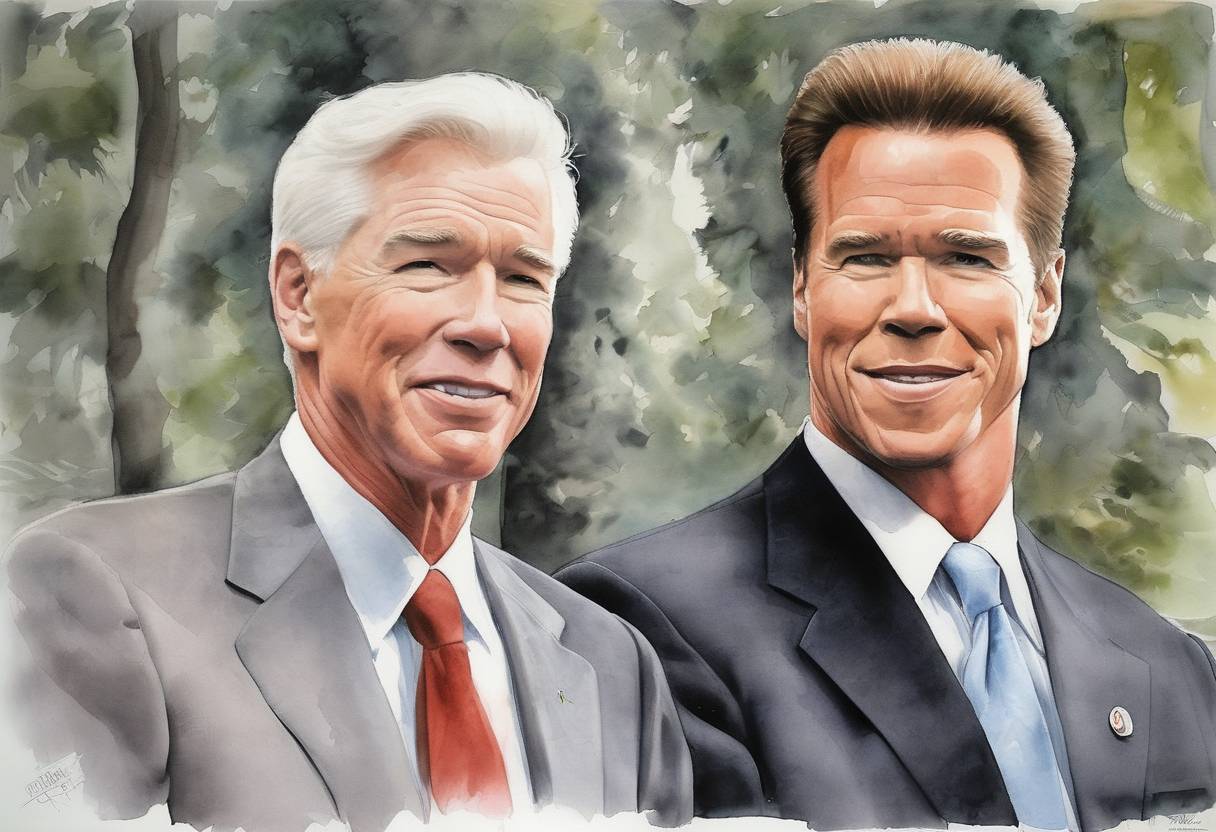
On October 7, 2003, California experienced a significant political event when Governor Gray Davis was recalled in a special election. This marked only the second time in U.S. history that a sitting governor was removed from office through a recall election. The outcome of this election led to the rise of Arnold Schwarzenegger, a well-known actor and political newcomer, as the new governor of California.
Gray Davis, a Democrat, was first elected as the Governor of California in 1998 and re-elected in 2002. However, his second term was marred by several challenges, including:
The recall effort was initiated by Republican activists and gained momentum with the support of Congressman Darrell Issa, who contributed substantial financial resources to the campaign. The recall petition gathered over 1.6 million signatures, surpassing the required threshold to trigger a special election.
The special election held on October 7, 2003, consisted of two parts:
Arnold Schwarzenegger, a Republican, emerged as the leading candidate among the 135 contenders. Known for his roles in blockbuster films such as “The Terminator,” Schwarzenegger leveraged his celebrity status and outsider image to appeal to a broad spectrum of voters. His campaign focused on reforming California’s fiscal policies and improving the state’s economy.
Schwarzenegger won the election with approximately 48.6% of the vote, defeating other prominent candidates, including Lieutenant Governor Cruz Bustamante and conservative commentator Tom McClintock.
The recall of Gray Davis and the election of Arnold Schwarzenegger underscored the dynamic nature of California’s political environment and the impact of public sentiment on governance.
Source: en.wikipedia.org