Elizabeth I and the Title 'Supreme Governor of the Church of England'
1588 · London, England
British Parliament confers the title 'Supreme Governor of the Church of England' on Elizabeth I.
December 16, 1689
The English Bill of Rights becomes law, laying the foundation for a constitutional monarchy.
London, England | Parliament of England
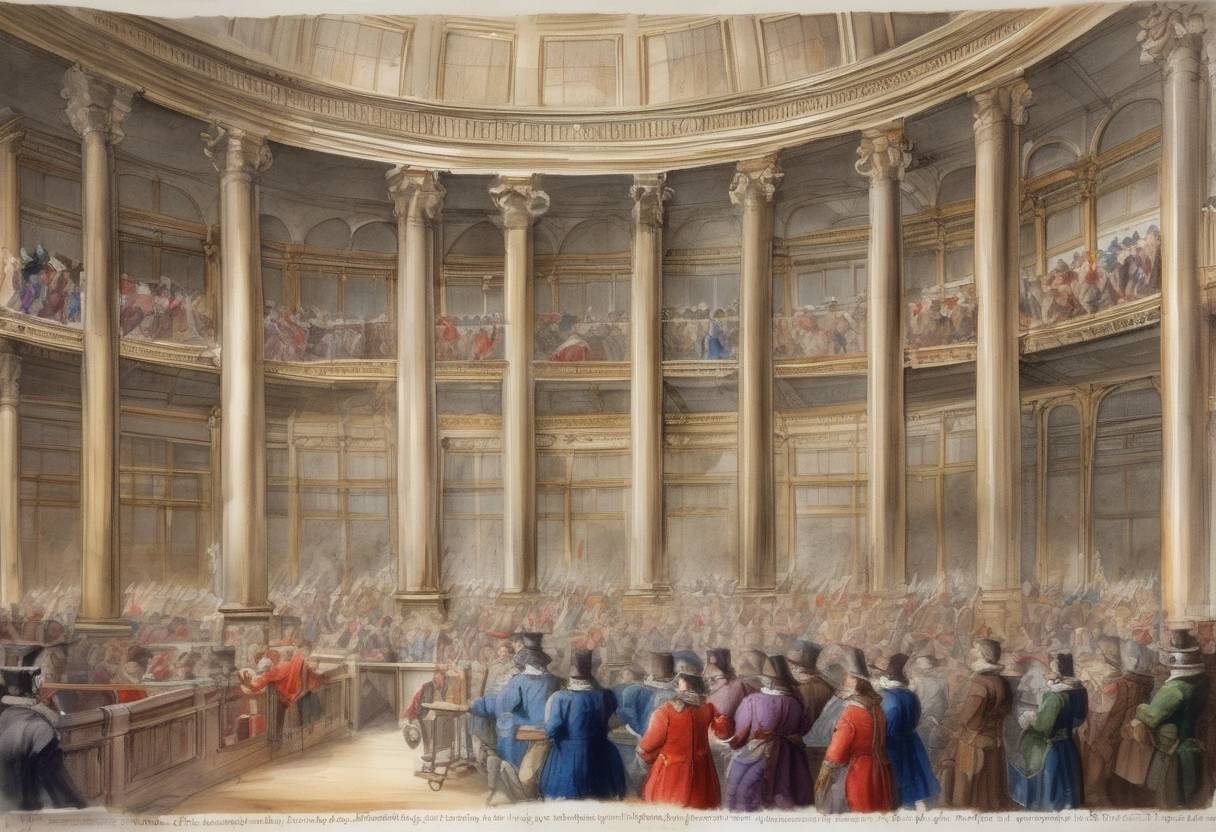
On December 16, 1689, the English Bill of Rights was enacted, marking a pivotal moment in the establishment of a constitutional monarchy in England. This landmark document laid the groundwork for modern parliamentary democracy and significantly influenced the development of constitutional law.
The English Bill of Rights emerged from the political turmoil of the late 17th century, a period characterized by conflicts between the monarchy and Parliament. The Glorious Revolution of 1688 was a crucial precursor, during which King James II was deposed, and William of Orange and his wife Mary, James’s Protestant daughter, were invited to take the throne. This revolution was largely bloodless and was driven by fears of a Catholic monarchy and the desire for a constitutional government.
The English Bill of Rights was a response to the perceived abuses of power by James II and previous monarchs. It outlined specific constitutional and civil rights, including:
The English Bill of Rights was instrumental in shaping the constitutional landscape of England and later influenced other democratic documents, such as the United States Bill of Rights. It marked a shift from absolute monarchy to a constitutional monarchy, where the monarch’s powers were limited by law and balanced by the authority of Parliament.
The Bill also reinforced the supremacy of Parliament over the monarchy, a principle that would continue to evolve and define British governance. It established a precedent for the protection of individual liberties and the rule of law, principles that are central to modern democratic societies.
The enactment of the English Bill of Rights set the stage for a stable constitutional framework in England. It helped to prevent the recurrence of the kind of arbitrary rule that had characterized previous reigns and ensured a more balanced distribution of power between the monarchy and Parliament.
In the centuries that followed, the principles enshrined in the Bill of Rights would be echoed in various democratic movements and constitutional documents worldwide, underscoring its enduring legacy as a foundational text in the history of democracy.
In summary, the English Bill of Rights of 1689 was a transformative document that not only redefined the relationship between the monarchy and Parliament but also laid the groundwork for the development of constitutional democracy in England and beyond.
Source: en.wikipedia.org