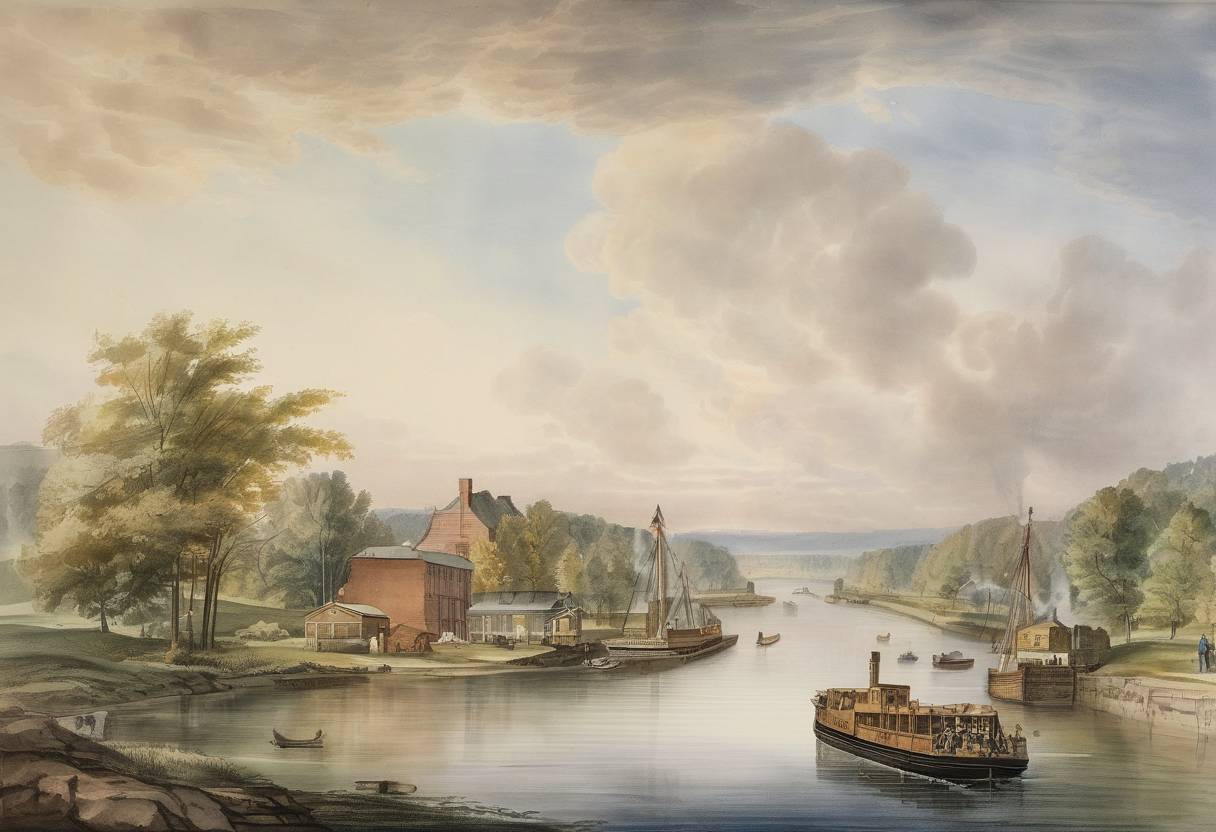
The Opening of the Erie Canal: October 26, 1825
On October 26, 1825, the Erie Canal was officially opened, marking a pivotal moment in American history. This monumental engineering project connected the Great Lakes with the Atlantic Ocean via the Hudson River, transforming the economic landscape of the United States.
Background
The idea for the Erie Canal was conceived in the early 19th century as a means to facilitate trade and settlement in the western territories. Prior to the canal, transporting goods from the interior of the country to the eastern seaboard was a costly and time-consuming endeavor. The canal promised a more efficient route, reducing transportation costs and time significantly.
Construction
- Initiation: The construction of the Erie Canal began on July 4, 1817, under the leadership of New York Governor DeWitt Clinton, who was a major proponent of the project.
- Challenges: The project faced numerous challenges, including difficult terrain and the need for innovative engineering solutions. Despite skepticism and the nickname “Clinton’s Folly,” the project pressed on.
- Completion: After eight years of labor, the canal was completed, stretching approximately 363 miles from Albany on the Hudson River to Buffalo on Lake Erie.
Impact
- Economic Growth: The Erie Canal drastically reduced the cost of shipping goods. For example, the cost of transporting a ton of goods from Buffalo to New York City dropped from \(100 to just \)10.
- Settlement and Development: The canal spurred the growth of cities along its route, including Syracuse, Rochester, and Buffalo, and encouraged westward expansion and settlement.
- Trade: It facilitated the movement of agricultural products from the Midwest to the East Coast and manufactured goods in the opposite direction, integrating the economies of the eastern and western United States.
- Technological Influence: The success of the Erie Canal inspired a wave of canal-building projects across the country and highlighted the potential of large-scale infrastructure projects.
Broader Historical Significance
The Erie Canal played a crucial role in the economic development of the United States during the 19th century. It not only boosted New York City’s status as a major port but also set a precedent for future infrastructure projects that would further unify and develop the nation. The canal’s opening is often seen as a catalyst for the Industrial Revolution in America, as it facilitated the movement of raw materials and finished goods, thereby accelerating industrial growth.
In conclusion, the opening of the Erie Canal on October 26, 1825, was a landmark event that reshaped the economic and geographic landscape of the United States, leaving a lasting legacy on the nation’s development.