Death of Henry IV and Accession of Henry V
1413 · London, England
Henry IV of England died, leading to the accession of his son, Henry V.
September 16, 1400
Owain Glyndŵr was declared Prince of Wales, leading a revolt against English rule.
Machynlleth, Wales | Welsh rebels
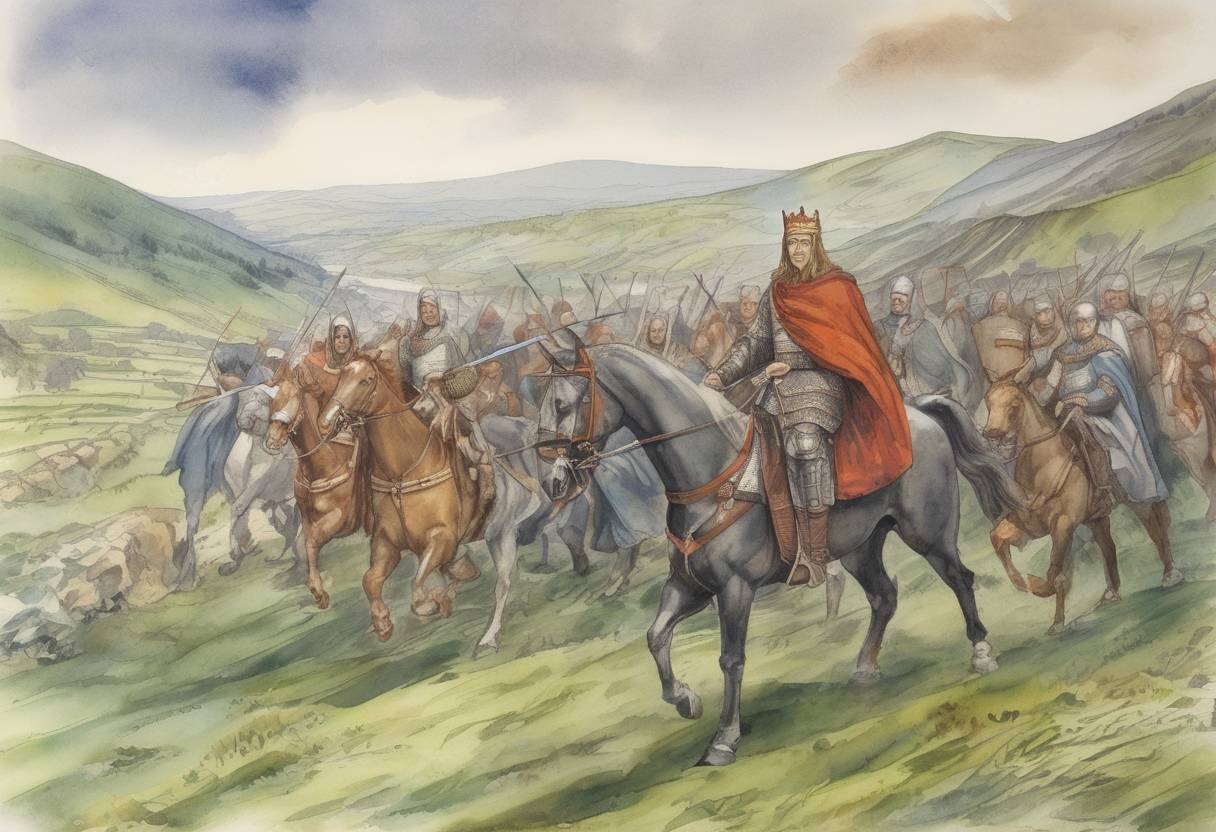
On September 16, 1400, Owain Glyndŵr was declared Prince of Wales, marking the beginning of a significant Welsh revolt against English rule. This event is a pivotal moment in Welsh history, symbolizing a fierce struggle for independence and national identity.
Owain Glyndŵr: Born around 1359, Glyndŵr was a Welsh nobleman with a strong lineage, tracing back to the ancient Welsh princes. He was well-educated and had served in the English army, gaining valuable military experience.
Political Climate: By the late 14th century, tensions were high between the Welsh and the English. The English crown, under King Henry IV, imposed heavy taxes and restrictive laws on the Welsh, exacerbating local grievances.
Catalyst for Revolt: The immediate cause of the revolt was a personal dispute between Glyndŵr and his English neighbor, Reginald Grey, Lord of Ruthin. Grey’s encroachment on Glyndŵr’s lands and his influence in the English court led to Glyndŵr’s disenchantment with English rule.
Proclamation: On September 16, 1400, Owain Glyndŵr was proclaimed Prince of Wales by his supporters at Glyndyfrdwy, his family estate. This declaration was both a symbolic and political act, challenging English authority and asserting Welsh sovereignty.
Initial Successes: Glyndŵr’s revolt quickly gained momentum. His forces captured several key castles and towns, including Ruthin, and received support from various Welsh chieftains and commoners alike.
National Symbol: Glyndŵr’s uprising is often seen as the last major Welsh attempt to overthrow English rule. It inspired a sense of national identity and pride among the Welsh people.
Military Campaigns: The revolt saw several notable battles and sieges, with Glyndŵr employing guerrilla tactics against the larger and better-equipped English forces. His ability to evade capture and maintain resistance for over a decade is a testament to his leadership and strategic acumen.
Aftermath: Although the revolt ultimately failed, with Glyndŵr disappearing around 1412 and never being captured, it left a lasting legacy. The revolt highlighted the deep-seated issues between Wales and England and set the stage for future discussions on Welsh autonomy.
Owain Glyndŵr’s declaration as Prince of Wales on September 16, 1400, remains a defining moment in Welsh history. It represents not only a struggle for political power but also a profound assertion of cultural identity and resistance against oppression. Glyndŵr’s legacy continues to inspire Welsh nationalism and is celebrated as a symbol of resilience and determination.
Source: en.wikipedia.org