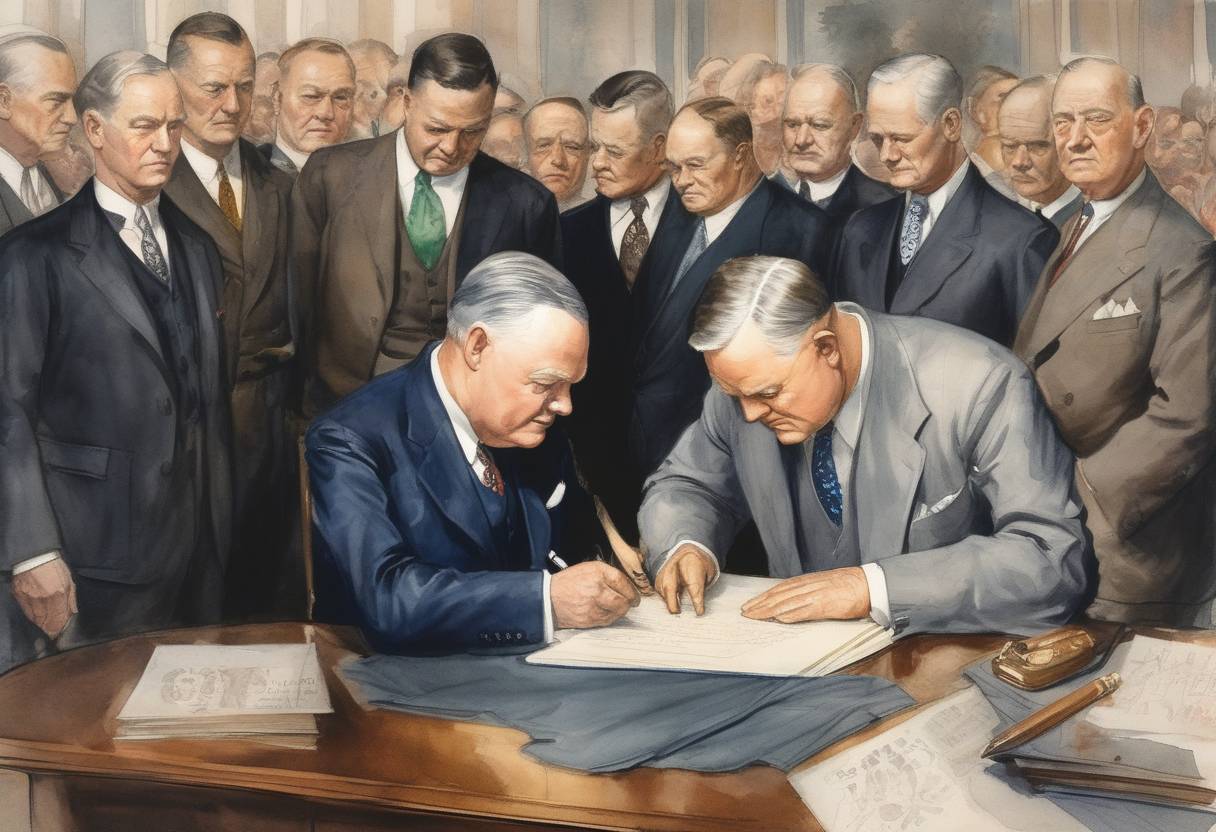
The Smoot-Hawley Tariff Act: June 17, 1930
On June 17, 1930, President Herbert Hoover signed the Smoot-Hawley Tariff Act into law, marking a significant moment in U.S. economic history. This legislation raised tariffs on over 20,000 imported goods, aiming to protect American industries from foreign competition during the onset of the Great Depression.
Context and Background
- The Great Depression: By 1930, the United States was grappling with the early years of the Great Depression, a severe worldwide economic downturn that began with the stock market crash of 1929.
- Protectionist Sentiment: There was a strong protectionist sentiment in the U.S., with many believing that high tariffs would shield domestic industries and preserve jobs by reducing foreign competition.
Key Provisions of the Act
- Increased Tariffs: The Smoot-Hawley Tariff Act imposed some of the highest tariffs in U.S. history, affecting a wide range of products including agricultural goods and manufactured items.
- Legislative Journey: The bill was sponsored by Senator Reed Smoot of Utah and Representative Willis C. Hawley of Oregon. It faced significant opposition but was ultimately passed by Congress and signed by President Hoover.
- Retaliation: Many countries retaliated by imposing their own tariffs on American goods, leading to a sharp decline in international trade.
- Economic Impact: The Act is often criticized for exacerbating the Great Depression by stifling global trade and worsening economic conditions both domestically and internationally.
Broader Historical Significance
- Shift in Trade Policy: The Smoot-Hawley Tariff Act is frequently cited as a cautionary example of protectionism. It highlighted the interconnectedness of global economies and the potential negative consequences of trade barriers.
- Long-term Consequences: The backlash against the Act eventually led to a shift in U.S. trade policy towards more liberal trade practices, culminating in the Reciprocal Trade Agreements Act of 1934, which aimed to reduce tariffs and promote international trade.
In summary, the signing of the Smoot-Hawley Tariff Act by President Hoover on June 17, 1930, was a pivotal event with far-reaching implications, influencing both the course of the Great Depression and future U.S. trade policies.