Zviad Gamsakhurdia Elected as First President of Georgia
1991 · Tbilisi, Georgia
Zviad Gamsakhurdia was elected as the first President of Georgia following its declaration of independence from the USSR.
April 9, 1991
Georgia declared independence from the Soviet Union, marking a significant moment in the dissolution of the USSR.
Tbilisi, Georgia | Georgian government
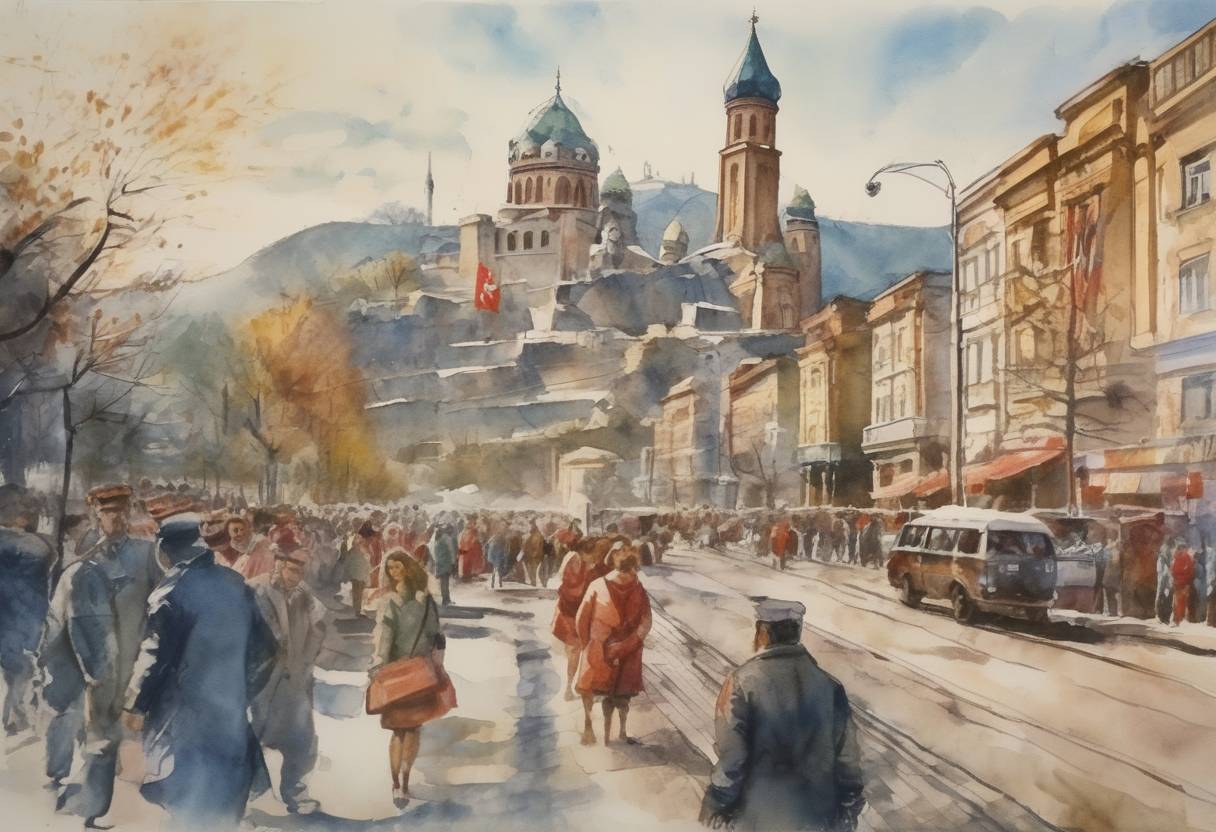
On April 9, 1991, the Republic of Georgia declared its independence from the Soviet Union, marking a pivotal moment in the dissolution of the USSR. This event was a significant milestone in the wave of independence movements that swept across Eastern Europe and the former Soviet states during the late 1980s and early 1990s.
Soviet Union’s Decline: By the late 1980s, the Soviet Union was experiencing significant political and economic challenges. Mikhail Gorbachev’s policies of glasnost (openness) and perestroika (restructuring) aimed to reform the Soviet system but also inadvertently encouraged nationalist movements within the various Soviet republics.
Georgian Nationalism: Georgia had a long history of seeking independence, with a strong national identity rooted in its unique language, culture, and history. The late 1980s saw a resurgence of Georgian nationalism, fueled by dissatisfaction with Soviet rule and inspired by the broader movements for independence in Eastern Europe.
April 9, 1989: A pivotal moment occurred two years prior when Soviet troops violently suppressed a peaceful pro-independence demonstration in Tbilisi, Georgia’s capital. This event, known as the Tbilisi Massacre, resulted in the deaths of 21 demonstrators and galvanized public opinion against Soviet rule.
Elections and Referendum: In October 1990, Georgia held its first multiparty elections, which resulted in a victory for the pro-independence coalition, the Round Table-Free Georgia bloc, led by Zviad Gamsakhurdia. On March 31, 1991, a referendum was held in which an overwhelming majority of Georgians voted in favor of independence.
International Recognition: Georgia’s independence was initially recognized by a few countries, but following the official dissolution of the Soviet Union in December 1991, it gained broader international recognition.
Challenges: The early years of independence were marked by political instability, economic difficulties, and internal conflicts, including civil war and separatist movements in regions such as Abkhazia and South Ossetia.
Legacy: Georgia’s declaration of independence was a crucial step in the broader process of the Soviet Union’s dissolution. It highlighted the power of nationalist movements and the desire for self-determination among the Soviet republics.
Georgia’s path to independence is a testament to the resilience of its people and their enduring quest for sovereignty, setting the stage for the country’s ongoing journey towards democracy and integration with the West.
Source: en.wikipedia.org