Unveiling of Michelangelo's David: September 8, 1504
1504 · Florence, Italy
Michelangelo's statue of David is unveiled in Florence's Piazza della Signoria.
September 8, 1504
Michelangelo's statue of David is unveiled in Florence.
Florence, Italy | City of Florence
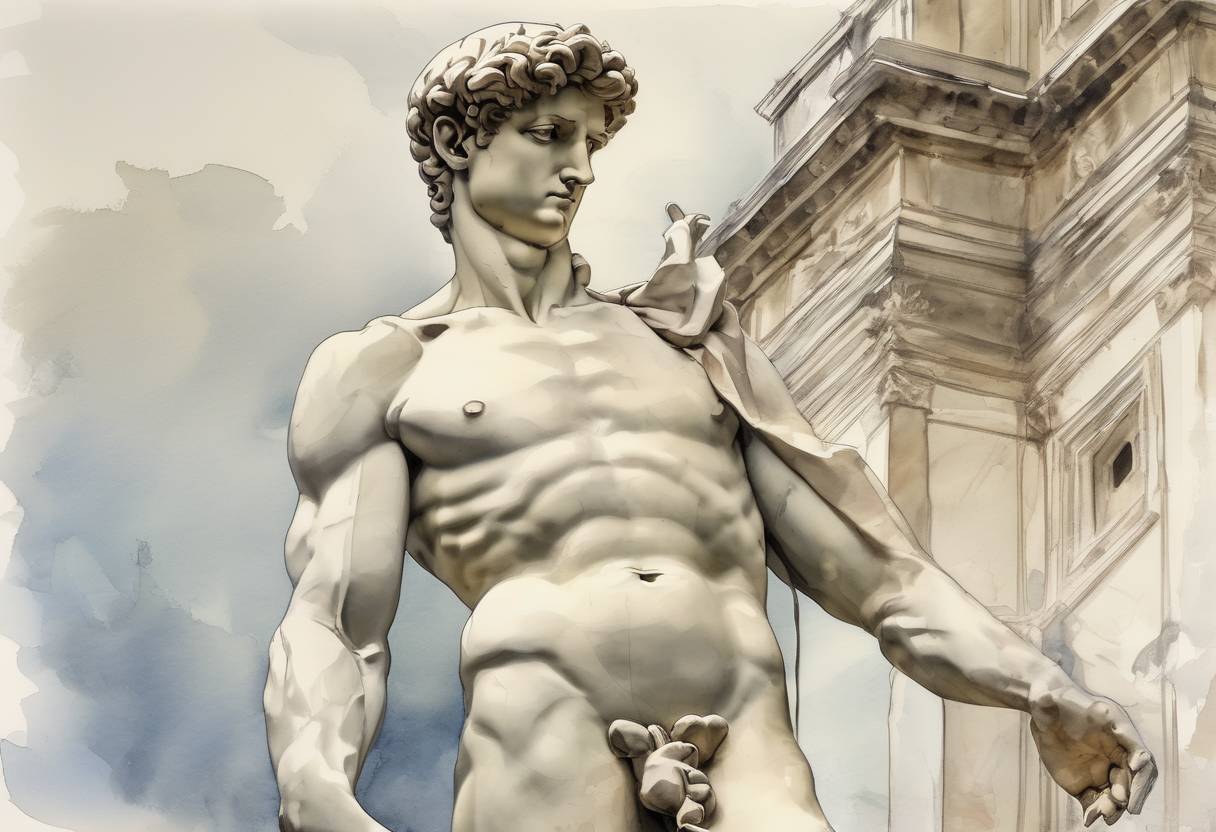
On September 8, 1504, one of the most iconic masterpieces of Renaissance art, Michelangelo’s statue of David, was unveiled in Florence, Italy. This event marked a significant moment in art history, showcasing the extraordinary skill and vision of Michelangelo Buonarroti, a leading figure of the Italian Renaissance.
Commission and Creation: The statue was originally commissioned by the Opera del Duomo for the Cathedral of Florence. Michelangelo began work on the statue in 1501, sculpting it from a single block of Carrara marble that had been partially worked on by other artists before him. The project was intended to be one of a series of statues depicting biblical figures.
Michelangelo’s Approach: Michelangelo chose to depict David before his battle with Goliath, capturing a moment of contemplative tension and readiness. This choice was a departure from previous representations of David, which often showed him triumphant after the battle.
Location: Initially intended for the Florence Cathedral, the statue was instead placed in the Piazza della Signoria, in front of the Palazzo Vecchio, the seat of civic government in Florence. This decision was made by a committee that included prominent artists like Leonardo da Vinci and Sandro Botticelli.
Public Reaction: The unveiling of David was met with widespread acclaim. The statue was celebrated not only for its artistic excellence but also for its symbolic representation of the Republic of Florence, embodying the city’s ideals of strength and independence.
Renaissance Ideals: David exemplifies the Renaissance ideals of humanism and naturalism. Michelangelo’s attention to anatomical precision and the portrayal of human emotion and intellect were groundbreaking.
Technical Mastery: The statue stands at 17 feet tall and is renowned for its detailed craftsmanship, particularly in the depiction of muscles, veins, and the poised stance of David.
Cultural Impact: Over the centuries, David has become a symbol of artistic achievement and a testament to the cultural flourishing of the Renaissance. It continues to attract millions of visitors and remains a central piece of art historical study.
Preservation and Display: In 1873, to protect it from weathering, the statue was moved to the Galleria dell’Accademia in Florence, where it remains today. A replica stands in its original location in the Piazza della Signoria.
Michelangelo’s David not only represents a pinnacle of artistic skill but also serves as a lasting symbol of the cultural and political aspirations of Renaissance Florence. Its unveiling on September 8, 1504, marked the beginning of its enduring legacy in the world of art and beyond.
Source: en.wikipedia.org