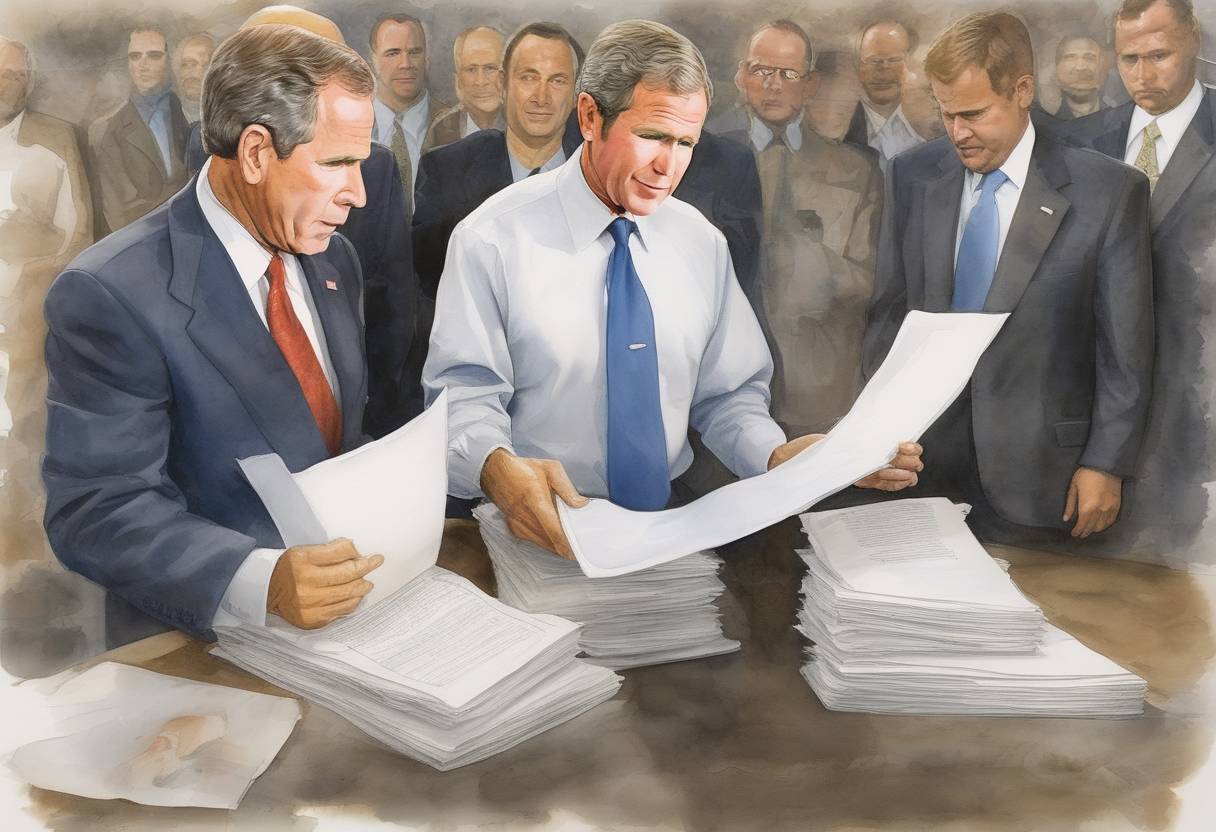
October 10, 2001: President George W. Bush’s List of Most Wanted Terrorists
On October 10, 2001, in the wake of the devastating September 11 attacks, U.S. President George W. Bush took a significant step in the War on Terror by unveiling a list of the 22 most wanted terrorists. This announcement was part of a broader strategy to combat global terrorism and bring those responsible for the attacks to justice.
Context and Background
September 11 Attacks: On September 11, 2001, the United States experienced one of the deadliest terrorist attacks in its history. Coordinated by the al-Qaeda terrorist network, led by Osama bin Laden, the attacks resulted in the destruction of the World Trade Center in New York City, significant damage to the Pentagon, and the loss of nearly 3,000 lives.
War on Terror: In response, President Bush declared a global War on Terror, aiming to dismantle terrorist organizations and prevent future attacks. This involved military, political, and economic measures, including the invasion of Afghanistan to dismantle al-Qaeda and remove the Taliban from power.
The List of Most Wanted Terrorists
Purpose: The list was intended to prioritize the capture of key figures in terrorist organizations, particularly those linked to al-Qaeda. It served as a tool for international cooperation, encouraging countries worldwide to assist in apprehending these individuals.
Osama bin Laden: At the top of the list was Osama bin Laden, the mastermind behind the 9⁄11 attacks. His capture or death was a primary objective of the U.S. and its allies.
Other Notable Figures: The list included other high-ranking members of al-Qaeda and affiliated groups, such as Ayman al-Zawahiri, bin Laden’s deputy, and other operatives involved in various terrorist activities.
Broader Implications
International Cooperation: The announcement underscored the need for global collaboration in counter-terrorism efforts. The U.S. sought to build a coalition of nations to share intelligence and resources in tracking down these individuals.
Impact on U.S. Policy: The list was part of a broader shift in U.S. foreign policy, emphasizing preemptive action against perceived threats and expanding the scope of military and intelligence operations worldwide.
Public Awareness: By publicizing the list, the U.S. government aimed to raise awareness about the threat posed by these individuals and encourage public vigilance.
Aftermath
Long-term Pursuit: The pursuit of these terrorists became a long-term endeavor, with varying degrees of success. Osama bin Laden was eventually located and killed by U.S. Navy SEALs in Pakistan in May 2011.
Ongoing Threat: While some individuals on the list were captured or killed, others remained at large, highlighting the persistent and evolving nature of the terrorist threat.
The release of the most wanted terrorists list on October 10, 2001, marked a pivotal moment in the early stages of the War on Terror, setting the tone for U.S. counter-terrorism efforts in the years that followed.