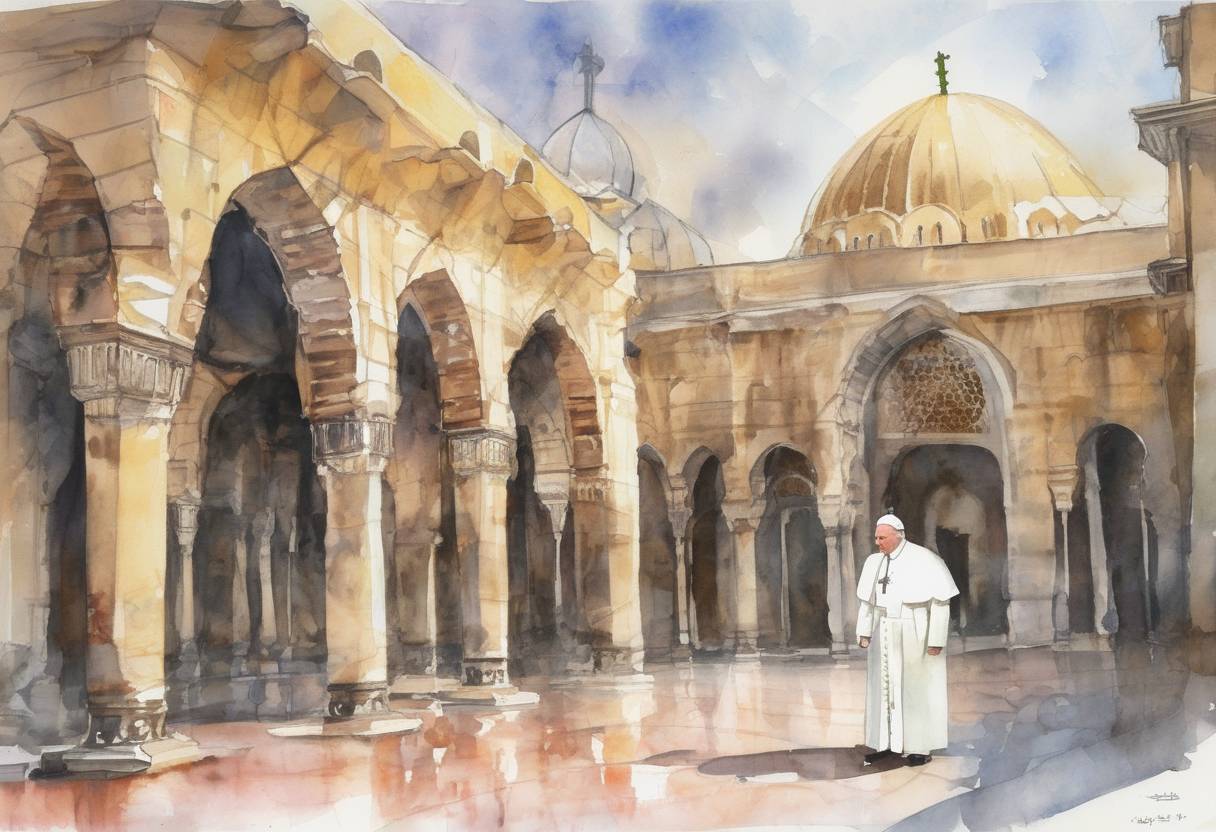
Pope John Paul II’s Historic Visit to Syria on May 6, 2001
On May 6, 2001, Pope John Paul II made a historic visit to Syria, marking a significant moment in interfaith relations. This visit was part of his broader pilgrimage to retrace the steps of Saint Paul, a key figure in Christianity, and it included a groundbreaking visit to the Umayyad Mosque in Damascus. This event was notable for several reasons:
Context and Background
Pope John Paul II’s Pilgrimage: The visit was part of the Pope’s journey to the biblical lands, which included stops in Greece and Malta. The pilgrimage was aimed at promoting dialogue and reconciliation among different faiths, particularly between Christians and Muslims.
The Umayyad Mosque: Also known as the Great Mosque of Damascus, the Umayyad Mosque is one of the largest and oldest mosques in the world. It holds significant importance for both Muslims and Christians. For Muslims, it is a revered site, while for Christians, it is believed to house the tomb of John the Baptist, known as Prophet Yahya in Islam.
Key Events of the Visit
Entering the Mosque: Pope John Paul II became the first pope to enter a mosque, symbolizing a gesture of goodwill and a desire for mutual understanding between Christianity and Islam. This act was seen as a powerful message of peace and dialogue.
Interfaith Dialogue: During his visit, the Pope emphasized the importance of interfaith dialogue and understanding. He called for Christians and Muslims to work together towards peace and coexistence, highlighting shared values and mutual respect.
Meeting with Religious Leaders: The Pope met with various religious leaders, including Muslim clerics, to discuss ways to foster better relations between the two faiths. These meetings underscored the Pope’s commitment to building bridges between different religious communities.
Significance and Aftermath
Symbol of Reconciliation: The visit was widely regarded as a symbol of reconciliation and a step towards healing historical tensions between Christians and Muslims. It demonstrated the potential for religious leaders to play a role in promoting peace and understanding.
Legacy of Interfaith Efforts: Pope John Paul II’s visit to the Umayyad Mosque set a precedent for future interfaith engagements. It highlighted the importance of dialogue and respect in addressing religious differences and conflicts.
Continued Impact: The visit continues to be remembered as a milestone in the history of interfaith relations, inspiring subsequent efforts to foster dialogue and cooperation among different religious communities worldwide.
In summary, Pope John Paul II’s visit to Syria and the Umayyad Mosque on May 6, 2001, was a landmark event that underscored the importance of interfaith dialogue and set a precedent for future efforts to bridge gaps between different religious traditions.