Franklin D. Roosevelt's Fourth Inauguration: January 20, 1945
1945 · Washington, D.C., United States
Franklin D. Roosevelt was inaugurated for an unprecedented fourth term as President of the United States.
March 4, 1933
Franklin D. Roosevelt was inaugurated as the 32nd President of the United States, delivering his famous 'the only thing we have to fear is fear itself' speech.
Washington, D.C., United States | United States Government
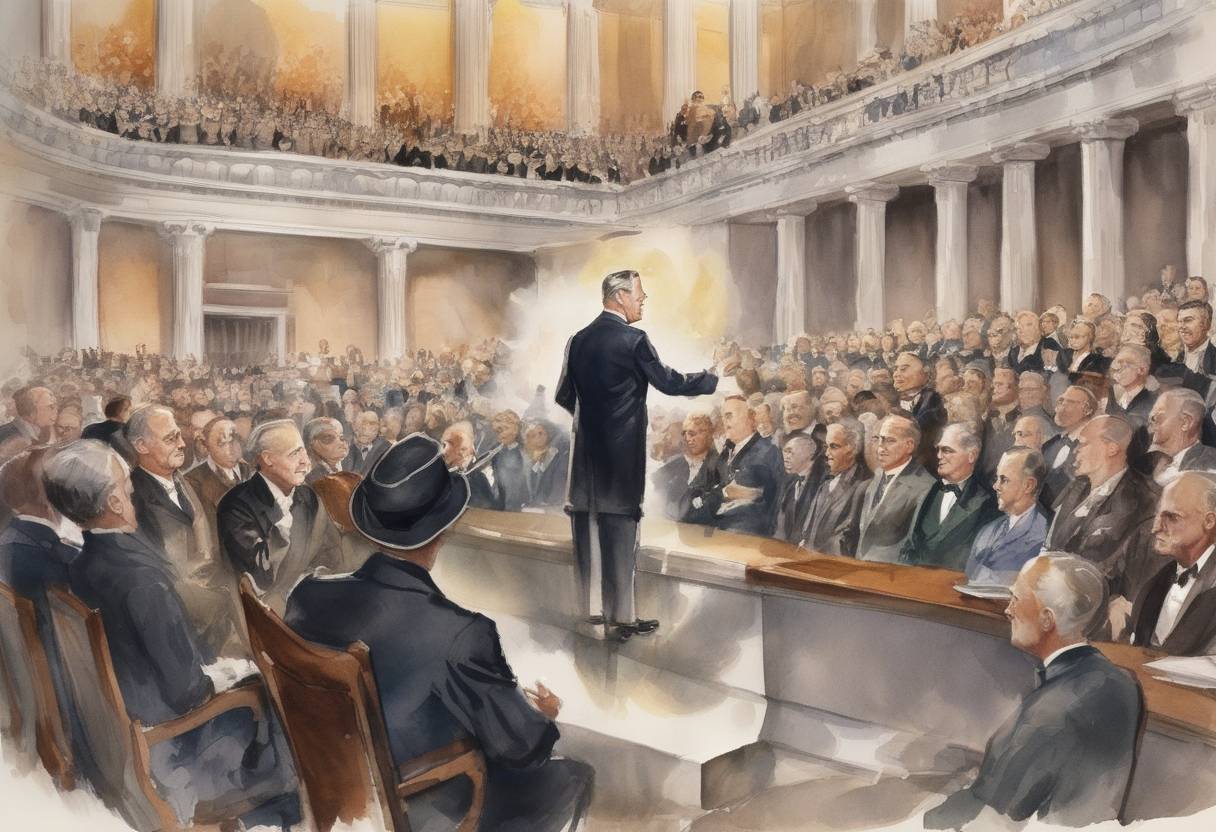
On March 4, 1933, Franklin D. Roosevelt was inaugurated as the 32nd President of the United States. This event marked a pivotal moment in American history, as the nation was in the grips of the Great Depression, facing unprecedented economic challenges and widespread unemployment.
The Great Depression: By 1933, the United States was four years into the Great Depression, a severe worldwide economic downturn that began with the stock market crash of 1929. Banks had failed, industrial production had plummeted, and unemployment had soared to about 25%.
The 1932 Presidential Election: Roosevelt, a Democrat and then-Governor of New York, ran against the incumbent President Herbert Hoover. Roosevelt’s campaign promised a “New Deal” for the American people, focusing on relief, recovery, and reform.
Roosevelt’s inaugural address is one of the most famous in American history, primarily due to its optimistic tone and the memorable line: “The only thing we have to fear is fear itself.” This phrase was intended to inspire confidence and hope among the American people during a time of despair.
Addressing Fear: Roosevelt emphasized that fear was paralyzing the nation and that overcoming it was essential for recovery. He sought to reassure Americans that the government would take decisive action to address the crisis.
Call for Action: The speech outlined Roosevelt’s commitment to immediate and vigorous action to combat the economic crisis. He promised to use the full power of the federal government to address the problems facing the nation.
Unity and Sacrifice: Roosevelt called for national unity and a spirit of sacrifice, urging Americans to work together to overcome the challenges.
The New Deal: Following his inauguration, Roosevelt launched the New Deal, a series of programs, public work projects, financial reforms, and regulations. These initiatives aimed to provide relief for the unemployed, recovery of the economy, and reform of the financial system.
Restoration of Confidence: Roosevelt’s leadership and policies helped restore confidence in the American government and economy. His administration’s efforts laid the groundwork for economic recovery and significantly expanded the role of the federal government in American life.
Legacy: Roosevelt’s inaugural address and subsequent actions solidified his reputation as a transformative leader. His presidency, which lasted until his death in 1945, saw the United States through both the Great Depression and World War II.
In summary, Franklin D. Roosevelt’s inauguration on March 4, 1933, was a defining moment in American history, marked by a call to overcome fear and a commitment to bold action to address the nation’s economic woes. His leadership during this period left a lasting impact on the United States and its government.
Source: en.wikipedia.org