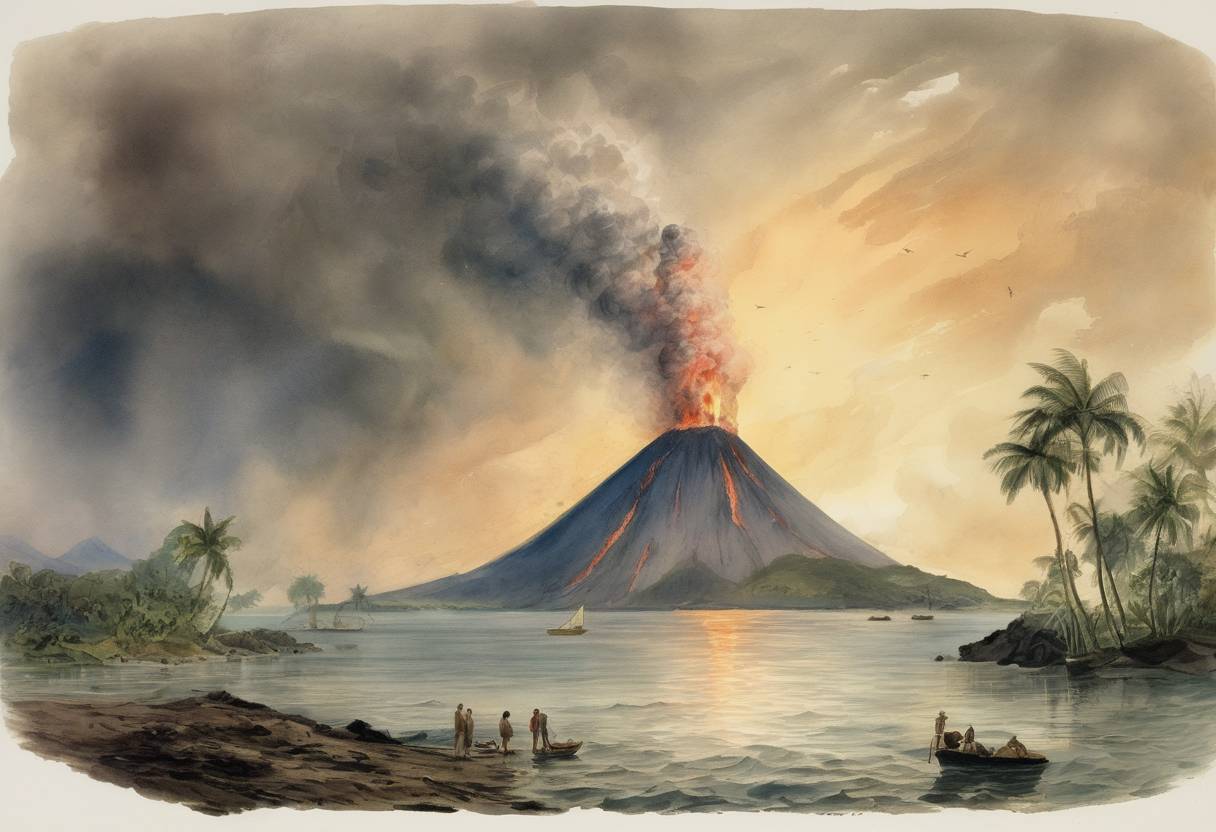
The Eruption of Krakatoa: August 27, 1883
The eruption of Krakatoa, which reached its catastrophic peak on August 27, 1883, stands as one of the most violent volcanic events in recorded history. Located in the Sunda Strait between the islands of Java and Sumatra in Indonesia, Krakatoa’s eruption had profound and far-reaching impacts.
Background
Krakatoa, a volcanic island, had been relatively quiet for centuries until May 1883, when it began to show signs of increased activity. Initial eruptions were noted in May, but it wasn’t until August that the volcano’s activity escalated dramatically.
The Eruption
On August 27, 1883, a series of massive explosions occurred, culminating in four cataclysmic blasts. The most powerful of these explosions was heard as far away as Australia and the island of Rodrigues near Mauritius, over 4,800 kilometers (3,000 miles) away. The eruption obliterated most of the island of Krakatoa and generated massive pyroclastic flows.
Tsunamis
The explosions triggered a series of tsunamis that devastated coastal regions across the Indian Ocean. Waves as high as 37 meters (120 feet) were reported, causing widespread destruction and loss of life. The tsunamis reached as far as South Africa and the Arabian Peninsula.
Impact and Aftermath
- Casualties: The eruption and the resulting tsunamis caused the deaths of over 36,000 people, making it one of the deadliest volcanic events in history.
- Global Climate Effects: The eruption ejected an estimated 20 cubic kilometers (4.8 cubic miles) of rock, ash, and pumice into the atmosphere. This led to a significant drop in global temperatures and caused vivid sunsets around the world for several years.
- Geological Changes: The eruption destroyed over two-thirds of the island of Krakatoa. The island’s collapse formed a caldera, which later became the site of the new volcanic island, Anak Krakatau, or “Child of Krakatoa,” which emerged in 1927.
Historical Significance
The Krakatoa eruption highlighted the destructive power of volcanic activity and its ability to affect global climate. It also underscored the importance of geological monitoring and the need for better understanding of volcanic hazards.
The event remains a key subject of study for volcanologists and serves as a reminder of the dynamic and sometimes violent nature of our planet.