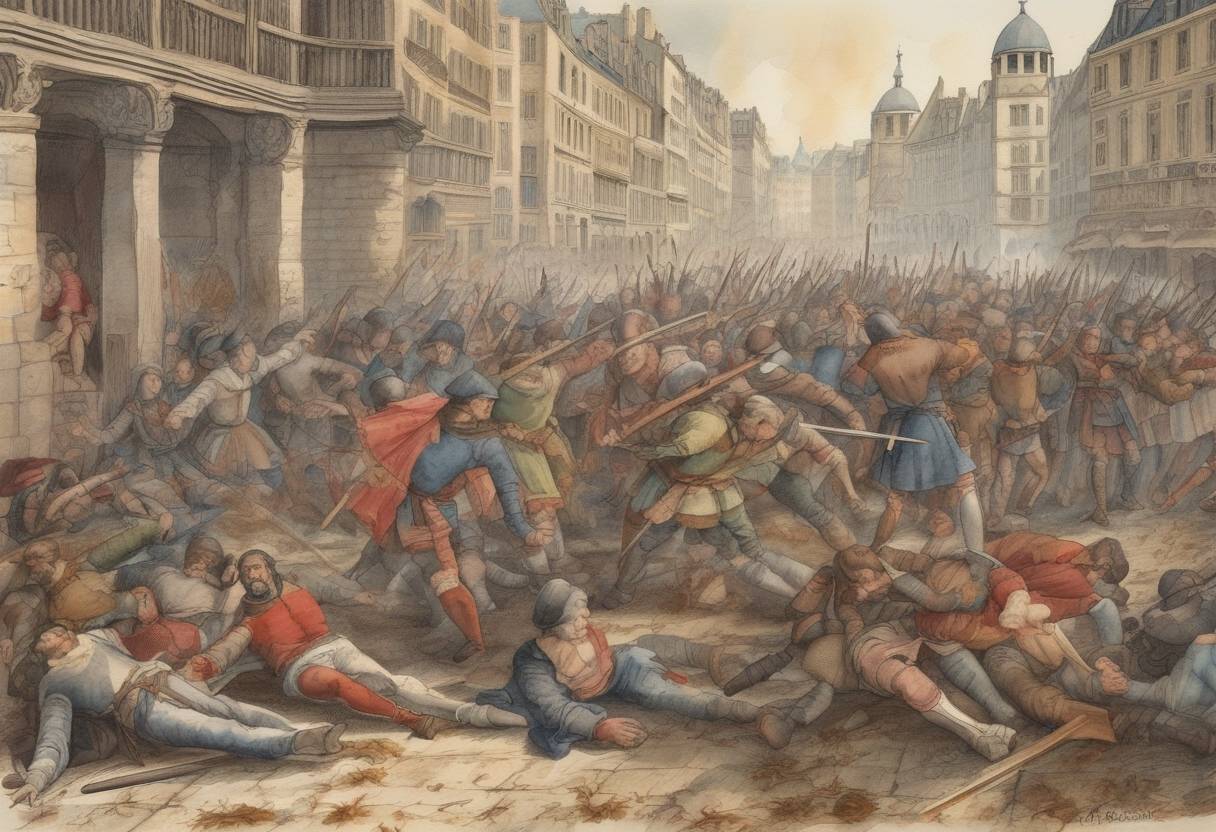
The St. Bartholomew’s Day Massacre: August 24, 1572
The St. Bartholomew’s Day Massacre is one of the most infamous episodes of religious violence in European history, marking a significant turning point in the French Wars of Religion. It began on August 24, 1572, in Paris, France, and resulted in the deaths of thousands of Huguenots, who were French Protestants, at the hands of Catholic mobs.
Context and Background
- Religious Tensions: The massacre occurred during a period of intense religious conflict in France, known as the French Wars of Religion (1562–1598), which pitted Catholics against the Protestant Huguenots.
- Political Climate: The political landscape was fraught with tension. The French crown, under King Charles IX, was heavily influenced by his mother, Catherine de’ Medici, who sought to maintain Catholic dominance while navigating the complex political alliances of the time.
- Marriage Alliance: In an attempt to ease tensions, a marriage was arranged between the Protestant Henry of Navarre (later King Henry IV of France) and the Catholic Margaret of Valois, sister of King Charles IX. The wedding, held on August 18, 1572, brought many Huguenot nobles to Paris.
Key Events Leading to the Massacre
- Assassination Attempt: On August 22, 1572, an assassination attempt was made on Admiral Gaspard de Coligny, a leading Huguenot and advisor to the king. Although he survived the initial attack, the attempt heightened tensions between the Catholic and Protestant factions.
- Royal Council’s Decision: In the wake of the assassination attempt, a royal council meeting was held. Influenced by fears of a Huguenot uprising and pressure from hardline Catholic factions, a decision was made to eliminate the Huguenot leadership.
The Massacre
- Beginning of Violence: In the early hours of August 24, 1572, St. Bartholomew’s Day, the massacre began. It started with the targeted killing of Huguenot leaders, including Admiral Coligny, and quickly spiraled into widespread violence.
- Spread of the Massacre: The violence spread from Paris to other parts of France over the following weeks. Estimates of the death toll vary, but it is believed that between 5,000 and 30,000 Huguenots were killed.
Aftermath and Consequences
- Impact on the Huguenots: The massacre dealt a severe blow to the Huguenot community, both in terms of leadership and morale. It also intensified the French Wars of Religion, leading to further conflicts and atrocities.
- International Reaction: The massacre shocked Europe and drew condemnation from Protestant nations, while some Catholic leaders viewed it as a necessary action against heresy.
- Long-term Effects: The events of St. Bartholomew’s Day deepened the religious divide in France and contributed to the eventual issuance of the Edict of Nantes in 1598, which granted limited rights to Huguenots and aimed to bring an end to the religious wars.
The St. Bartholomew’s Day Massacre remains a stark reminder of the destructive power of religious intolerance and the complex interplay of politics and faith in shaping historical events.