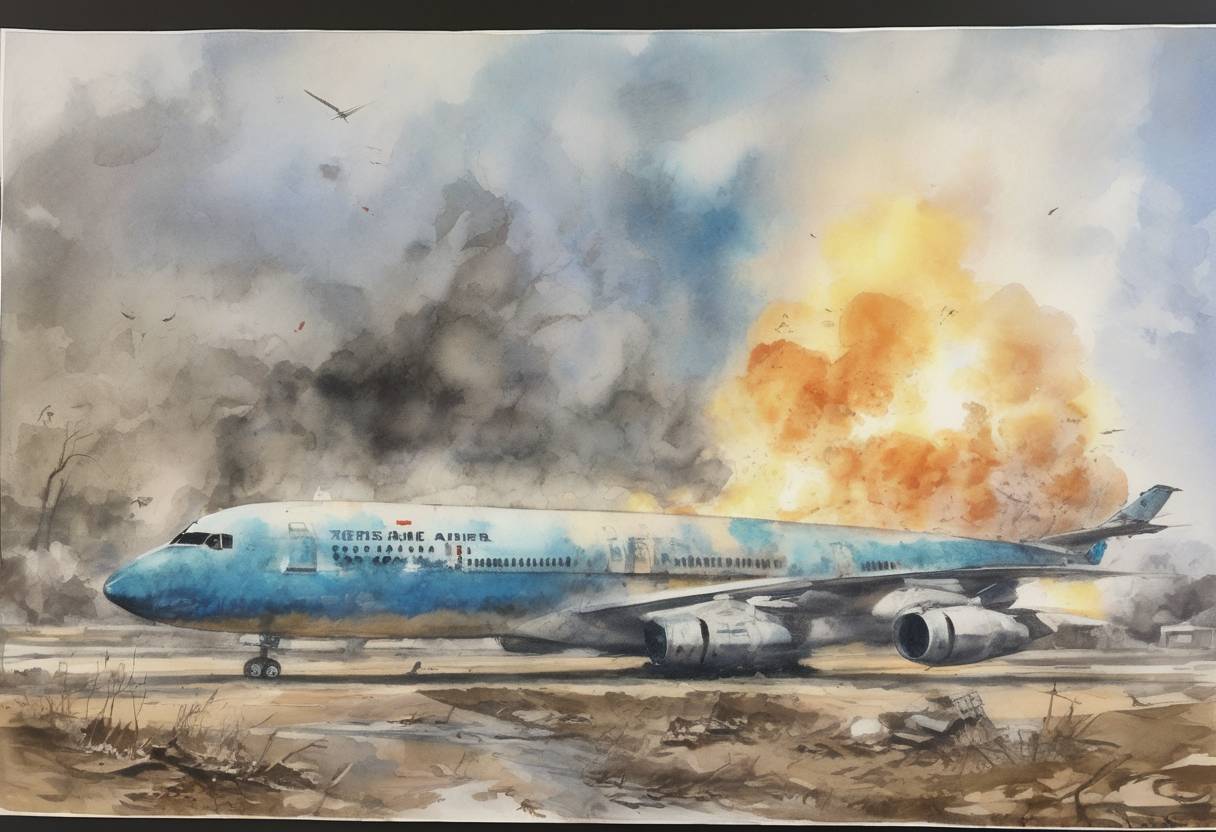
Korean Air Flight 858 Bombing - November 29, 1987
On November 29, 1987, Korean Air Flight 858 was destroyed by a bomb, resulting in the tragic loss of all 115 people on board. This event is a significant moment in the history of Korean relations and international terrorism.
Background
- Flight Details: Korean Air Flight 858 was a scheduled international passenger flight from Baghdad, Iraq, to Seoul, South Korea, with stopovers in Abu Dhabi, United Arab Emirates, and Bangkok, Thailand.
- Aircraft: The aircraft involved was a Boeing 707-3B5C.
The Incident
- Bombing: The aircraft exploded in mid-air over the Andaman Sea near Burma (now Myanmar). The explosion was caused by a bomb planted in an overhead compartment.
- Perpetrators: The bombing was orchestrated by North Korean agents. Two operatives, Kim Hyon-hui and Kim Seung-il, were responsible for planting the explosive device.
- Method: The bomb was hidden in a portable radio and a bottle of liquor, which were placed in an overhead bin before the agents disembarked during a stopover in Abu Dhabi.
Investigation and Aftermath
- Capture and Confession: The two North Korean agents were apprehended in Bahrain after the bombing. Kim Seung-il committed suicide using a cyanide capsule hidden in a cigarette, while Kim Hyon-hui was captured and later extradited to South Korea.
- Trial and Sentencing: Kim Hyon-hui confessed to the bombing during her trial in South Korea, revealing that the attack was ordered by the North Korean government to disrupt the 1988 Seoul Olympics. She was sentenced to death but later pardoned by the South Korean government, which considered her a victim of indoctrination.
- Political Impact: The bombing heightened tensions between North and South Korea and drew international condemnation. It underscored the volatile nature of inter-Korean relations during the Cold War era.
Broader Historical Significance
- International Relations: The incident strained North Korea’s relations with the international community, leading to increased isolation and sanctions.
- Security Measures: The attack prompted a reevaluation of aviation security measures worldwide, contributing to stricter regulations and screening processes in airports.
The Korean Air Flight 858 bombing remains a poignant reminder of the era’s geopolitical tensions and the human cost of international terrorism.