Charlemagne Confirms the Donation of Territories to the Papal States
800 · Rome, Papal States
Charlemagne confirms the donation of territories to the Papal States, strengthening the alliance between the Frankish kingdom and the papacy.
December 1, 0800
Charlemagne, King of the Franks, arrives in Rome at the request of Pope Leo III to restore order and prepare for his coronation as Emperor of the Romans.
Rome, Papal States | Frankish Kingdom
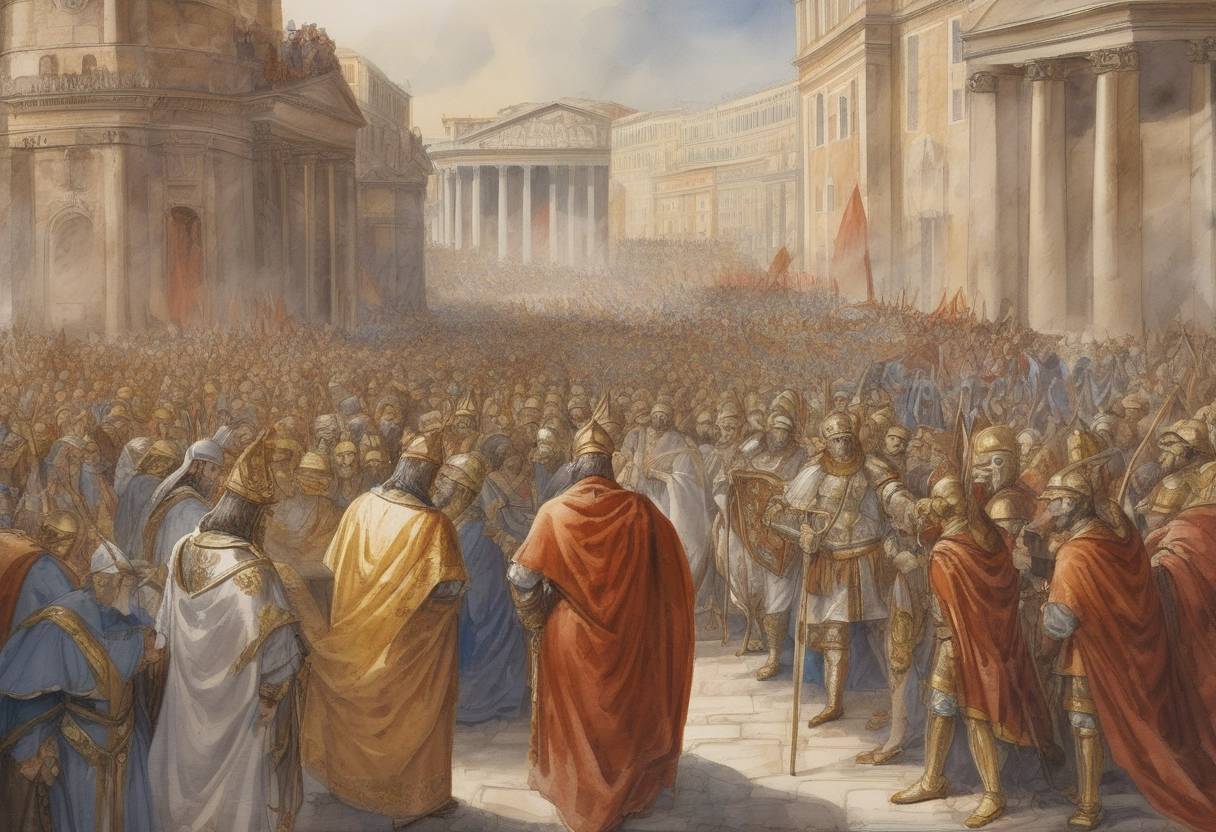
On December 1, 800, Charlemagne, King of the Franks, arrived in Rome at the behest of Pope Leo III. This event was a pivotal moment in medieval European history, setting the stage for Charlemagne’s coronation as Emperor of the Romans on Christmas Day of the same year.
Charlemagne’s Reign: Charlemagne, also known as Charles the Great, was the King of the Franks from 768 and later became King of the Lombards in 774. His reign was marked by military conquests, expansion of his empire, and efforts to consolidate and Christianize his territories.
Pope Leo III’s Plight: Pope Leo III faced significant challenges, including opposition from Roman nobility who questioned his legitimacy. In 799, he was attacked and fled to Charlemagne’s court seeking protection and support.
Political and Religious Dynamics: The relationship between the Frankish kingdom and the Papacy was mutually beneficial. The Papacy sought protection from the Lombards and internal Roman factions, while Charlemagne sought to legitimize his rule through the Church’s endorsement.
Papal Appeal: After being restored to power with Charlemagne’s support, Pope Leo III invited Charlemagne to Rome to address ongoing unrest and to discuss the future of the Frankish-Papal alliance.
Journey to Rome: Charlemagne’s journey to Rome was a significant undertaking, demonstrating his commitment to the Papacy and his role as a protector of Christendom.
Restoration of Order: Upon his arrival, Charlemagne worked to restore order in Rome, addressing the grievances of the Roman nobility and ensuring the stability of Pope Leo III’s position.
Preparation for Coronation: Discussions between Charlemagne and Pope Leo III likely included plans for Charlemagne’s coronation as Emperor, a title that would revive the concept of a Western Roman Empire and strengthen the alliance between the Frankish kingdom and the Papacy.
Coronation as Emperor: On December 25, 800, Charlemagne was crowned Emperor of the Romans by Pope Leo III in St. Peter’s Basilica. This event marked the revival of the Western Roman Empire and established the precedent for the Holy Roman Empire.
Legacy: Charlemagne’s coronation had profound implications for European history. It symbolized the fusion of Roman, Christian, and Germanic elements, laying the foundation for the medieval European order and influencing the political landscape for centuries.
Church-State Relations: The coronation underscored the intertwined nature of religious and political authority in medieval Europe, setting a model for future interactions between the Papacy and European monarchs.
Charlemagne’s arrival in Rome and subsequent coronation as Emperor were crucial in shaping the course of European history, reinforcing the power of the Frankish kingdom, and establishing a legacy that would endure throughout the Middle Ages.
Source: en.wikipedia.org