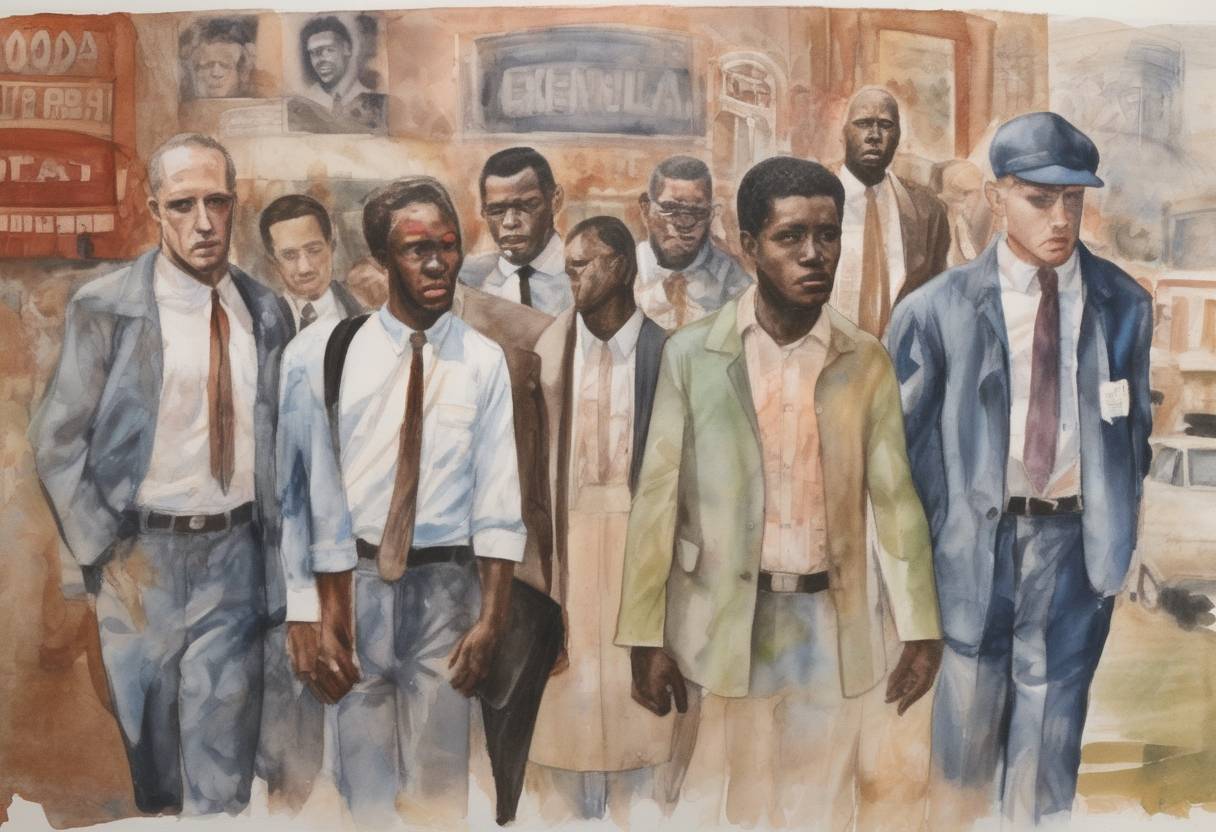
The Murder of Civil Rights Workers: Schwerner, Goodman, and Chaney
On June 21, 1964, a tragic and pivotal event in the Civil Rights Movement unfolded in Mississippi. Three civil rights workers—Michael Schwerner, Andrew Goodman, and James Chaney—were brutally murdered by members of the Ku Klux Klan. This heinous act highlighted the extreme resistance to racial equality in the United States and galvanized national attention towards the Civil Rights Movement.
Background
The three men were part of the Freedom Summer campaign, a voter registration drive aimed at increasing the number of registered Black voters in Mississippi. This initiative was organized by the Congress of Racial Equality (CORE) and the Student Nonviolent Coordinating Committee (SNCC). The campaign faced intense opposition from local segregationists and white supremacist groups, including the Ku Klux Klan.
- Michael Schwerner: A 24-year-old white CORE field worker from New York, known for his dedication to civil rights and equality.
- Andrew Goodman: A 20-year-old white college student and volunteer from New York, who had recently joined the Freedom Summer project.
- James Chaney: A 21-year-old Black CORE worker from Mississippi, deeply committed to the struggle for civil rights.
The Events of June 21, 1964
On the day of their murder, Schwerner, Goodman, and Chaney were investigating the burning of a Black church in Neshoba County, Mississippi, which was intended to be used as a Freedom School. After visiting the site, they were arrested by local police on a traffic violation, held for several hours, and then released into the night.
Unbeknownst to them, a Klan conspiracy was already in motion. After their release, the three men were followed by a group of Klansmen. They were abducted, driven to a remote area, and brutally murdered. Their bodies were buried in an earthen dam, where they remained hidden for 44 days.
Aftermath and Impact
The disappearance of Schwerner, Goodman, and Chaney sparked a massive federal investigation, led by the FBI under the code name “Mississippi Burning.” The case drew national and international attention, highlighting the violent resistance to civil rights efforts in the South.
Discovery and Prosecution: The bodies were discovered on August 4, 1964. Due to the reluctance of local authorities to prosecute, the federal government charged 18 individuals with civil rights violations. In 1967, seven were convicted, but none served more than six years in prison.
Civil Rights Act of 1964: The murders underscored the urgent need for federal civil rights legislation. The Civil Rights Act of 1964 was signed into law shortly after, prohibiting discrimination based on race, color, religion, sex, or national origin.
Legacy: The sacrifice of Schwerner, Goodman, and Chaney became a rallying point for the Civil Rights Movement, symbolizing the struggle and the high cost of fighting for justice and equality. Their story continues to inspire generations committed to civil rights and social justice.
This tragic event remains a stark reminder of the violent opposition faced by civil rights activists and the enduring struggle for racial equality in America.