The League of Nations Moves to Geneva: October 25, 1920
1920 · Geneva, Switzerland
The League of Nations moved its headquarters to Geneva, Switzerland, marking a significant step in its efforts to maintain world peace after World War I.
January 25, 1919
The League of Nations is founded during the Paris Peace Conference, marking the first international organization aimed at maintaining world peace.
Paris, France | League of Nations
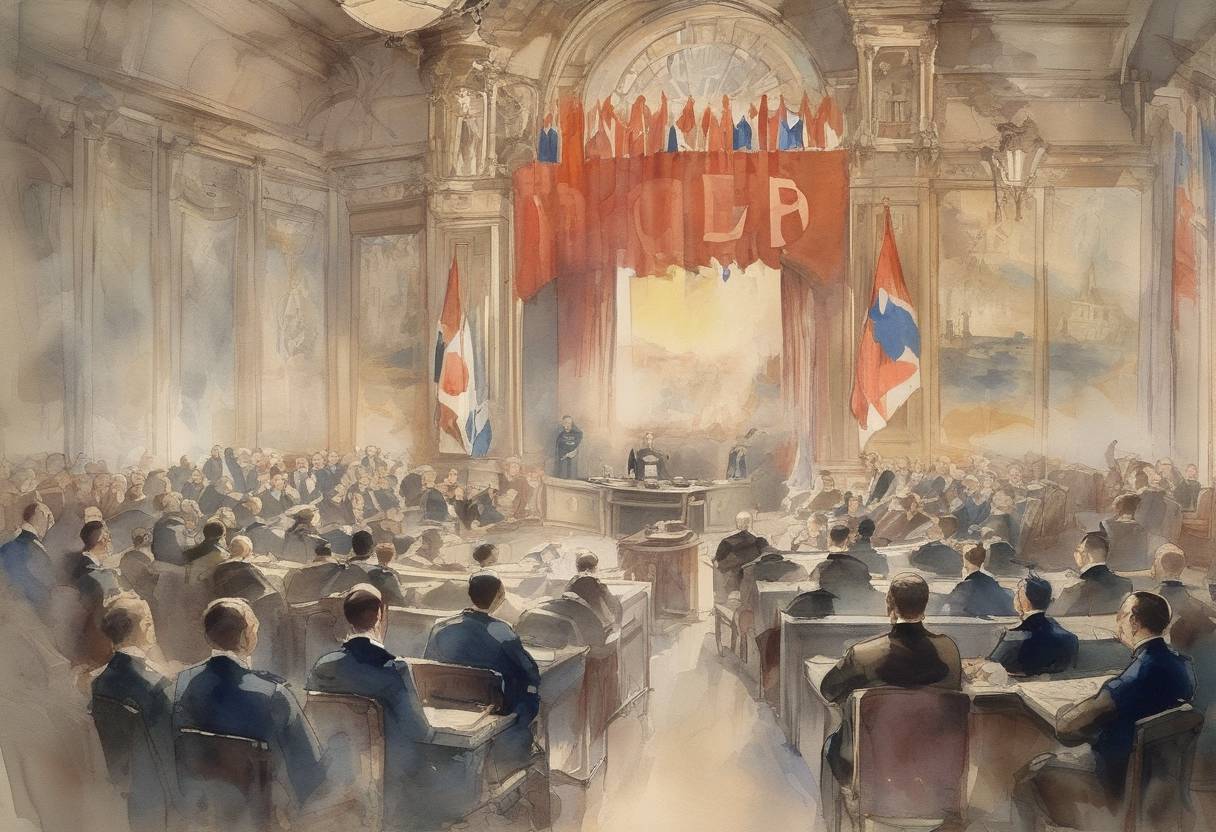
On January 25, 1919, during the Paris Peace Conference, the League of Nations was established as the first international organization with the primary aim of maintaining world peace. This momentous event marked a significant shift in international relations, as it represented the first concerted effort to create a global body dedicated to preventing conflicts and fostering cooperation among nations.
The League of Nations was conceived in the aftermath of World War I, a devastating conflict that had caused unprecedented destruction and loss of life. The war highlighted the need for a new system of international diplomacy and conflict resolution to prevent such a catastrophe from occurring again. The idea of a league of nations was championed by U.S. President Woodrow Wilson, who included it as the 14th point in his famous Fourteen Points speech, which outlined his vision for a post-war world order.
Paris Peace Conference: The conference began on January 18, 1919, bringing together representatives from over 30 countries to negotiate the terms of peace and to reshape the geopolitical landscape of Europe and beyond. The establishment of the League of Nations was a central topic of discussion.
Wilson’s Advocacy: President Wilson played a pivotal role in advocating for the League, emphasizing the need for a collective security arrangement and a forum for resolving international disputes peacefully.
Drafting the Covenant: A commission was formed to draft the Covenant of the League of Nations, which would outline its structure, functions, and objectives. The Covenant was later integrated into the Treaty of Versailles, signed on June 28, 1919.
The League of Nations was designed to be a forum where member states could discuss and resolve international issues. Its primary objectives included:
The League’s structure included an Assembly, a Council, and a Permanent Secretariat. It also established various agencies and committees to address specific global issues.
Despite its ambitious goals, the League of Nations faced numerous challenges:
The League of Nations ultimately dissolved in 1946, following the end of World War II, and was succeeded by the United Nations. Despite its shortcomings, the League laid the groundwork for modern international organizations and highlighted the importance of multilateral diplomacy in maintaining global peace.
The founding of the League of Nations was a landmark moment in the history of international relations. It represented the first major attempt to create a global institution dedicated to peace and cooperation, setting a precedent for future efforts to build a more stable and peaceful world order.
Source: en.wikipedia.org