Founding of Lima by Francisco Pizarro
1535 · Lima, Peru
Spanish conquistador Francisco Pizarro founded the city of Lima, which would become the capital of Peru.
November 15, 1533
Francisco Pizarro arrives in Cuzco, the capital of the Inca Empire, marking a significant moment in the Spanish conquest of Peru.
Cuzco, Peru | Spanish Empire
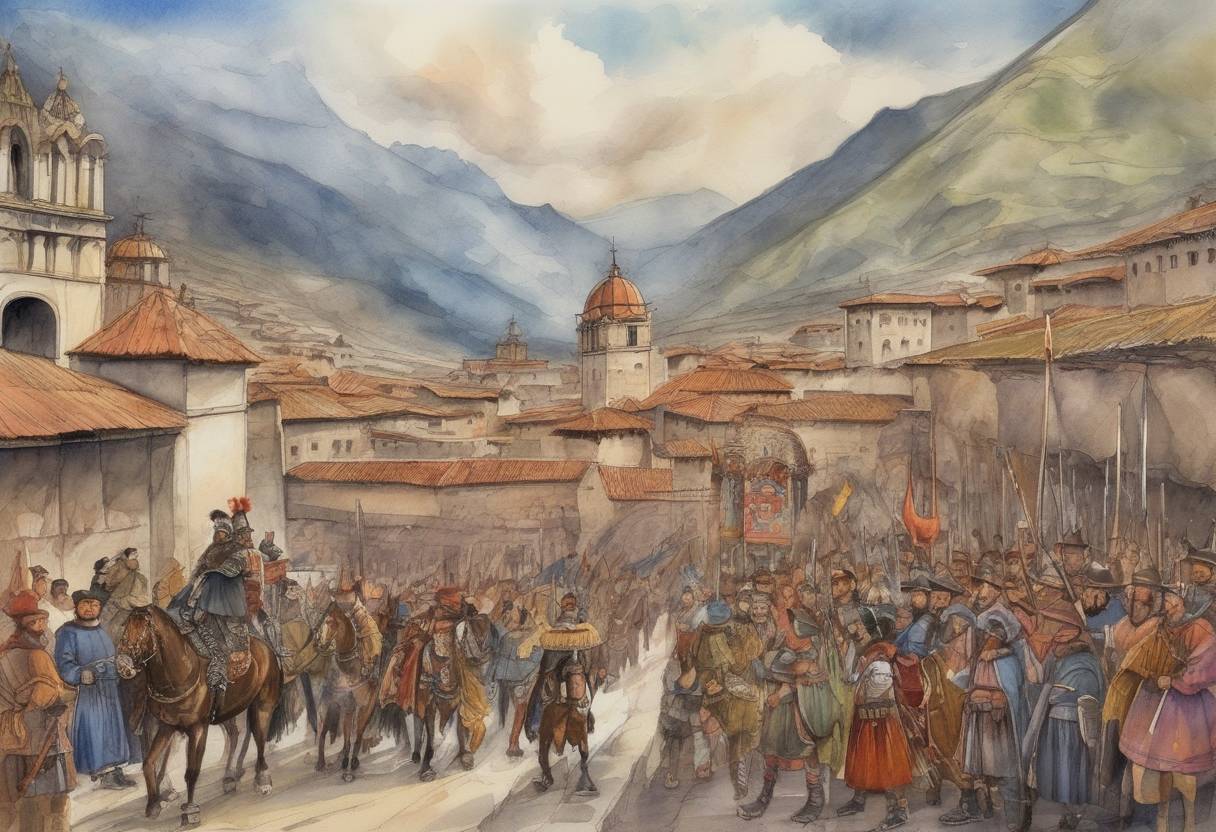
On November 15, 1533, Spanish conquistador Francisco Pizarro entered Cuzco, the capital of the Inca Empire, marking a pivotal moment in the Spanish conquest of Peru. This event was a significant milestone in the broader context of European colonial expansion in the Americas and had profound implications for the indigenous populations of the region.
The Spanish conquest of the Inca Empire began in earnest in the early 1530s. Francisco Pizarro, along with his brothers and a small group of Spanish soldiers, embarked on an expedition to conquer the vast and wealthy Inca Empire. The Incas, at the time, were embroiled in a civil war between two brothers, Atahualpa and Huáscar, which weakened their ability to resist the Spanish forces.
In 1532, Pizarro captured Atahualpa at the Battle of Cajamarca. Despite receiving a substantial ransom in gold and silver for Atahualpa’s release, Pizarro executed the Inca emperor in July 1533. This act left the Inca Empire leaderless and further destabilized the region.
Pizarro’s arrival in Cuzco on November 15, 1533, was the culmination of a strategic campaign to seize control of the Inca heartland. Cuzco was not only the political and administrative center of the Inca Empire but also held immense cultural and religious significance. The city’s capture symbolized the effective collapse of Inca resistance and the consolidation of Spanish power in the region.
Upon entering Cuzco, Pizarro and his men encountered little resistance. The city had been weakened by the ongoing civil war and the recent execution of Atahualpa. The Spanish forces quickly took control, looting the city’s riches and imposing their rule over the indigenous population.
The capture of Cuzco had far-reaching consequences:
Spanish Consolidation of Power: The fall of Cuzco marked the beginning of Spanish dominance in the Andes. It allowed the Spanish to establish a colonial administration and exploit the region’s resources.
Cultural and Social Impact: The Spanish conquest led to the dismantling of the Inca political and social structures. The imposition of Spanish culture, religion, and language had lasting effects on the indigenous populations.
Resistance and Rebellion: Despite the Spanish victory, resistance continued in various forms. Indigenous leaders, such as Manco Inca, led uprisings against Spanish rule, although these were ultimately unsuccessful in reversing the conquest.
Economic Exploitation: The Spanish exploited the region’s mineral wealth, particularly silver, which became a cornerstone of the Spanish economy and fueled European markets.
Pizarro’s arrival in Cuzco is a key event in the history of the Spanish conquest of the Americas. It exemplifies the dynamics of European colonialism, characterized by military conquest, cultural imposition, and economic exploitation. The events surrounding the fall of Cuzco continue to be studied for their impact on indigenous societies and their role in shaping the modern history of South America.
Source: www.britannica.com