NASA's Mars Odyssey Begins Mapping the Surface of Mars
2002 · Pasadena, United States
NASA's Mars Odyssey begins mapping the surface of Mars.
January 24, 1986
The Voyager 2 spacecraft made its closest approach to Uranus, providing the first detailed images of the planet and its moons.
Pasadena, United States | NASA
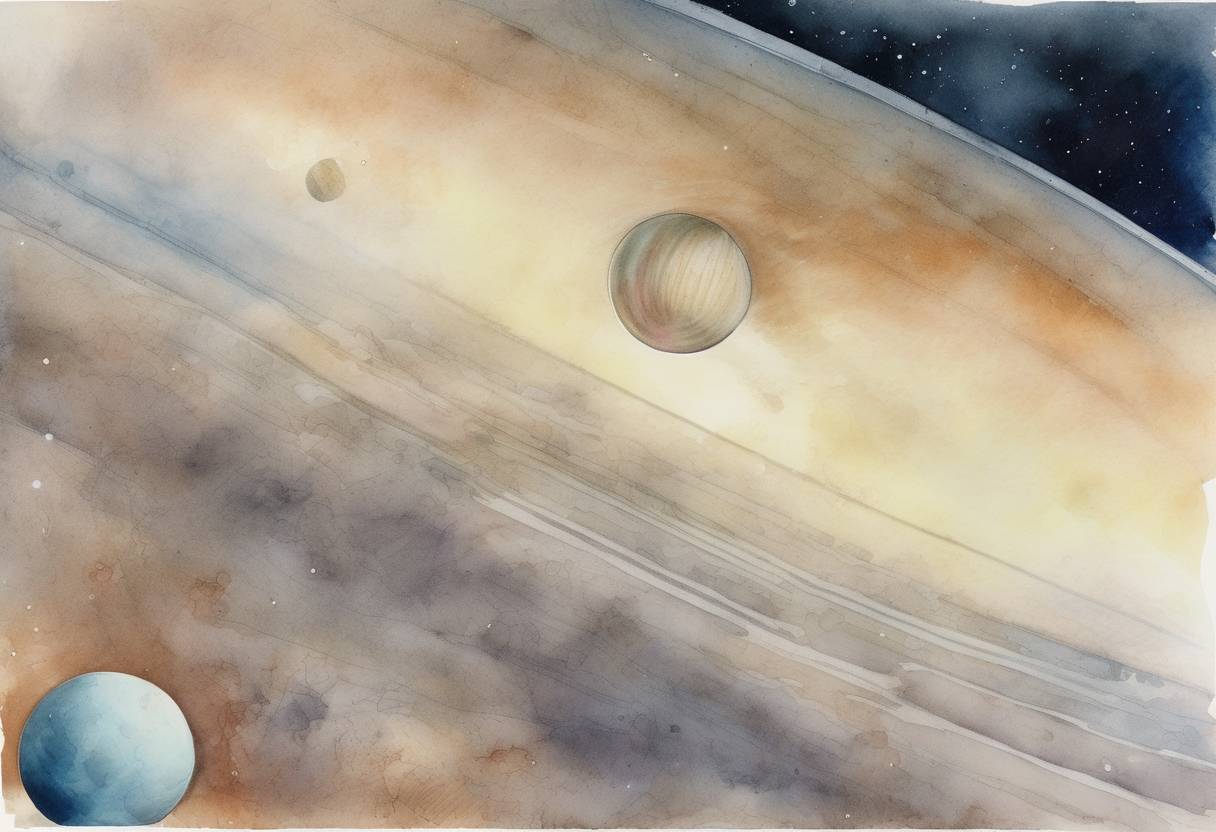
On January 24, 1986, NASA’s Voyager 2 spacecraft made its closest approach to Uranus, marking a significant milestone in space exploration. This event provided humanity with the first detailed images and data of the distant ice giant and its moons, greatly enhancing our understanding of the outer solar system.
Voyager 2 was launched on August 20, 1977, as part of NASA’s Voyager program, which aimed to explore the outer planets of the solar system. The spacecraft was designed to take advantage of a rare planetary alignment that occurs once every 176 years, allowing it to visit Jupiter, Saturn, Uranus, and Neptune using gravitational assists to propel it from one planet to the next.
During its closest approach to Uranus, Voyager 2 passed within approximately 81,500 kilometers (about 50,600 miles) of the planet’s cloud tops. This encounter provided a wealth of information:
The data collected by Voyager 2 during its Uranus flyby significantly advanced our understanding of the planet and its system. The mission’s findings challenged existing theories about planetary formation and dynamics, particularly regarding Uranus’s unusual magnetic field and axial tilt.
Following its successful Uranus encounter, Voyager 2 continued its journey to Neptune, which it reached in 1989. The spacecraft remains operational and continues to send data back to Earth as part of the Voyager Interstellar Mission, exploring the outer boundaries of the heliosphere.
Voyager 2’s encounter with Uranus remains a testament to human ingenuity and curiosity, providing insights that continue to influence planetary science and our understanding of the solar system.
Source: en.wikipedia.org