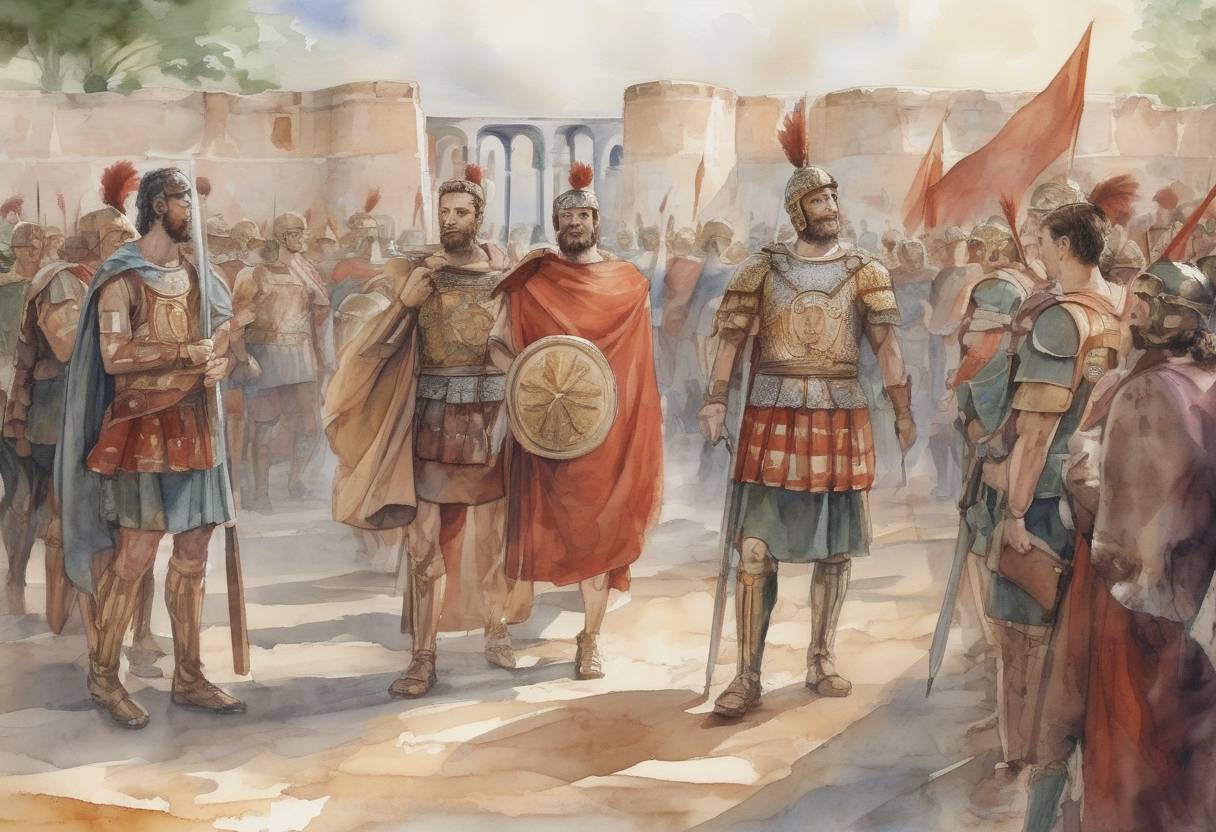
Septimius Severus Proclaimed Roman Emperor
On April 9, 193 CE, Lucius Septimius Severus was proclaimed Roman Emperor by the legions stationed in Illyricum, marking the beginning of his reign and the establishment of the Severan dynasty. This event was a pivotal moment in Roman history, characterized by military power struggles and significant political changes.
Background
The year 193 CE, known as the “Year of the Five Emperors,” was a period of intense instability for the Roman Empire. The assassination of Emperor Commodus on December 31, 192 CE, led to a rapid succession of rulers:
- Pertinax: He was declared emperor by the Senate but was assassinated by the Praetorian Guard after only 86 days.
- Didius Julianus: He purchased the throne in an auction held by the Praetorian Guard, but his rule was widely unpopular and short-lived.
Amidst this chaos, several provincial governors with strong military backing vied for power, including Septimius Severus, who was then the governor of Pannonia Superior.
Proclamation and Rise to Power
- Military Support: Severus was a seasoned military leader with a strong reputation among the legions. His troops in Illyricum, recognizing his leadership qualities and potential to restore stability, proclaimed him emperor on April 9, 193 CE.
- March on Rome: With the support of his legions, Severus marched on Rome. His strategic acumen and swift action allowed him to gain control over the capital with minimal resistance.
- Consolidation of Power: Severus quickly moved to consolidate his power by eliminating rivals. He defeated Pescennius Niger, another claimant to the throne, and later dealt with Clodius Albinus, securing his position as the uncontested ruler of the Roman Empire.
Establishment of the Severan Dynasty
- Reforms and Policies: As emperor, Severus implemented several military and administrative reforms. He increased the pay of soldiers and allowed them to marry, strengthening loyalty to his regime.
- Dynastic Rule: Severus founded the Severan dynasty, which would rule the Roman Empire until 235 CE. His reign marked a shift towards a more militarized and autocratic form of governance.
Historical Significance
- Stabilization: Severus’ reign brought a degree of stability to the empire after a period of civil unrest and political fragmentation.
- Military Emphasis: His reliance on the military set a precedent for future emperors, highlighting the growing influence of the army in Roman politics.
- Cultural and Architectural Contributions: Severus invested in significant building projects, including the Arch of Septimius Severus in Rome, which commemorated his victories.
Septimius Severus’ ascension to power on April 9, 193 CE, was a defining moment that reshaped the Roman Empire’s political landscape and laid the groundwork for the Severan dynasty’s influence in the years to come.